Struggling with bulky downlight trims ruining your clean ceiling? This clash can undermine a minimalist design. Trimless downlights integrate seamlessly, providing a flawless, modern finish for your projects.
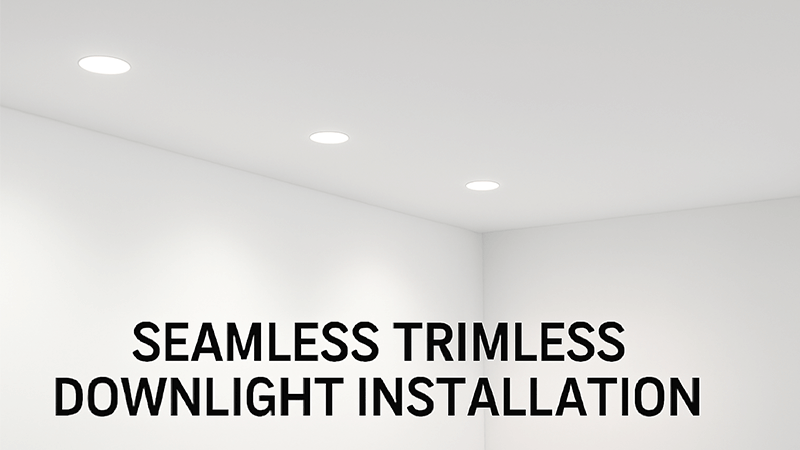
A trimless downlight, also known as a plaster-in downlight, is a recessed lighting fixture installed into the ceiling before the final plaster skim. This method hides the fixture’s housing, creating a smooth, seamless opening where only the light source is visible, achieving a clean, architectural look.
You see, achieving that high-end, "barely there" lighting effect is what separates good design from great design. As I’ve learned over my years in manufacturing, a trimless downlight is more than a fixture; it’s a design philosophy. It’s about trading a more complex installation for an unmatched clean look and spatial integrity. But understanding the "what" is just the first step. To really master this for your clients, you need to know the "how" and the "why." Let’s explore what makes these fixtures a game-changer and how they differ from other options. Stick with me, and I’ll walk you through everything you need to know.
What is the difference between trim and trimless downlight?
Choosing between trimmed and trimless downlights can be confusing. The wrong choice can ruin your design’s aesthetic. I will clarify the key differences to ensure your project’s vision is met.
The main difference is visual. A trim downlight has a visible flange or rim that sits on the ceiling surface. A trimless downlight is plastered into the ceiling, so its housing is completely hidden. The result is a clean, seamless hole with no visible trim.
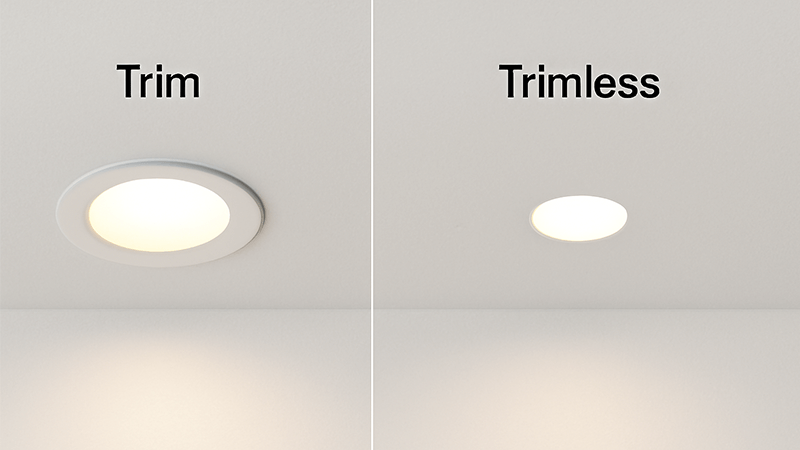
When I work with purchasing managers like Shaz, this is one of the first distinctions we clarify. The choice impacts not just the look, but the entire project timeline and budget. A trim downlight is the standard, easy-to-install choice. The trim handily covers any imperfections in the cutout, making installation fast and forgiving. A trimless downlight, however, is all about precision. It requires a multi-step installation process that must be coordinated with the ceiling contractors. It’s a commitment to a higher aesthetic standard. I once had a client for a luxury hotel project who was hesitant about the extra work for trimless. After we installed a mockup room, the choice was clear. The seamless ceiling made the rooms feel taller and more sophisticated, which became a key selling point.
Key Differences at a Glance
To make it simple, let’s break down the core differences in a table. This is the kind of checklist I use with my own team to ensure we’re aligning with a project’s goals.
| Feature |
Trim Downlight (Standard) |
Trimless Downlight (Plaster-in) |
| Appearance |
Visible flange or rim on the ceiling. |
No visible trim; light appears from a clean hole. |
| Installation |
Simple cut-out and clip-in after ceiling is finished. |
Installed before final plastering; requires plastering, sanding, and painting. |
| Maintenance |
Easy to remove and replace from below. |
Lamp is replaceable, but housing is permanently fixed. |
| Best Application |
General use, retrofits, budget-conscious projects. |
High-end new builds, minimalist designs, architectural spaces. |
| Cost |
Lower initial fixture and installation cost. |
Higher fixture cost and more labor-intensive installation. |
Understanding these trade-offs is crucial. For a purchasing expert, knowing when to specify trimless isn’t just about the product; it’s about understanding the entire construction process it demands.
What is a trimless light?
You’ve heard the term, but what’s the core idea behind ‘trimless’? It’s a design-first approach that can frustrate contractors. Let’s demystify it and show why it’s a modern design essential.
A trimless light is any lighting fixture—downlight, linear light, or spotlight—designed to be installed without a visible frame or trim. Its housing is concealed within the wall or ceiling, creating a clean, architectural look where light appears to emerge directly from the surface itself.
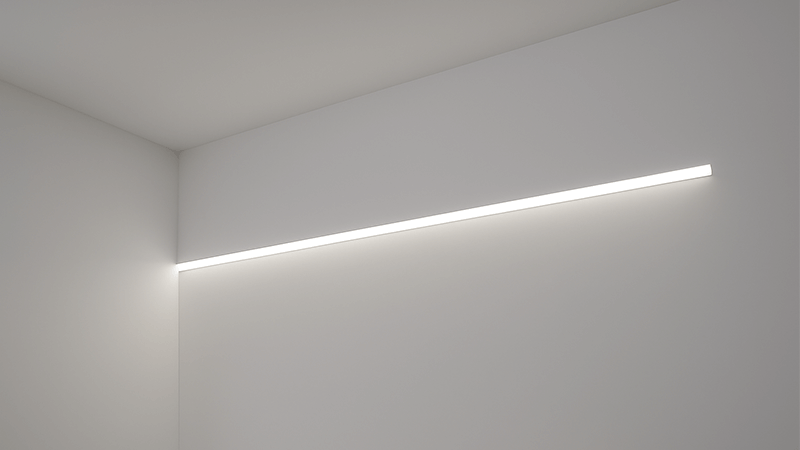
The term "trimless" represents a philosophy more than a single product. It’s about making the light source, not the light fixture, the main event. In my factory, we design these products with the installation process in mind. The fixture itself has a perforated flange or special edge that plaster can bond to, creating that smooth, invisible transition. This concept isn’t limited to round downlights. You can find trimless linear lights that create clean lines of light on walls or ceilings, and trimless wall washers that evenly illuminate a vertical surface without a visible source. I remember working on a custom solution for an art gallery. The curator wanted the art to be the only focus, with no distracting ceiling hardware. We used a series of adjustable trimless fixtures that were completely invisible until switched on. This allowed the light to "paint" the artwork, turning the lighting itself into a form of art.
The Trimless Design Philosophy
The core idea is integration. A trimless light is not an object you place on a surface; it’s a component you build into a surface. This requires careful planning and coordination.
Common Trimless Light Applications
- Downlights: The most common type, used for general and accent lighting.
- Linear Systems: Create clean lines of light for corridors, coves, or dramatic wall-grazing effects.
- Wall Washers: Designed to illuminate a vertical surface smoothly and evenly from top to bottom.
- Accent Lights: Small, focused trimless fixtures used to highlight architectural details or objects.
For a procurement professional, this means sourcing not just a fixture, but a system that works with standard building materials. The quality of the plaster-in kit is just as important as the LED engine itself.
What is a trimless spot light?
Your project needs focused, adjustable light, but you can’t have bulky tracks. This is where trimless spotlights excel. They offer precision without clutter, but how do they work?
A trimless spotlight is a recessed, adjustable fixture installed without a visible trim. It combines the clean aesthetic of trimless design with the flexibility of a spotlight, allowing you to direct light precisely onto artwork, objects, or architectural features while the housing remains hidden.

This is where trimless design gets really functional. A standard trimless downlight provides a fixed beam of light. A trimless spotlight, however, adds a gimbal or articulating mechanism. This means that after the seamless installation, you can still tilt and sometimes rotate the light source inside. In my experience, this is the perfect solution for retail environments, galleries, and high-end residential projects where the layout might change over time. For example, if a homeowner moves a painting or a store changes its merchandise display, you don’t need to reinstall the lighting. You simply adjust the angle of the spotlight. When I’m developing these products, we focus heavily on the mechanics. The adjustment has to be smooth and stable, holding its position over years of use. We also design them to be "deep-recessed," so that even when the light is angled, the source remains hidden from most viewing angles, minimizing glare.
Spotlight Functionality vs. Fixed Downlight
It’s important to understand when to use a flexible spotlight versus a fixed downlight. Both can be trimless, but they serve very different purposes in a lighting plan.
| Feature |
Trimless Fixed Downlight |
Trimless Spotlight |
| Light Direction |
Fixed, usually straight down. |
Adjustable (tilt and/or rotate). |
| Primary Use |
General ambient lighting, creating pools of light. |
Accent lighting, task lighting, highlighting features. |
| Flexibility |
None. The light plan is set at installation. |
High. The lighting can be adapted to changes in the room layout. |
| Glare Control |
Good, especially with deep-recessed models. |
Excellent, as light is directed away from general sightlines. |
| Typical Scenario |
Hallways, kitchens, general room illumination. |
Living rooms (over art), retail displays, museum exhibits. |
For a purchasing manager, specifying a trimless spotlight means looking at the tilt angle, rotation degrees, and the quality of the adjustment mechanism, in addition to the light quality itself.
What are the 4 types of lighting?
You know your products, but does your lighting plan work? Just using downlights isn’t enough. Understanding the four layers of lighting is key to creating a truly effective and beautiful space.
The four fundamental types of lighting in interior design are Ambient, Task, Accent, and Decorative. A successful lighting scheme layers these four types to create a space that is not only functional and comfortable but also visually interesting and atmospheric.
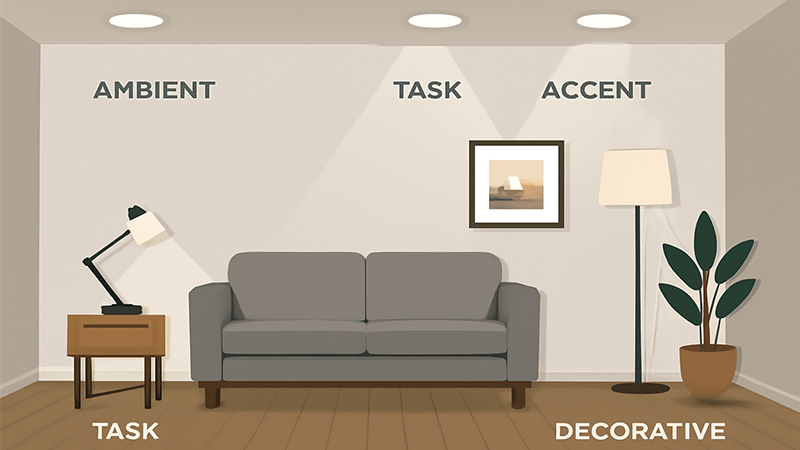
This is a topic I discuss with every single client, whether they are a seasoned importer or a new project contractor. You can have the best fixtures in the world, but if they aren’t used correctly, the space will feel flat and uninviting. Thinking in layers is the secret. I often compare it to painting a picture. You start with a broad background, then add the main subjects, then the fine details, and finally, a beautiful frame. Trimless downlights can play a role in several of these layers, particularly for ambient and accent lighting, but they are part of a larger strategy. Understanding this framework helps a purchasing manager like Shaz advise his clients more effectively, moving from simply fulfilling an order to being a valuable lighting consultant. This knowledge adds value and builds stronger partnerships.
Breaking Down the Four Layers
Let’s look at each layer and what it does. A great lighting plan uses a mix of all four to meet the needs of a space.
| Lighting Type |
Purpose |
Common Fixtures |
| 1. Ambient |
Provides overall, general illumination. The foundation of light for a room. |
Downlights, ceiling-mounted fixtures, cove lights. |
| 2. Task |
Provides focused light for specific activities like reading, cooking, or working. |
Under-cabinet lights, desk lamps, vanity lights. |
| 3. Accent |
Creates visual interest by highlighting specific objects or features, like art or architecture. |
Spotlights, wall washers, track lights. |
| 4. Decorative |
The "jewelry" of the room. It is meant to be seen and admired for its beauty. |
Chandeliers, pendants, wall sconces. |
When you review a lighting plan, ask yourself: Is there a good base of ambient light? Are all task areas properly lit? What are we highlighting with accent light? And where can decorative lighting add personality? Answering these questions is the key to success.
Conclusion
In summary, trimless downlights offer a seamless, architectural look. By layering them with task, accent, and decorative fixtures, you can create a truly professional and dynamic lighting design.