Struggling with bulky fixtures that clutter your ceiling? These lights can ruin a clean, modern aesthetic. Recessed downlights provide a sleek, built-in solution for a minimalist and polished look.
A recessed downlight is a light fixture installed into a hollow opening in a ceiling. It provides a clean, minimalist look and functional lighting, making it essential for modern interior designs, especially those without a central main light.

In my years in the lighting industry, from the factory floor to founding my own company, I’ve seen how the right lighting can transform a space. Recessed downlights are a favorite among designers and contractors for good reason, but choosing the right one requires more than just picking a style. Understanding the details behind these simple-looking fixtures is key to achieving the perfect lighting effect for any project. Let’s dive into what makes them work and how to select the best ones for your needs.
Why Are They Called Recessed Lights?
Confused by lighting jargon? Terms like "recessed" can be unclear, making it hard to specify products. Let’s clarify the name so you can source products with complete confidence.
They are called "recessed" because the main body of the light fixture is set back, or recessed, into a hollow space in the ceiling. Only the trim is flush with the ceiling surface, hiding the fixture’s housing from view.
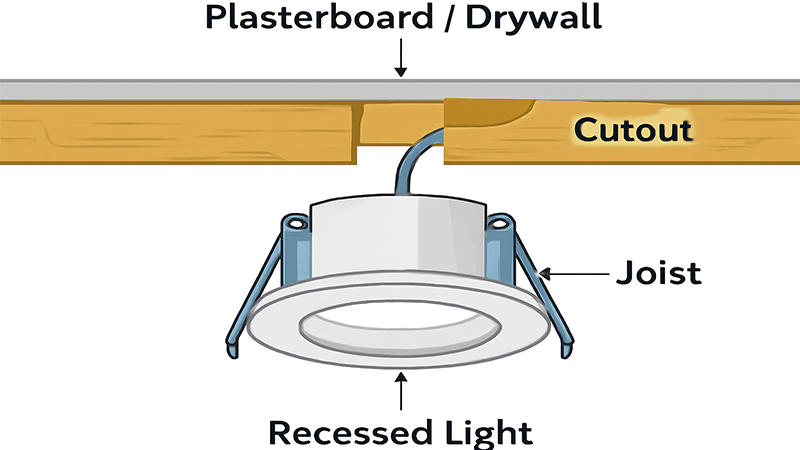
The name "recessed" directly describes how the fixture is installed. It comes from the word "recess," which means a small space set back in a wall or ceiling. Unlike surface-mounted lights that attach to the outside of the ceiling, these fixtures are designed to be hidden within it. This is why you’ll also hear them called "can lights" or "pot lights" in some regions, referring to the can-shaped housing that holds all the components.
Anatomy of a Recessed Light
To fully understand the name, it helps to know the main parts. The fixture is essentially made of two key components: the housing and the trim.
- Housing: This is the main body of the fixture that is hidden inside the ceiling. It contains the electrical connections, the driver, and the mounting hardware. Housings can be IC-rated (Insulation Contact), meaning they can be safely covered with insulation, or Non-IC rated, which require clearance from insulation. I always advise clients like Shaz to double-check the building codes and ceiling conditions before ordering.
- Trim: This is the visible part of the light. It covers the edge of the hole cut into the ceiling and shapes the light output. The trim includes the baffle or reflector, which is crucial for controlling glare and directing the light beam. The style of the trim defines the fixture’s final appearance.
The entire concept is about making the light source discreet. By recessing the fixture, you draw attention to the light itself—the pools of brightness on the floor or the illuminated artwork on the wall—rather than the hardware that creates it.
What Is the Difference Between Recessed and Flat Downlights?
Choosing between recessed and flat panel lights can be tricky. Making the wrong choice affects both aesthetics and installation. Let’s look at the key differences to guide your decision.
Recessed downlights are installed into the ceiling, with the light source set back for depth and glare control. Flat downlights are ultra-thin and mount almost flush against the ceiling surface, offering a very low-profile look but with less depth.
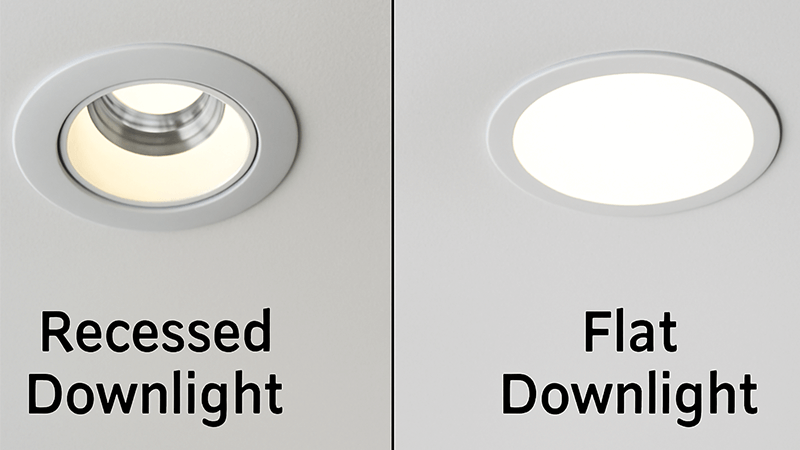
While both are called downlights, their design and application serve different purposes. When I consult with purchasing managers like Shaz, the first thing we clarify is the ceiling structure and the desired lighting effect, as this usually determines which type is better. A flat downlight is essentially a type of surface-mounted fixture, even though some slim models can be "recessed" into a junction box. The key difference lies in the position of the light source relative to the ceiling plane.
Core Differences Explained
Let’s break down the comparison into factors that matter for any project specification.
| Feature |
Recessed Downlight |
Flat Downlight (Surface-Mount/Slim) |
| Installation |
Requires a hollow ceiling cavity for the housing. |
Can be mounted on solid ceilings or junction boxes. |
| Visual Depth |
Creates a sense of depth; light source is hidden. |
Sits flush with the ceiling, creating a flat, uniform look. |
| Glare Control |
Excellent; the recessed position naturally shields the eye. |
Varies; can have more surface glare if not designed well. |
| Beam Shaping |
Highly versatile with different reflectors and lenses. |
Typically provides a wide, diffused flood of light. |
| Aesthetics |
Architectural, minimalist, professional. |
Ultra-modern, simple, discreet. |
| Best For |
Task lighting, accent lighting, high-end residential. |
General ambient lighting, low-ceiling areas, closets. |
The most critical difference from a performance standpoint is glare control. With a recessed downlight, the light source is set deep into the fixture. This design creates a high cut-off angle, meaning you have to be almost directly underneath the light to see the source. This is what we call good anti-glare design, and it’s why recessed lights feel so comfortable in a room. Flat downlights, on the other hand, have a light-emitting surface that is level with the ceiling. This makes them great for providing broad, even illumination but can create surface brightness that some people find distracting. For projects where visual comfort is a top priority, a well-designed recessed downlight is almost always my recommendation.
Why Use Recessed Downlights?
Your project demands clean lines and functional light. But with so many options, why choose recessed lights? They offer a unique combination of aesthetics and performance that other fixtures can’t match.
Recessed downlights are used to create a clean, uncluttered ceiling while providing versatile, high-quality illumination. They are perfect for achieving minimalist aesthetics, functional task lighting, and dramatic accent lighting without visible fixtures.
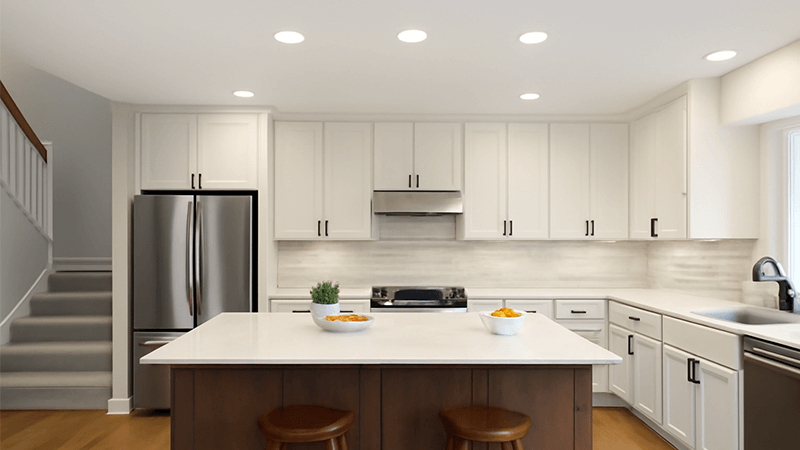
From my experience helping contractors and designers, the decision to use recessed downlights comes down to three main benefits: seamless aesthetics, functional versatility, and enhanced spatial perception. They are not just lights; they are architectural tools. When you want the focus to be on the room’s design, furniture, or artwork, recessed lights do their job without drawing attention to themselves. They integrate directly into the architecture of the space.
Key Advantages for Modern Spaces
Let’s explore the specific reasons why these fixtures are a staple in modern lighting design. I often walk clients through these points to ensure the lighting plan meets their goals.
-
Minimalist Design: The primary appeal is the clean ceiling line. By hiding the fixture’s body, you remove visual clutter. This is essential for minimalist, contemporary, and high-end residential or commercial spaces where every detail matters. In a project with a beautiful ceiling detail, the last thing you want is a bulky light fixture interrupting the view.
-
Lighting Versatility: Recessed downlights are not just for general lighting. With the right trim and beam angle, they can serve multiple functions in a single room:
- Ambient Lighting: Spaced evenly, they can provide overall illumination for a whole room.
- Task Lighting: Positioned over a kitchen counter, desk, or reading chair, they provide focused light for specific activities.
- Accent Lighting: Using gimbal (adjustable) trims, you can direct light to highlight artwork, architectural features, or retail displays.
-
Making Spaces Feel Larger: Surface-mounted or hanging fixtures can visually lower a ceiling and make a room feel more cramped. Because recessed lights are flush with the ceiling, they create an uninterrupted plane that enhances the sense of height and openness. I’ve seen this make a huge difference in apartments and offices with standard-height ceilings. It’s a simple trick to make a space feel more expansive and airy.
What Is the Difference Between Recessed and Normal Spotlights?
You need focused light, but the terms can be confusing. Is a recessed light the same as a spotlight? Choosing the wrong one can lead to poor lighting effects and unhappy clients.
A recessed downlight typically casts light downwards in a fixed position. A spotlight is designed to aim light at a specific object or area and is often adjustable. While some recessed lights can be spotlights, not all are.

This is a point of confusion I clarify often. Think of "recessed" as describing how a light is installed (hidden in the ceiling), while "spotlight" describes what the light does (creates a concentrated "spot" of light). The two are not mutually exclusive; you can have a recessed spotlight. However, there are key differences in their typical form and function. A standard recessed downlight is for general or task lighting, while a spotlight is specifically for accentuation.
Comparing Function and Form
For a purchasing manager like Shaz, knowing these distinctions is crucial for sourcing the right product for the right application. A client asking for "recessed lights" for an art gallery needs something very different from a client asking for them for an office hallway.
| Feature |
Standard Recessed Downlight |
Spotlight (Recessed or Track-Mounted) |
| Primary Function |
General or task lighting (downward). |
Accent lighting (directional). |
| Beam Angle |
Typically wider (36° to 60°) for broader coverage. |
Typically narrower (15° to 30°) for focused intensity. |
| Adjustability |
Usually fixed, pointing straight down. |
Almost always adjustable (gimbal, eyeball, or track head). |
| Typical Use Case |
Kitchens, hallways, offices, general room light. |
Art galleries, retail displays, architectural highlighting. |
| Visual Effect |
Creates pools of light on the floor or work surfaces. |
Creates a bright focal point on a vertical surface or object. |
The most important distinction is adjustability. A true spotlight gives you control over the direction of the light. In the recessed category, these are often called "gimbal" or "adjustable" downlights. The inner part of the fixture can be tilted and sometimes rotated, allowing you to aim the beam precisely. A standard fixed recessed downlight cannot do this. When my team develops a new product line, we always include both fixed and adjustable versions to cover all possible applications, from providing comfortable ambient light to creating dramatic highlights. Therefore, when specifying a project, always ask: is the goal to light up the space, or to light up something in the space? The answer will tell you whether you need a downlight or a spotlight.
Conclusion
Recessed downlights are the key to clean, modern, and functional lighting. By understanding their core features—from anti-glare design to adjustability—you can choose the perfect solution for any project.