Choosing where to put recessed lights can be confusing. The wrong choice can leave your space poorly lit, but getting it right creates the perfect atmosphere for any room.
Recessed downlights are typically installed to provide general lighting in main living areas like kitchens and living rooms. They are also used for task lighting over counters and for accenting artwork. The key is to place them based on the room’s function and desired mood.

So, you know the common rooms. But that’s just the start. The real skill is in understanding why these locations work and how to adapt the rules for your specific project. As a manufacturer, I’ve seen countless lighting plans, and the best ones always consider the purpose first. Let’s look at this more closely.
Where are recessed lights typically installed?
You know downlights are versatile, but where do they really shine? Placing them randomly just won’t work. The best spots combine function with design for a professional finish.
Recessed lights are typically installed for three main purposes: general ambient lighting, specific task lighting, and dramatic accent lighting. You’ll find them in ceilings for overall room brightness, over kitchen islands for tasks, or aimed at walls to highlight art.
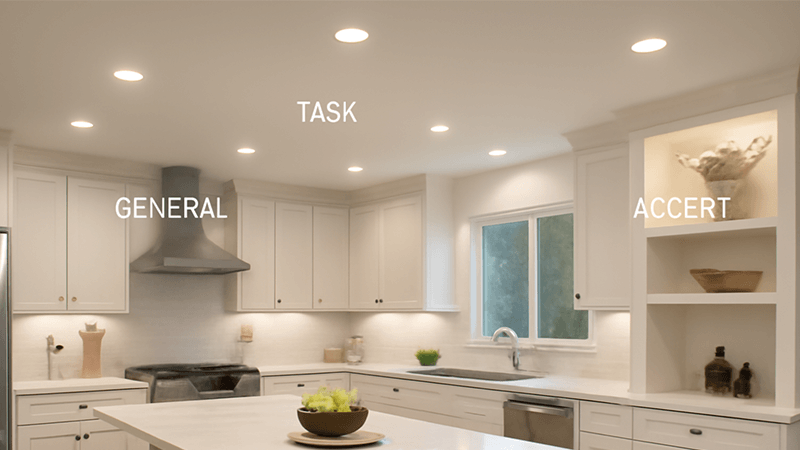
The location of a recessed downlight depends entirely on the job you want it to do. It’s not just about making a room bright. It’s about creating layers of light that make a space functional and beautiful. I always tell my clients, like Shaz, a purchasing manager I work with, to think about the light’s purpose before deciding on a location. This simple step separates an average lighting job from a great one. We can break these purposes down into three main categories.
General (Ambient) Lighting
This is the most common use. The goal here is to provide overall, uniform light for a whole room. You install the downlights in a grid pattern across the ceiling. This ensures that light spreads evenly, eliminating dark corners and shadows. This approach is perfect for spaces like living rooms, bedrooms, and open-plan offices where you need consistent brightness to navigate the area safely and comfortably. The key is proper spacing, which we’ll discuss later.
Task Lighting
Sometimes, you need focused, intense light for specific activities. This is where task lighting comes in. You install recessed lights directly above the area where a task is performed. Think about a kitchen counter where you chop vegetables, a desk where you do paperwork, or a reading chair. For these applications, you don’t need to light up the whole room. You just need a concentrated pool of light right where you need it. This makes tasks easier and reduces eye strain.
Accent Lighting
Accent lighting is all about creating drama and highlighting features. You can use adjustable recessed lights, often called "gimbals," to direct a narrow beam of light onto a specific object or architectural detail. This could be a piece of artwork, a textured stone wall, or a decorative plant. The goal is to draw the eye and create a focal point. Wall-washing is another technique, where lights are placed close to a wall to cast a smooth, even light down its surface, making a room feel bigger.
| Lighting Type |
Primary Goal |
Typical Location |
Spacing |
| General |
Uniform, overall brightness |
Grid pattern across ceiling |
Evenly spaced |
| Task |
Focused light for activities |
Directly above workspaces |
Clustered or single |
| Accent |
Highlight specific features |
Aimed at artwork, walls |
Based on the object |
Which rooms should have recessed lighting?
You see recessed lighting everywhere, but does that mean it belongs in every room? Some rooms benefit greatly from it, while others might need a different approach to feel right.
Recessed lighting is ideal for kitchens, bathrooms, hallways, and living rooms. These spaces benefit most from its clean look and functional versatility for general, task, and accent lighting needs.
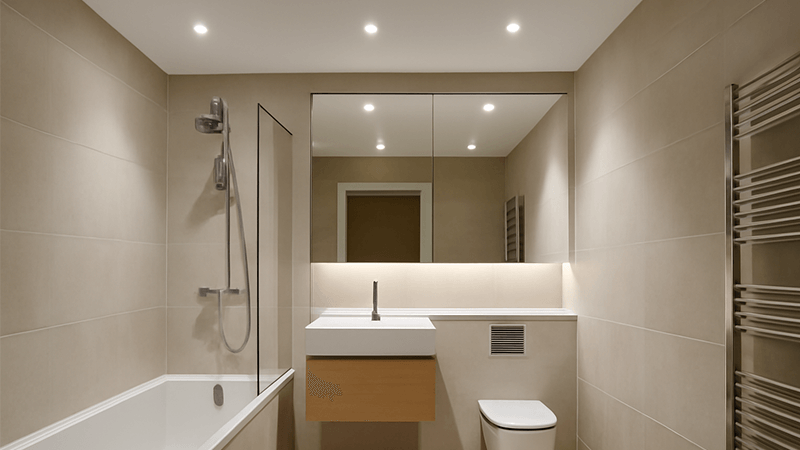
Choosing the right room for recessed lighting is just as important as choosing the light itself. While you can install them almost anywhere, they are more effective in some spaces than others. I remember a project where a client wanted recessed lights in a grand dining room with a very high, ornate ceiling. I advised against it, because a beautiful chandelier was a better fit for the room’s character. We used a few recessed lights to accent the walls, but the chandelier remained the star. It’s about finding a balance. Let’s explore which rooms are the best candidates.
Kitchens
The kitchen is perhaps the number one room for recessed lighting. It’s a workspace that demands excellent visibility. You can use a grid of downlights for general ambient light. Then, add more lights directly over the counters, the sink, and the island for powerful task lighting. This layered approach ensures the kitchen is bright, functional, and free of shadows, which is critical for safety when cooking.
Bathrooms
Bathrooms also benefit from recessed lighting, especially those with lower ceilings where hanging fixtures would feel crowded. Use a general light in the center of the room. Most importantly, place task lights over the vanity. I recommend placing one on each side of the mirror instead of directly overhead. This placement illuminates your face evenly and avoids casting unflattering shadows. Be sure to use fixtures rated for damp or wet locations.
Hallways and Corridors
Hallways are perfect for recessed lights. They provide clear, unobstructed illumination for safe passage. You don’t need hanging lights that people might bump into. Spacing them in a straight line down the center of the hallway creates a clean, guiding path. You can also use wall-washer downlights to make a narrow hallway feel wider and more spacious. It’s a simple, effective solution for these transitional spaces.
| Room |
Primary Use Case |
Why It Works Well |
| Kitchen |
General & Task Lighting |
Provides bright, shadow-free light for cooking and prep work. |
| Bathroom |
General & Task Lighting |
Offers a clean look and excellent vanity lighting without taking up space. |
| Hallway |
General & Accent Lighting |
Creates a safe, clear path and can make the space feel larger. |
| Living Room |
General & Accent Lighting |
Offers flexible control over mood and highlights architectural features. |
Can you install recessed lighting anywhere?
You have a lighting plan, but what about the ceiling itself? It seems simple to just cut a hole, but hidden obstacles like joists, pipes, or ducts can stop your project cold.
No, you cannot install recessed lighting just anywhere. You must consider ceiling structure, like joists and ducts, available clearance for the housing, and electrical wiring access. Specific fixture types are designed to overcome these common obstacles.
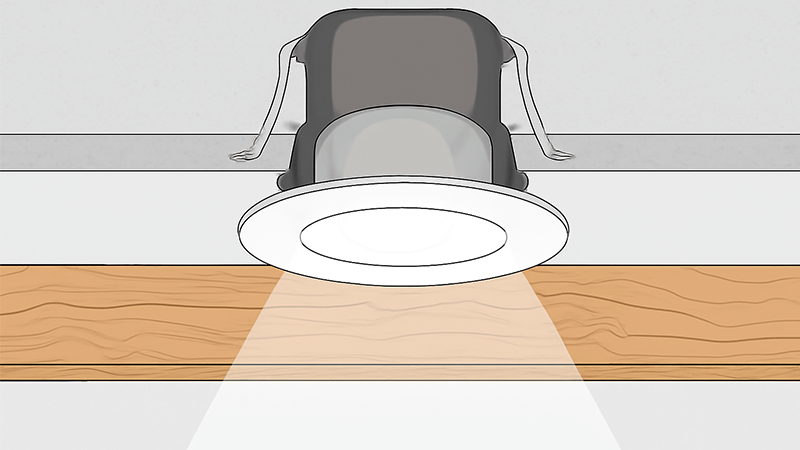
This question is more about the ‘how’ than the ‘where’. In my years of manufacturing, I’ve developed products specifically to solve installation problems. One of the biggest frustrations for installers is opening up a ceiling only to find a joist exactly where they planned to put a light. The good news is, we have solutions for almost every situation. But you must know what to look for before you start cutting holes. Understanding the physical limitations of the ceiling is a critical step.
Ceiling Joists
Ceiling joists are the wooden beams that support the ceiling and the floor above it. They are typically spaced 16 or 24 inches apart. A standard recessed light housing might not fit if a joist is in the way.
- New Construction Housing: These are used when you have open access to the ceiling frame. They have brackets that nail directly onto the joists.
- Remodel Housing: These are used for existing ceilings. They are installed from below and held in place by clips.
- Solution for Joists: If you hit a joist, you might have to move the light. Or, you can use specialized "pancake" or "wafer" style ultra-thin LED lights. These are so slim they can often be installed directly under a joist without needing a large can housing.
Clearance and Insulation
Recessed light housings generate heat. They need space around them for air to circulate. If you have insulation in your ceiling, you must use the correct type of housing.
- IC-Rated Housing: The "IC" stands for "Insulation Contact." These fixtures are designed to be safely buried in ceiling insulation.
- Non-IC Rated Housing: These housings require at least 3 inches of clearance from any insulation. They are typically used in ceilings without insulation. Using the wrong one is a serious fire hazard. I always stress this to my clients; safety must come first.
Other Obstructions
Beyond joists, you might find plumbing pipes, HVAC ducts, or electrical wiring in the ceiling. Always use a stud finder and, if possible, check the space from an attic or crawlspace before you begin. For very tight spaces with many obstructions, ultra-thin wafer lights are often the best and only solution.
| Obstacle |
Standard Solution |
Specialized Solution |
| Ceiling Joist |
Plan layout to avoid joists |
Use ultra-thin wafer lights |
| Insulation |
Use IC-Rated housing |
Create a sealed box around a Non-IC housing |
| Pipes/Ducts |
Relocate the light fixture |
Use ultra-thin wafer lights that need minimal depth |
How to layout recessed lights in living room?
You’ve chosen the living room, but how do you arrange the lights? A bad layout can create a "runway" effect or leave the seating area in the dark.
To layout recessed lights in a living room, start with a general lighting grid spaced evenly. A good rule of thumb is to divide the ceiling height by two to get the spacing between lights. Then, add task and accent lights where needed.

The living room is challenging because it serves so many purposes. It’s for relaxing, entertaining, watching TV, and sometimes even working. Your lighting layout needs to be just as flexible. I always advise starting with a plan on paper. Don’t just start installing lights. A good layout provides balanced general light while keeping the focus on the living areas, not the empty floor space. A few simple rules can make all the difference and give you a professional-looking result.
Start with General Lighting
The foundation of your layout is general, ambient light. The goal is an even wash of light throughout the room.
- Calculate Spacing: A common formula is to take your ceiling height in feet and divide it by two. For an 8-foot ceiling, you would space your lights about 4 feet apart (8 / 2 = 4). This is just a starting point.
- Wall Distance: Place your first row of lights about half the spacing distance from the wall. So, if your lights are 4 feet apart, place the first row about 2 feet from the wall. This prevents casting harsh shadows, a common mistake called "scalloping."
- Create a Grid: Use these measurements to draw a symmetrical grid on your ceiling. This will be your base layer of light.
Add Task and Accent Layers
Once your general lighting grid is planned, think about specific activities and features.
- Reading Nook: Place a single recessed light directly over the reading chair.
- Fireplace or Artwork: Use adjustable gimbal lights to highlight these features. Position them so the light beam hits the object at a 30-degree angle for the best effect.
- Wall Washing: To make the room feel larger and brighter, place a row of lights 12-18 inches from a feature wall and space them closely together. This creates a beautiful, uniform wash of light down the wall.
Don’t Forget Dimmers
The single most important accessory for living room lighting is a dimmer switch. The living room’s function changes throughout the day. You want bright light for cleaning or gatherings, but soft, low light for watching a movie. Dimmers give you complete control over the mood of the room. I always tell my partners that selling a lighting system without a dimmer is leaving half the value on the table.
| Layout Step |
Purpose |
Quick Tip |
| Calculate Spacing |
Create even general light |
Ceiling Height (ft) / 2 = Spacing (ft) |
| Set Wall Distance |
Avoid shadows on walls |
Spacing (ft) / 2 = Distance from Wall (ft) |
| Add Accent Lights |
Create focal points |
Use adjustable gimbals aimed at a 30-degree angle. |
| Install Dimmers |
Provide mood control |
Put all lighting layers on separate dimmer switches for maximum flexibility. |
Conclusion
Recessed lighting placement depends on function, room type, and ceiling structure. Plan your layout with layers for general, task, and accent lighting to create a beautiful and functional space.