Struggling with harsh, uncomfortable light from your downlights? This glare can cause eye strain and headaches. The solution lies in choosing luminaires designed from the start to prevent glare.
To reduce glare from downlights, select fixtures with a deep-recessed light source, a high cut-off angle, and quality optics like a black anti-glare reflector. Proper placement and using dimmers also help. Aim for a Unified Glare Rating (UGR) below 19 for comfortable indoor environments.
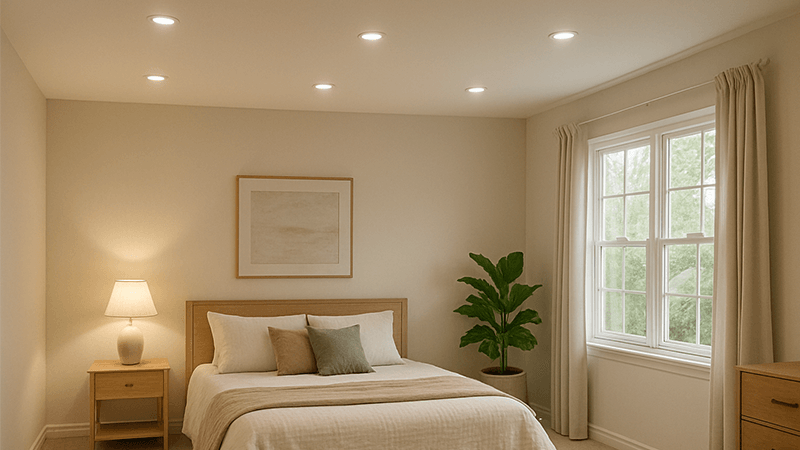
When I first started in this industry, working on the factory floor, our focus was simple: make lights brighter. But as I started my own company, iPHD, I quickly learned from clients like Shaz in the UAE that brightness isn’t everything. Quality of light is what truly matters. I realized that the real solution to glare isn’t about reducing light that’s already there. It’s about preventing bad light from being created in the first place. It’s a shift from just lighting up a room to carefully managing the entire light environment. Let’s explore how you can achieve this.
How to reduce the glare of downlights?
Your downlights create blinding spots and ruin the room’s atmosphere. This harsh light makes spaces unusable. You can solve this by choosing downlights with built-in anti-glare features.
To effectively reduce downlight glare, you need to focus on the fixture’s design. Choose downlights where the light source is deeply recessed. Also, look for features like black baffles or honeycomb louvers. These elements trap stray light and direct it only where it’s needed, preventing it from shining into your eyes.
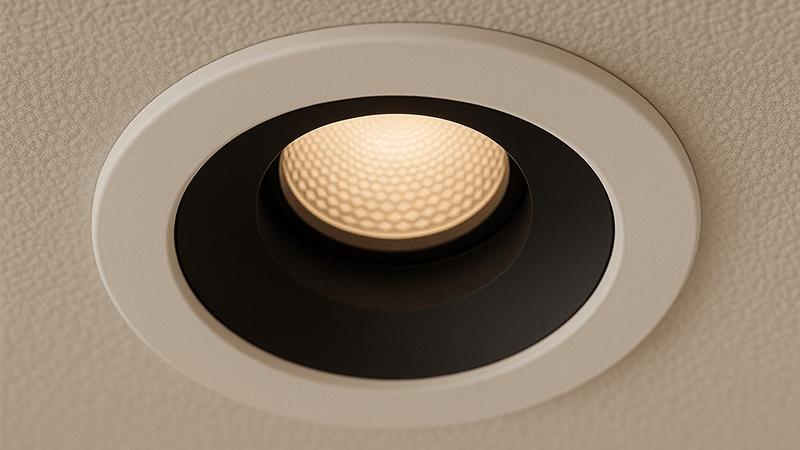
The most effective way to combat glare is to control the light at its source. This is a core principle we follow at iPHD. It’s not about adding a filter later; it’s about intelligent design from the very beginning. For a purchasing manager like Shaz, understanding these design details is key to sourcing products that deliver real comfort and quality, not just lumens. Let’s break down the specific design elements that make a downlight "anti-glare."
Key Downlight Design Features for Glare Control
The physical construction of the downlight is your first line of defense. A well-designed luminaire guides light precisely. The goal is to see the light, not the source.
- Deep-recessed Light Source: The further the LED chip is set back into the fixture, the higher the cut-off angle. This means you have to be almost directly underneath the light to see the source, dramatically reducing direct glare.
- Reflector & Baffle Design: The inner cone, or baffle, plays a huge role. A matte black baffle absorbs stray light rays that would otherwise cause glare. A shiny or white baffle, while slightly more efficient, reflects light in all directions, increasing the chance of glare.
The Role of Optics and Lenses
Beyond the physical housing, the optics shape the light beam.
- Lenses vs. Reflectors: High-quality Total Internal Reflection (TIR) lenses can provide excellent beam control with minimal light spill, which helps reduce indirect glare.
- Honeycomb Louvers: This is an accessory that can be added to some downlights. It’s a grid-like filter that sits in front of the light source and acts like a series of tiny black baffles, further refining the light and cutting off glare from wider viewing angles.
Here is a simple comparison of different methods:
| Anti-Glare Method |
Glare Reduction |
Light Output Efficiency |
Best Use Case |
| Deep Recessed Source |
High |
High |
General purpose, essential for comfort |
| Black Baffle/Reflector |
Very High |
Slightly Reduced |
Spaces where visual comfort is top priority |
| Honeycomb Louver |
Excellent |
Moderately Reduced |
Task lighting, accent lighting, art galleries |
| Frosted/Diffused Lens |
Medium |
High |
Ambient lighting, not for focused tasks |
By specifying these features, you are moving from simply buying a "light" to investing in a comfortable "light environment."
How do you reduce glare from LED lights?
LEDs are powerful and efficient, but their intensity can cause severe glare. This makes them uncomfortable to live and work with. The key is managing this intensity with better fixture design and controls.
To reduce glare from LED lights, use fixtures with good diffusers or lenses that soften the light. Also, installing dimmers gives you control over the brightness. For directional lights like downlights, choosing designs with deep-set LEDs and anti-glare reflectors is the most effective solution.
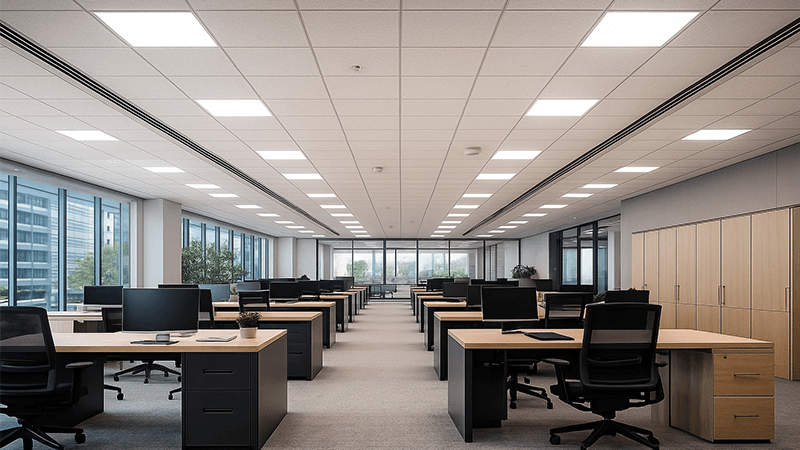
LED technology gave us incredible efficiency, but it also presented a new challenge: managing the intense, pinpoint source of light. When I talk to project contractors, I always emphasize that the LED chip itself is only one part of the equation. The real magic happens in how you package and control that light. It’s about taming the raw power of the LED to create a pleasant and useful beam of light. Simply swapping an old bulb for a cheap LED downlight often leads to a room filled with uncomfortable glare. Let’s look at the specific strategies to tame LED glare across different types of fixtures.
Managing the Light Source
The problem often starts with the LED itself.
- COB vs. SMD: Chip-on-Board (COB) LEDs provide a single, uniform point of light that is often easier to control with precision optics compared to Surface Mount Device (SMD) LEDs, which are multiple small points of light. For high-quality downlights, a COB source paired with a good reflector or lens is typically superior for glare control.
- Diffusion: For general lighting fixtures like panels or linear lights, the diffuser is critical. A poor diffuser creates hotspots and visible dotting from the LEDs. A high-quality opal or micro-prismatic diffuser spreads the light evenly, creating a soft, uniform surface that is much more comfortable to look at.
Using External Controls
Controlling the light output is just as important as the fixture itself.
- Dimming is Essential: Not all light is needed all the time. Installing dimmable drivers and compatible dimmer switches is one of the easiest and most effective ways to reduce glare. You can adjust the light output to the perfect level for the time of day or the task at hand. This not only improves comfort but also saves energy.
Here’s how these strategies apply to different LED fixture types:
| Fixture Type |
Primary Glare Source |
Recommended Solution |
| Downlights |
Direct view of the intense LED chip |
Deep recess, black baffle, quality TIR lens |
| LED Panels |
Uneven brightness, visible LED dots |
High-transmittance opal or micro-prismatic diffuser |
| Spotlights |
Narrow, high-intensity beam |
Use of snoots, honeycomb louvers, and proper aiming |
| Linear Strips |
Direct view of individual LED chips |
Mount in an aluminum channel with a frosted diffuser |
Ultimately, reducing glare from any LED light is about adding layers of control between the powerful chip and your eyes.
How to stop glare from spotlights?
Spotlights are great for highlighting features, but they often create harsh reflections. This distracting glare on shiny surfaces or artwork can ruin the intended effect and be visually jarring.
To stop glare from spotlights, carefully aim the beam to avoid hitting reflective surfaces directly. Use accessories like honeycomb louvers or snoots to control light spill. Also, choosing a spotlight with a wider beam angle or using a diffuser lens can soften the light and reduce harshness.

I remember visiting a client’s newly opened retail store. They had spent a fortune on beautiful displays, but the spotlights they used were creating terrible veiling glare on the glass cases. You could barely see the products inside. This is a common problem. Spotlights, by their nature, are intense and directional. Their job is to create contrast and draw attention. But without proper control and aiming, they create more problems than they solve. The solution is not to use fewer spotlights, but to use them more intelligently. It’s about precision and control.
Mastering the Art of Aiming
This is the most critical and often overlooked step.
- Angle of Incidence: The fundamental rule is that the angle of reflection equals the angle of incidence. If you aim a spotlight directly at a picture frame with glass, it will reflect right back at the viewer. Instead, aim the light from a steeper angle (e.g., from higher up and closer to the wall) so the reflection is directed down towards the floor, away from eye level.
- Wall Grazing vs. Wall Washing: Grazing a textured wall (like brick or stone) with a narrow beam from a close position can create beautiful shadows and highlight texture. Washing a smooth wall with a wider beam from further away creates even, flat illumination. Understanding which technique to use prevents unwanted "hot spots" and glare.
Using Light Shaping Accessories
These tools are essential for any professional lighting project.
- Honeycomb Louvers: As mentioned before, these are fantastic for spotlights. They significantly reduce peripheral light spill, ensuring the beam only goes where you want it. This prevents the light from accidentally hitting a viewer’s eye or a reflective surface.
- Snoots and Barn Doors: Snoots are tubes that fit over the spotlight to create a very narrow, circular beam. Barn doors have adjustable flaps that allow you to shape the light into a square or rectangular pattern. These are perfect for precisely illuminating an object without any light spilling onto the background.
This table shows which accessory to use for a specific goal:
| Accessory |
Primary Function |
Ideal Application |
| Honeycomb Louver |
Reduces side glare and light spill |
General accent lighting, preventing eye-level glare |
| Snoot |
Creates a tight, circular beam |
Highlighting small objects, creating dramatic spots |
| Barn Doors |
Shapes the light beam into squares/rectangles |
Illuminating artwork, signs, or architectural features |
| Diffusion Lens |
Softens the beam and reduces harsh shadows |
When a less intense, softer accent light is needed |
Using spotlights effectively is a craft. It combines a bit of physics with an artistic eye. By mastering aiming and using the right accessories, you can create stunning visual effects without the distracting glare.
How to stop glare from ceiling light?
General ceiling lights often cast a wide, uncontrolled glare. This can make a room feel flat and uncomfortable, especially in spaces with lower ceilings or reflective floors.
To stop glare from a ceiling light, choose fixtures with a diffuser, like an opal or prismatic cover, to soften and scatter the light. For open fixtures, use bulbs with a frosted coating. Installing a dimmer switch to control brightness is also a highly effective method for reducing glare.
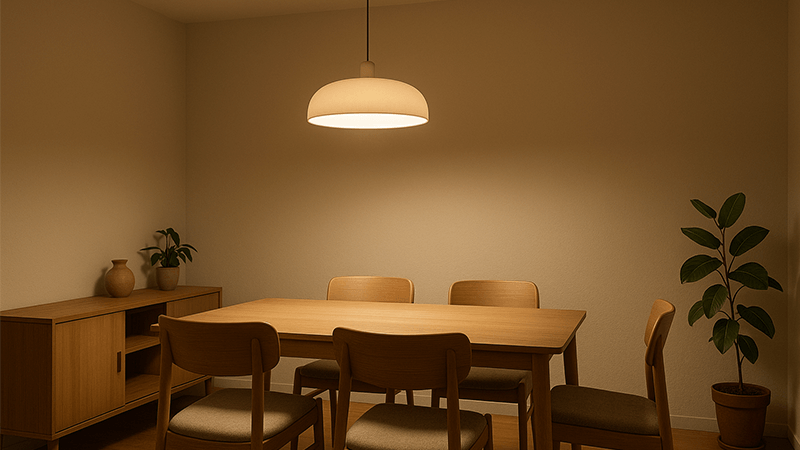
A common mistake I see is people choosing a ceiling light based only on its look when it’s turned off. But the real test is how it performs when it’s on. A bare bulb in a simple fixture might look minimalist, but it’s a major source of glare. The goal of a general ceiling light is to provide comfortable, ambient illumination. It should be a source of soft light that fills the room without calling attention to itself. This comes down to one main principle: diffusion.
The Power of Diffusion
Diffusion is the process of scattering light to create a softer, more uniform output.
- Opal/Frosted Diffusers: This is the most common method. A piece of frosted glass or plastic (like PMMA or polycarbonate) is placed over the light source. It hides the direct view of the bulb or LEDs and transforms the harsh pinpoint of light into a smooth, glowing surface. The trade-off is a slight reduction in total light output, but the gain in visual comfort is immense.
- Prismatic Diffusers: These diffusers have a textured, prism-like surface. They are engineered to direct light downwards more efficiently than a simple opal diffuser while still reducing high-angle glare. You often see these in office settings (as part of troffer or panel lights) where controlling glare on computer screens is critical.
Indirect Lighting Techniques
Another powerful strategy is to hide the light source completely.
- Cove Lighting: This involves placing linear LED strips in a ledge or recess near the ceiling. The light is directed upwards, bouncing off the ceiling and back down into the room. This creates an incredibly soft, even, and completely glare-free ambient light. It makes the space feel larger and more open.
- Uplighting Fixtures: Some ceiling fixtures are designed to direct most of their light upwards. Like cove lighting, this uses the ceiling as a giant reflector to provide comfortable, indirect illumination.
Here’s how to choose the right approach for your space:
| Method |
Visual Effect |
Efficiency |
Complexity/Cost |
| Opal Diffuser Fixture |
Soft, even glow |
Good |
Low |
| Prismatic Diffuser |
Bright, controlled downward light |
Very Good |
Low-Medium |
| Cove Lighting (Indirect) |
Very soft, shadow-free ambient light |
Moderate |
High |
| Uplighting Fixture |
Soft ambient light, highlights ceiling |
Moderate |
Medium |
For any project, I advise my partners to consider a layered approach. Use indirect cove lighting for beautiful ambient light, and then add well-designed, anti-glare downlights for task and accent lighting where needed.
Conclusion
Solving glare is not about reducing light, but about designing it correctly from the source. It’s a change from simply illuminating a space to truly managing the light environment.