Choosing the wrong bathroom lights is a common worry. It feels like a choice between safety and budget. This confusion can lead to costly mistakes or unsafe installations.
No, not all bathroom downlights must be IP65. The required IP rating depends entirely on where the light is installed. You only need IP65 for downlights placed in areas directly hit by water jets, like inside a shower enclosure. Other areas are fine with lower ratings.
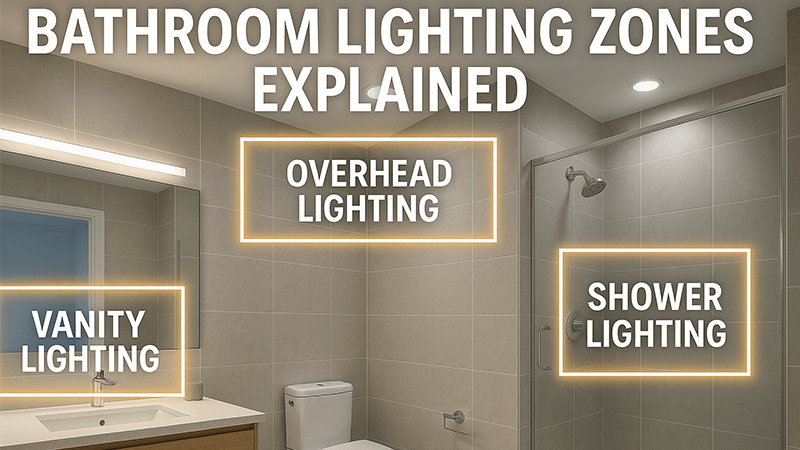
I’ve seen many clients struggle with this question. They either spend too much on high-spec lights for the entire bathroom or, worse, install fixtures that aren’t safe for wet areas. It’s a common point of confusion in the lighting industry. The key isn’t to buy the highest-rated product for every spot; it’s to understand the environment and choose smartly. Let’s break down exactly what you need to know to make the right choice every time, ensuring both safety and cost-effectiveness for your projects.
Do bathroom lights have to be IP65?
You’re trying to source lights for a bathroom project. The costs add up when you specify IP65 for every fixture. Is this really necessary or are you overspending?
No, most bathroom lights do not have to be IP65. This high rating is only required for Zone 1, areas likely to get splashed directly. For general ceiling lights in most bathrooms (Zone 2 or outside zones), an IP44 rating is completely safe and standard.
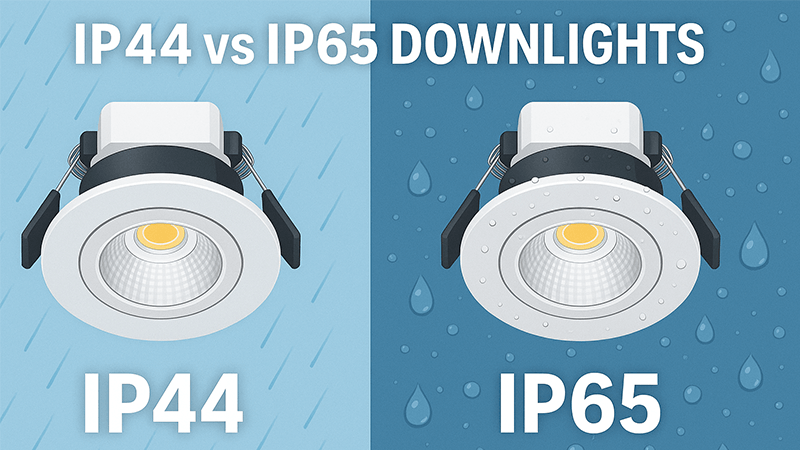
The idea that every light in a bathroom needs a fortress-like seal is a common misunderstanding. I remember a hotel project where the initial plan specified IP65 downlights throughout every single bathroom. The purchasing manager, much like you, was concerned about the budget. We sat down and reviewed the lighting plan against the bathroom zone regulations. By simply changing the lights outside the direct shower area to IP44, we maintained complete safety and compliance but saved the client nearly 30% on their lighting budget for those rooms. The project was a success, and it highlighted a simple truth: smart specification is about precision, not just power. You don’t use a sledgehammer to crack a nut. The same logic applies here. The goal is to match the protection level to the actual risk.
The Misconception of Universal IP65
Many believe that because a bathroom is a "wet room," everything in it must be completely waterproof. This leads to over-specifying products, which increases costs without adding any real safety benefit. The reality is that bathrooms are divided into different zones based on their proximity to water sources.
Why IP44 is Often Enough
For most of the bathroom ceiling, an IP44-rated downlight is perfectly adequate.
- Protection from Splashes: The ‘4’ in IP44 means the fixture is protected against water splashing from any direction. This covers condensation and the occasional splash, which is the most you’ll get on a ceiling outside the shower.
- Solid Object Protection: The first ‘4’ means it’s protected from solid objects larger than 1mm, so it’s safe from insects and other small debris.
- Cost-Effective: IP44 fittings are generally more affordable than their IP65 counterparts, allowing you to allocate your budget more effectively across a project.
Choosing the correct IP rating is about being an expert, not just being cautious. It shows you understand the regulations and can deliver a safe, compliant, and cost-effective solution for your client.
What IP rating do you need for bathroom downlights?
You need to select downlights for a bathroom installation. Picking the wrong IP rating can lead to failed inspections or, even worse, a serious safety hazard for the end-user.
The IP rating you need depends on the bathroom zone. For Zone 0 (inside the bath/shower), you need IP67. For Zone 1 (above the bath/shower), you need IP65. For Zone 2 (areas around the bath/shower/sink), IP44 is sufficient. Outside these zones, no IP rating is required.
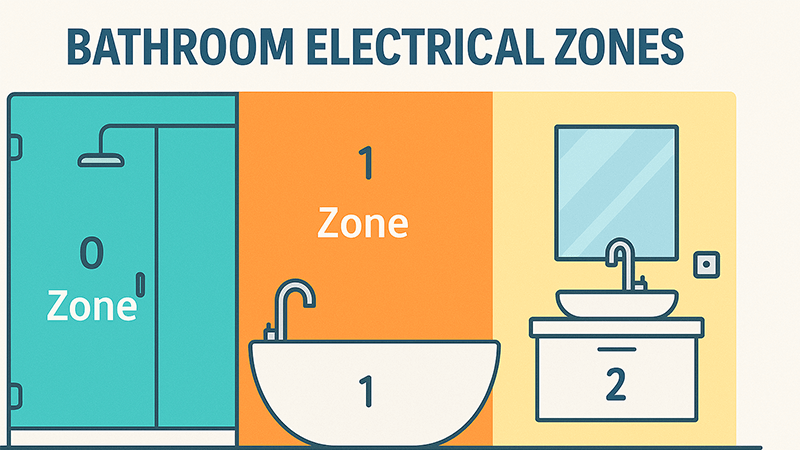
Understanding the specific requirements of each zone is the most important part of specifying bathroom lighting. It’s not just about passing an inspection; it’s about ensuring long-term safety and performance. Think of these zones as different levels of risk. You wouldn’t wear a swimsuit in a light drizzle, and you wouldn’t use just an umbrella in a typhoon. The lighting protection should match the level of water exposure expected in each specific area. I always use a simple table to explain this to my clients, and it clears up any confusion immediately. It turns a complex set of rules into a simple, logical guide for making safe and smart purchasing decisions.
A Clear Guide to Bathroom Zones and IP Ratings
To make it simple, here is a breakdown of the bathroom zones and the minimum IP rating required for each.
| Zone |
Location Description |
Minimum IP Rating |
Required Voltage |
| Zone 0 |
Inside the bathtub or shower basin itself. Any fitting here would be submerged. |
IP67 |
Max 12V (SELV) |
| Zone 1 |
The area directly above the bath or shower, up to a height of 2.25m from the floor. |
IP65 |
Max 12V (SELV) |
| Zone 2 |
The area stretching 0.6m outside the perimeter of the bath/shower and up to 2.25m from the floor. Also includes the area around a sink. |
IP44 |
230V is acceptable |
| Outside Zones |
Any area outside of zones 0, 1, and 2. This is most of the bathroom for many layouts. |
No IP rating required |
230V is acceptable |
Practical Application for Purchasing Managers
When you receive a lighting plan, the first thing to do is map the fixture locations to this zone chart.
- Identify Shower/Bath Areas: Pinpoint all downlights located directly within or above the shower or bathtub. These are your Zone 0 and Zone 1 lights and require the highest IP ratings (IP67/IP65).
- Check the Perimeter: Look for lights within the 0.6m perimeter of the bath, shower, and sink. These are Zone 2 lights and need at least IP44.
- The Rest of the Room: Any lights on the ceiling or walls outside these defined areas can be standard, non-IP-rated fixtures. However, using IP44 throughout these "outside" areas is good practice to protect against general humidity and condensation.
This methodical approach ensures every light you purchase is fit for purpose, safe, and cost-effective.
What happens if IP65 gets wet?
You’ve installed an IP65-rated downlight. You know it’s for wet areas, but you’re concerned about what happens during and after it gets directly sprayed with water.
An IP65-rated fixture is designed to get wet. It is protected against low-pressure water jets from any direction. When it gets wet, the water will not penetrate the enclosure and reach the electrical components inside, ensuring the light continues to operate safely without short-circuiting or posing an electrical risk.
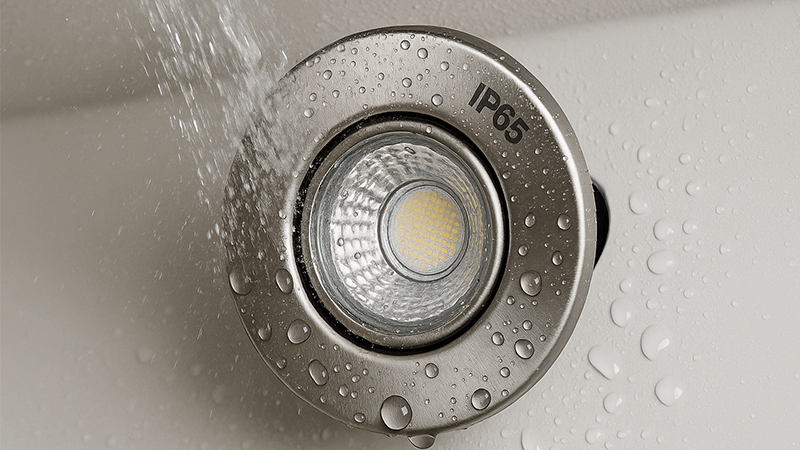
The ‘IP’ in IP rating stands for Ingress Protection. It’s a standard that we in the manufacturing industry take very seriously. An IP65 rating isn’t just a suggestion; it’s a guarantee backed by rigorous testing. I’ve personally overseen these tests in our factory. We subject the downlights to powerful water jets from multiple angles for several minutes. We then open them up to check for even the slightest trace of moisture. If a single drop gets inside, it fails the test. So, when you install an IP65 fixture, you can be confident that it is built to handle direct contact with water from a shower head. The seals and gaskets are specifically engineered to create a watertight barrier, protecting the driver and LED chip from any damage or failure caused by water ingress.
Breaking Down the IP65 Rating
The two digits in an IP rating have specific meanings, and understanding them builds confidence in the product’s capability.
What IP65 Protects Against in a Bathroom
- Direct Shower Spray: The primary purpose of IP65 in a shower is to withstand direct spray from the showerhead without any water getting inside.
- Steam and Condensation: The tight seals that keep water jets out are also extremely effective at preventing steam and moisture from entering the fitting over time. This prevents corrosion and electrical failures.
- Cleaning: The fixture can be safely wiped down with a wet cloth or even lightly sprayed during cleaning without risk.
In short, an IP65-rated light that gets wet is simply performing its job as designed. There is no risk to the light itself or to the user, provided it has been installed correctly.
Is IP65 enough for a shower?
You are sourcing lights for a project that includes walk-in showers. You need to be absolutely certain that the downlights you choose are safe and compliant for this very wet environment.
Yes, an IP65 rating is the standard and sufficient rating for downlights installed in a shower area (Zone 1), which is the space directly above the shower tray or bath up to 2.25m. It protects against the water jets from a typical showerhead, ensuring safe and reliable operation.
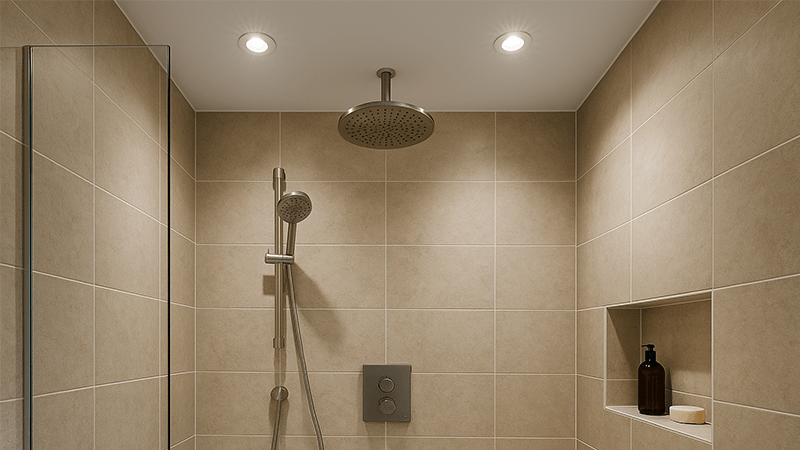
For any area inside a shower enclosure, IP65 is the specification I always recommend and supply. It is the industry standard for a reason. This rating provides complete protection against the conditions found in a typical shower. The only exception is if a light were to be installed on the floor or low on the wall of a shower where it could be submerged in pooled water. In that highly unusual case (Zone 0), you would need to upgrade to an IP67-rated fixture. But for ceiling-mounted downlights in 99.9% of all shower installations, IP65 is the correct and safe choice. It offers the perfect balance of protection needed to handle daily shower use for years without any issues.
Why IP65 is the Gold Standard for Showers (Zone 1)
The conditions inside a shower are very specific. You have direct water spray, high humidity, and lots of steam. An IP65-rated downlight is engineered to handle all of these factors.
- Protection from Water Jets: As we’ve discussed, the ‘5’ in IP65 guarantees protection from low-pressure water jets. A standard domestic showerhead falls squarely into this category. The light can be sprayed directly and will not allow water to enter.
- Durability against Steam: The dust-tight seal (the ‘6’) also means the fixture is hermetically sealed against fine particles. This makes it extremely effective at keeping out steam and water vapor, which can cause corrosion and short circuits in lesser-rated lights over time.
When Might You Need More? IP67 Explained
It’s important to know the limits. While IP65 is perfect for shower ceilings, it is not designed for submersion.
- IP65 (Jet Proof): Can withstand jets of water.
- IP67 (Immersion Proof): Can be submerged in water up to 1 meter deep for 30 minutes.
You would only need an IP67-rated light in a bathroom if you were placing it in Zone 0. This means it would be physically inside the bathtub or on the floor of a wet room shower where it could sit in standing water. For a downlight on a standard shower ceiling, this is never the case, making IP65 the correct and fully compliant choice. Specifying IP67 for a shower ceiling would be over-engineering and an unnecessary expense.
Conclusion
In summary, you don’t need IP65 everywhere. Match the IP rating to the bathroom zone. This ensures safety, complies with regulations, and is the most cost-effective approach for any project.