One faulty downlight brings down an entire circuit, causing client complaints and costly repairs. Understanding series versus parallel wiring is the simple fix that protects your reputation and budget.
For downlights, especially modern LED types, parallel wiring is almost always the correct choice. It ensures that if one light fails, the others on the same circuit remain lit. This provides much greater reliability and makes troubleshooting easier, which is critical for any professional installation.
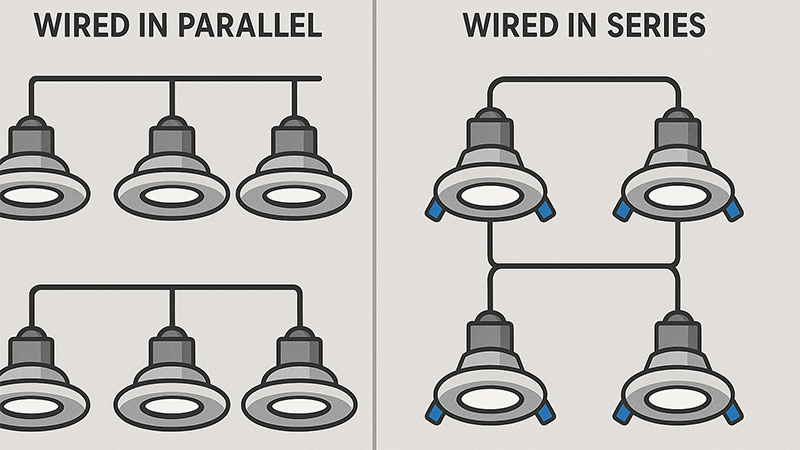
The choice seems clear, but the "why" is what separates a good purchasing manager from a great one. It’s a detail that impacts everything from performance to the long-term cost of ownership. I’ve seen firsthand how this one decision can make or break a project’s success. Let’s explore this further to make sure you’re making the most informed choice for your clients.
Is it better to wire LED lights in series or parallel?
Choosing new LED lights can be tricky. Some cheaper options use a wiring method that guarantees they will fail completely, forcing you to buy more. Let’s make sure that doesn’t happen.
Parallel wiring is far better for almost all general LED lighting applications. Each LED light gets the full circuit voltage, ensuring consistent brightness and performance. Most importantly, it creates a reliable system where the failure of one light does not affect the others, preventing total blackouts.
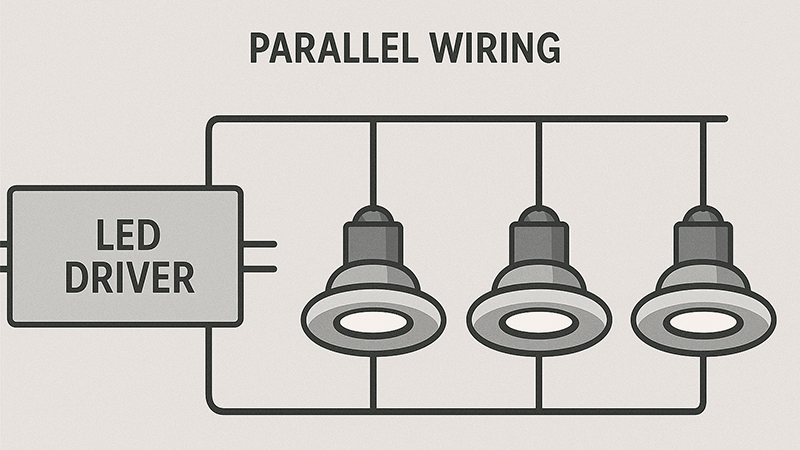
As a manufacturer, I see the internal workings of these products every day. The decision between series and parallel isn’t just a technical detail; it’s a statement about a manufacturer’s commitment to quality. When we design a new LED product, the circuit layout is one of the first things we finalize. For us at Upward Lighting, the choice is always parallel for our main lighting products. This ensures reliability.
The "Planned Obsolescence" Trap
Some manufacturers, especially in the low-cost segment, deliberately use series circuits. I call this the "planned obsolescence trap." In a series circuit, if one tiny LED chip fails, the entire circuit breaks. The light fixture goes dark and becomes useless. This forces the customer to buy a replacement. It’s a business model built on failure, not quality. A quality manufacturer will use a parallel design. If one LED chip fails in a parallel circuit, the others stay on. The fixture might have a small dark spot, but it continues to provide light.
Voltage and Brightness Consistency
Another key factor is performance. Here’s a simple breakdown of how the wiring choice affects the lights:
| Feature |
Series Wiring |
Parallel Wiring |
| Voltage |
Voltage is divided among all lights. |
Each light receives the full source voltage. |
| Brightness |
Can be uneven. If lights have different resistances, brightness will vary. |
Consistent brightness across all lights. |
| Adding Lights |
Adding more lights dims all of them. |
Adding more lights doesn’t affect the brightness of others (up to driver capacity). |
| Failure Impact |
One light fails, all lights go out. |
One light fails, the rest stay on. |
For a professional like Shaz in the UAE, managing large-scale projects, consistent brightness and reliability are non-negotiable. Imagine explaining to a client why an entire hallway is dark because of one faulty light. Parallel wiring completely avoids this scenario, protecting your project’s integrity and your professional reputation.
Is it better to wire in series or parallel?
You want a reliable electrical system that is easy to maintain. But a simple wiring choice can create a maintenance nightmare, where finding one small fault takes down everything.
Parallel wiring is better for reliability and ease of maintenance in most applications. In a parallel circuit, each device has its own path to the power source. This keeps the system running even if one component fails and simplifies troubleshooting by isolating the problem.
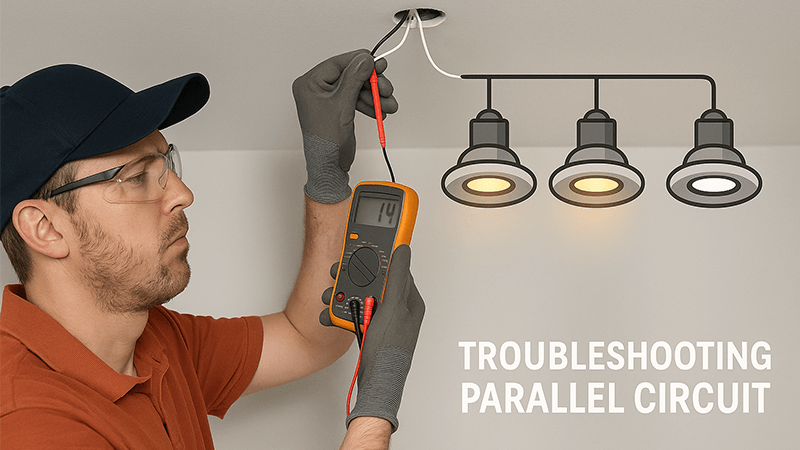
Let’s move beyond just lights and think about the electrical principles. This concept applies to any set of components in a circuit. I remember working on a custom project for a client in Dubai. They needed a complex display with hundreds of small light points. The original design they were shown by another company used a series-parallel mix. It was complex and had multiple points of failure.
I explained to them the risk. We redesigned it using a purely parallel system with multiple drivers. Yes, it required slightly more wire and a few more drivers, but the trade-off was immense. Now, if one light point fails, it’s an isolated issue. The maintenance team can easily spot the non-working light and replace it without affecting the rest of the display. They don’t need to test an entire string of lights to find the single faulty one.
Series Wiring: A Chain Reaction
- Think of a series circuit as a single-lane road. All the electricity (traffic) must flow through every single component (town). If there’s a roadblock in one town, the entire road shuts down.
- Current: The current is the same through every component.
- Voltage: The total voltage from the source is divided among the components.
- Resistance: The total resistance is the sum of all individual resistances.
R_total = R1 + R2 + ...
Parallel Wiring: Multiple Paths
- Think of a parallel circuit as a highway with multiple lanes. Traffic can choose different lanes to get to the same destination. If one lane is blocked, traffic can simply use the other lanes.
- Current: The total current from the source is split among the different branches.
- Voltage: The voltage across each branch is the same as the source voltage.
- Resistance: The total resistance is less than the smallest individual resistance.
1/R_total = 1/R1 + 1/R2 + ...
For any project where uptime and ease of maintenance are priorities, parallel is the clear winner. The small upfront investment in more wire or components pays for itself by preventing costly downtime and simplifying repairs.
Should recessed lights be wired in parallel or series?
You’re planning a recessed lighting layout for a clean, modern look. But if they’re wired incorrectly, one burnout could darken the whole room, ruining the effect and creating a major hassle.
Recessed lights must be wired in parallel. This ensures every light receives the full line voltage for uniform brightness. More importantly, if one bulb or fixture fails, all the other lights on the circuit will continue to operate normally, which is essential for safety and convenience.
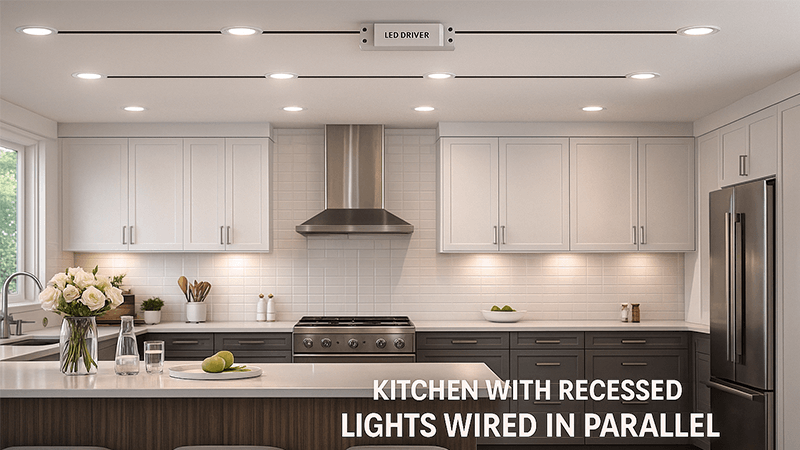
When I started my career in an LED factory, one of the first things I learned was the practical difference between lab theory and real-world application. In the lab, we could build series circuits for testing specific LED arrays. But on the production floor, for products meant for homes and businesses, everything was designed for parallel connection. Recessed lights are a perfect example of this. They are part of a home’s infrastructure. You expect them to work reliably for years.
Imagine a homeowner trying to figure out why their kitchen lights are all out. With series wiring, they might change a bulb, and nothing happens. They might think the switch is broken or there’s a major electrical fault. In reality, it could just be one bad bulb somewhere in the chain. This is a terrible user experience.
With parallel wiring, the problem is obvious: one light is out. The solution is simple: replace that one light.
Installation Best Practices for Recessed Lights
Wiring recessed lights in parallel is a standard practice for electricians. The method is often called "daisy-chaining," but it’s important to understand how it maintains a parallel circuit.
- How it Works: The power feed goes into the first light’s junction box. From that same box, a new wire runs to the next light, and so on. Even though the lights are connected in a line, the electrical connections inside each junction box are in parallel.
- Voltage Consistency: Each light taps into the main power line directly, so each one gets the same 120V or 240V (depending on the region). This is crucial for consistent light output.
- Safety Codes: In most places, electrical codes mandate this parallel structure for permanent lighting fixtures like recessed lights. Using a series circuit for line-voltage lighting would be a code violation and a significant safety hazard.
A Quick Comparison for Recessed Lighting
| Wiring Method |
Pros |
Cons |
Verdict for Recessed Lights |
| Series |
Uses slightly less wire. |
One failure causes total outage. Uneven brightness. Safety hazard. |
Never use. Not compliant with electrical codes for this application. |
| Parallel |
Highly reliable. Consistent brightness. Easy to troubleshoot. Safe. |
Uses slightly more wire. |
Always use. This is the industry standard and the only correct method. |
As a purchasing manager, ensuring the products you source are designed for standard parallel installation is critical. It guarantees they will be compatible with standard building practices and meet the safety and performance expectations of your clients.
Are light bulbs wired in series or parallel?
You screw in a new light bulb, and it works perfectly. You rarely think about the wiring behind the wall. But that wiring determines if your home stays lit or goes dark unexpectedly.
In a building’s electrical system, light bulbs and fixtures are always wired in parallel. This standard practice ensures that each light socket receives the full and constant voltage from the power source, allowing every bulb to shine at its intended brightness independently of the others.
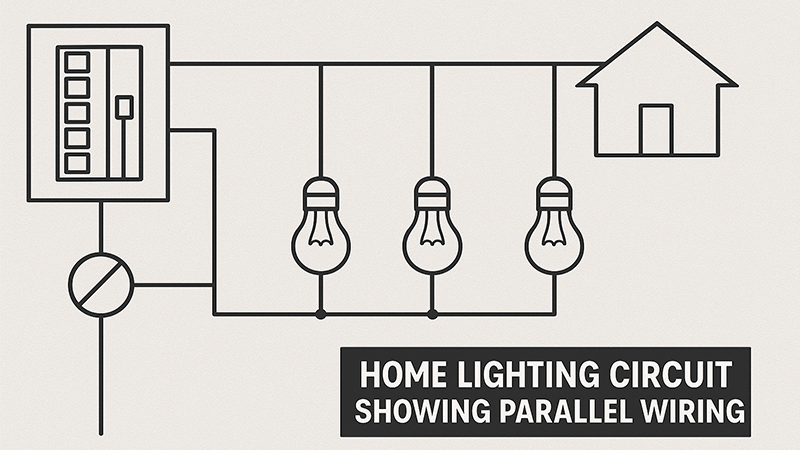
This is one of the foundational principles of electrical wiring in our homes and businesses. Everything from your ceiling lights to the outlets you plug your lamps into is part of a parallel circuit. The reason is simple: practicality and reliability. Can you imagine if turning off your bedroom light also turned off the light in the hallway? Or if a burnt-out bulb in the living room caused the entire house to go dark? It would be completely unlivable.
The only common place you might still see series wiring is in some cheap, decorative string lights, like old-style Christmas lights. I’m sure we’ve all experienced the frustration of trying to find the one bad bulb that has caused the entire string to go out. This is a classic example of a series circuit failure. Now, even most modern Christmas lights are made with parallel wiring to avoid this exact problem.
Why Your House is Wired in Parallel
The entire electrical grid that powers our cities and the wiring inside our homes is built on the principle of parallel circuits. There are several critical reasons for this.
1. Independent Operation
This is the most obvious benefit. You can turn any light or appliance on or off without affecting anything else. Each switch controls its own small part of a larger parallel circuit.
2. Consistent Voltage
Every outlet and light socket in your house is designed to provide a stable voltage (e.g., 120V in North America, 230V in Europe). Parallel circuits guarantee that this voltage is delivered consistently to every point. If they were wired in series, the voltage would drop with each added light, causing them to dim.
3. Safety and Load Management
Parallel circuits allow for the use of circuit breakers or fuses for safety. Each parallel branch (e.g., the lights in the kitchen, the outlets in the bedroom) is a separate circuit protected by its own breaker. If you overload one circuit by plugging in too many high-power devices, it will only trip that one breaker, not shut down the whole house. This isolates faults and prevents dangerous overloads.
This fundamental principle demonstrates why quality and reliability in lighting products are so tied to correct electrical design. A product that isn’t built for a parallel system simply isn’t built for the real world.
Conclusion
Ultimately, parallel wiring is the standard for reliability, safety, and performance in nearly all lighting applications. Choosing products designed for parallel circuits is a direct investment in quality and long-term value.