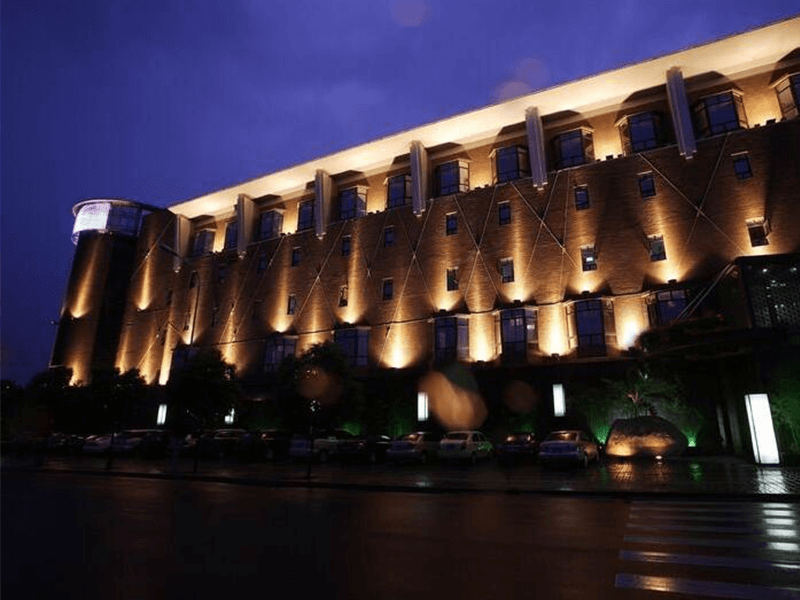
Are you confused by the long lifespan claims on LED downlights? Choosing the wrong ones leads to dim lighting and costly replacements. Understand what "lifespan" really means to make better choices.
A quality LED downlight can last 25,000 to 50,000 hours. However, "lifespan" doesn’t mean it stops working. It refers to the time until the light’s brightness dims to 70% of its original output (L70 standard), ensuring long-term, consistent illumination for your projects.
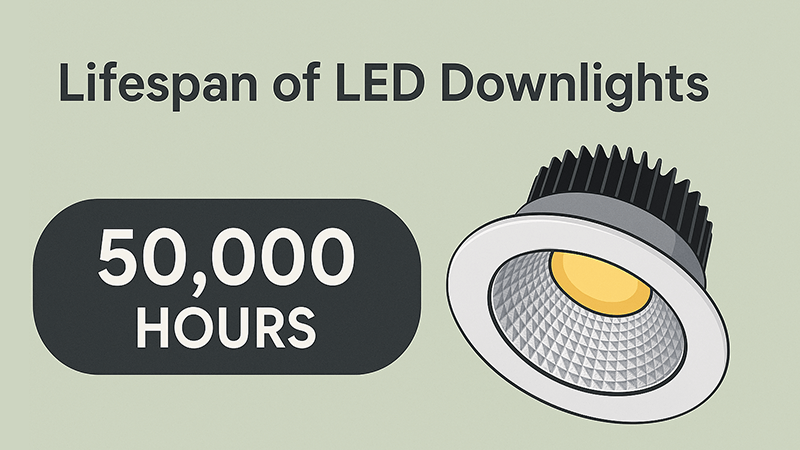
This 50,000-hour figure sounds impressive, but it’s not the whole story. As a manufacturer, I’ve seen how this number can be misleading if you don’t understand what’s behind it. The real question isn’t just about how long they stay on, but how well they perform during that time. This is a key conversation I have with purchasing managers like Shaz from the UAE, who need reliability for large-scale projects. Let’s dive deeper into what really determines the life of an LED downlight.
Do LED lights eventually burn out?
You expect your LEDs to last for years, but will they suddenly die like old bulbs? This uncertainty makes project planning difficult and affects client trust. Know the real failure modes.
Unlike old incandescent bulbs, LED lights don’t typically "burn out" with a sudden pop. Instead, they gradually lose brightness over thousands of hours, a process called lumen depreciation. Complete failure is usually caused by other components, like the driver, not the LED chip itself.
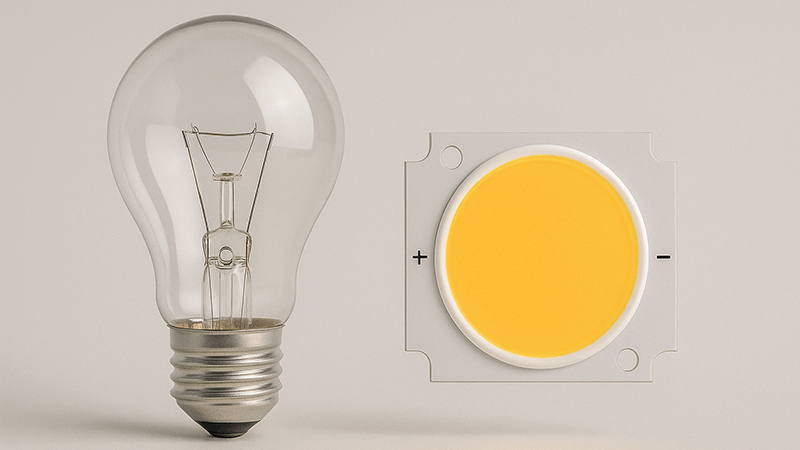
When I started my career in an LED factory, my biggest lesson was about how LEDs "die." They don’t die; they fade. This is the most important concept to grasp. The "lifespan" rating on a box, like 50,000 hours, is usually the L70 rating. This means after 50,000 hours of use, the light is predicted to still produce 70% of its original brightness. It hasn’t "burned out," but it is significantly dimmer. For a professional like Shaz, this distinction is critical. Imagine a hotel hallway where half the downlights are new and the other half are three years old. The difference in brightness would be very noticeable and look unprofessional, even if all the lights are still working. The value of a high-quality LED is its ability to maintain high levels of brightness and color consistency for a very long time.
The Slow Fade: Lumen Depreciation
The gradual dimming of an LED is a natural process. Heat is the biggest enemy. The hotter the LED chip runs, the faster its light output will decrease. This is why a good heatsink design is non-negotiable in a quality downlight. In my factory, we spend a lot of time testing the thermal management of our products. A well-designed downlight will efficiently draw heat away from the LED chip, slowing down lumen depreciation and ensuring the light stays brighter for longer.
The Real Point of Failure: The Driver
When an LED fixture fails completely, the problem is almost always the driver, not the LED chip. The driver is the electronic component that converts the AC power from your wall into the low-voltage DC power the LED needs. These drivers contain components like capacitors that are sensitive to heat and power fluctuations. A cheap, poorly made driver will fail long before the LED chip ever does.
| Failure Type |
Description |
Common Cause |
| Lumen Depreciation |
Gradual dimming of the light output over time. |
Normal aging of the LED chip, accelerated by excessive heat. |
| Catastrophic Failure |
The light suddenly stops working completely. |
Failure of the driver, poor internal wiring, or power surges. |
| Color Shift |
The color of the light changes over time (e.g., becomes bluer or yellower). |
Use of low-quality phosphors or materials in the LED package. |
How often should LED lights be replaced?
Planning maintenance cycles for a large project is a huge challenge. Replacing lights too soon is wasteful, but waiting too long can lead to poor lighting and complaints. You need a clear strategy.
LED lights should be replaced when they no longer meet the lighting requirements for the space. This is often when they have dimmed to 70% of their initial brightness (the L70 standard). For commercial use, this could mean replacement every 5 to 10 years, depending on usage.
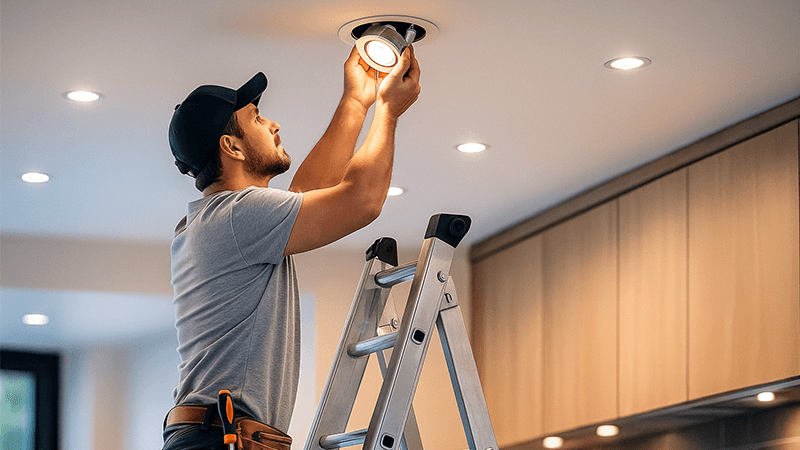
There is no single answer for every situation. How often you replace your LED downlights depends entirely on the application and your standards for light quality. A client of mine who manages a chain of high-end retail stores replaces his lights on a stricter schedule than one who owns a series of warehouses. The retail environment demands perfect color rendering and brightness to make products look their best, so he can’t afford to let the lights dim too much. In my experience, the decision to replace LEDs is less about the lights failing and more about maintaining the quality of the environment. You are not replacing a broken product; you are maintaining a standard of light.
Defining Your Replacement Threshold
The key is to decide on an acceptable level of light for your space. Is L70 (70% brightness) your trigger point? Or for a less critical area, maybe L50 (50% brightness) is acceptable. Once you define this, you can plan your replacement cycle.
Here’s how usage affects replacement frequency for a 50,000-hour L70-rated downlight:
| Usage per Day |
Years Until L70 is Reached |
Example Application |
| 24 hours |
~5.7 years |
Hospitals, 24/7 Security Areas, Data Centers |
| 12 hours |
~11.4 years |
Offices, Retail Stores, Schools |
| 8 hours |
~17.1 years |
Light Commercial Use, Workshops |
| 3 hours |
~45.6 years |
Residential Hallways, Closets |
Group vs. Spot Replacement
For a large installation, it is often more cost-effective to replace all the lights in one area at the same time ("group replacement") rather than one by one as they fail or become too dim ("spot replacement"). Group replacement can be scheduled during off-hours, minimizing disruption. It also ensures perfect lighting consistency across the entire space, which is something professionals like Shaz always aim for when managing large projects. Spot replacement might seem cheaper initially, but the labor costs and inconsistent lighting can be more expensive in the long run.
Why do LED lights fail so quickly?
You invested in LEDs for their long life, but some fail in just a year or two. This is frustrating and damages your budget and reputation. You need to know why this happens.
LEDs fail quickly almost always due to three main factors: poor heat management, a low-quality driver, or an unstable power supply. The LED chip itself is rarely the first thing to break. The supporting components are the weak links in cheap, poorly designed fixtures.
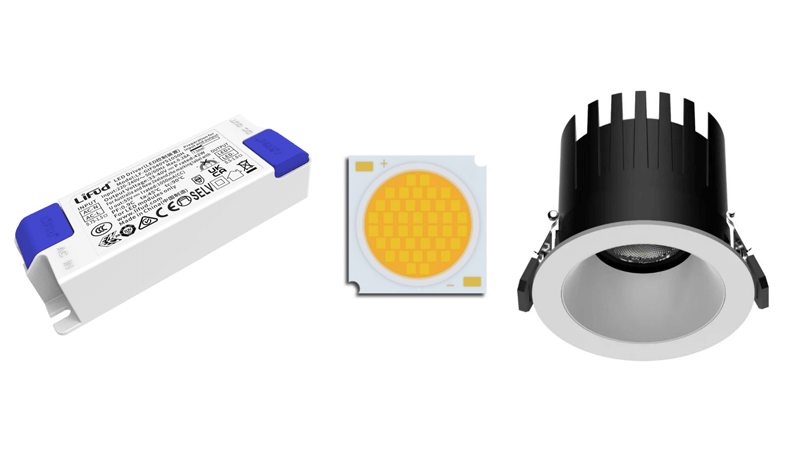
I’ve seen this problem countless times. A contractor calls me, completely frustrated. He bought a batch of cheap downlights for a project, and a year later, a third of them are flickering or dead. He thought he was saving money, but now he has to pay for new products and the labor to replace them all. This is the true cost of low-quality lighting. When we build our iPHD lights, we focus on the entire system, not just the LED chip. A good light is a balanced system where every component is designed to last. Cutting corners on any single part will cause the entire product to fail prematurely.
Root Cause Analysis of Early Failure
Let’s break down the common culprits. Understanding these helps you ask the right questions when you are sourcing products.
1. Poor Thermal Management (The Heatsink)
Heat is the number one killer of LEDs. The heatsink’s job is to pull heat away from the sensitive electronics. A small, poorly designed heatsink made from cheap materials cannot do this effectively. The chip overheats, which accelerates lumen depreciation and can damage the internal components, leading to early failure. When you pick up a downlight, feel the weight. A heavy, well-constructed aluminum heatsink is a good sign.
2. Substandard Driver Electronics
This is the most common point of failure. The driver is a complex piece of electronics, and high-quality drivers use robust components that can handle heat and minor power fluctuations. Cheap drivers use undersized capacitors and other low-grade parts that will degrade and fail quickly, especially in hot environments. This is what causes flickering, buzzing, or the light to die completely. A good manufacturer will specify the brand and quality of their drivers.
3. Environmental Factors
The environment where the light is installed plays a huge role.
- High Ambient Temperature: Installing a downlight in a hot ceiling with poor ventilation will shorten its life. Always check the operating temperature range of the fixture.
- Unstable Power: Power surges and inconsistent voltage can stress the driver and cause it to fail. For projects in areas with an unstable power grid, using fixtures with drivers that have built-in surge protection is crucial.
- Moisture: Using an indoor-rated downlight in a bathroom or outdoor area will lead to corrosion and failure. Always use fixtures with the correct IP rating for the location.
How to tell if an LED is burned out?
Your light is not working, but is it the bulb, the fixture, or something else? Misdiagnosing the problem can lead to wasted time and money buying parts you don’t need.
First, check for flickering or significant dimming, which are early signs of failure. If the light is completely dead, it is likely a failed driver or a wiring issue, not a "burned out" LED chip. A simple way to test is to swap the fixture with a known working one.
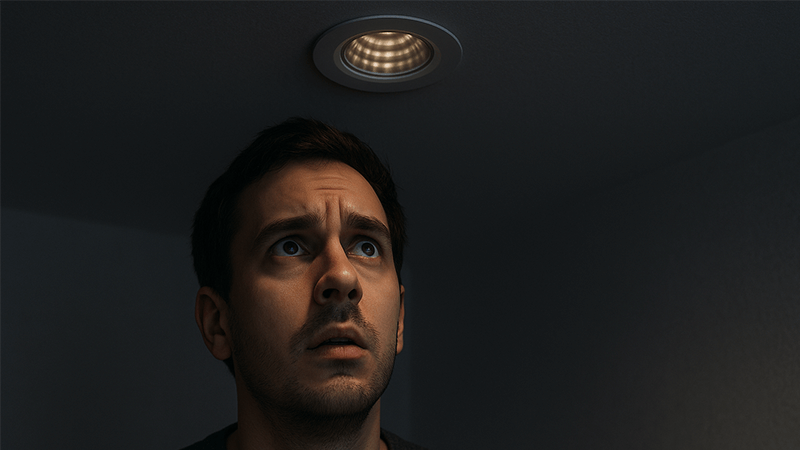
Diagnosing a dead LED downlight is a process of elimination. Since the LED chip itself rarely burns out suddenly, the problem usually lies elsewhere. Over the years, I’ve developed a simple mental checklist that I share with clients to help them troubleshoot. It saves them from assuming the most expensive part is the one that’s broken. Before calling an electrician or ordering a replacement, there are a few things you can check yourself to identify the real source of the problem. This approach helps project managers like Shaz quickly resolve issues on-site and keep their clients happy.
A Simple Troubleshooting Guide
When one of your LED downlights stops working, follow these steps to figure out why.
Step 1: Look for Visual Clues
- Flickering or Strobing: This is a classic sign of a failing driver. The driver is struggling to provide a steady current to the LEDs.
- Significant Dimming: If one light is much dimmer than identical lights nearby, its LED chip is likely nearing the end of its useful life (lumen depreciation), or the driver is failing.
- Color Change: If the light has turned a strange blue or yellow color, the phosphors on the LED chip have degraded. This is a sign of a low-quality LED package.
Step 2: Check the Basics
Before you blame the fixture, rule out simpler problems.
- Check the Breaker: Has a circuit breaker tripped?
- Check the Switch: Is the wall switch faulty? Sometimes the switch itself can wear out.
- Check the Connection: Is the fixture securely connected to the power source? A loose wire can easily cause a light to stop working.
Step 3: The Swap Test
This is the most definitive way to find the problem if you have more than one identical fixture.
- Turn off the power at the circuit breaker.
- Carefully remove the non-working downlight.
- Remove a nearby, working downlight of the same model.
- Install the working light in the non-working light’s location.
- Turn the power back on.
If the good light now works in the new spot, you know the original fixture is faulty (likely the driver). If the good light does not work in that spot, the problem is with the wiring or the switch in that specific location, not the fixture itself.
Conclusion
Understanding LED lifespan is not about when a light burns out, but how long it maintains useful brightness. Quality is defined by superior heat management, a reliable driver, and consistent performance.