Last Updated on: December 9, 2025You see downlights priced from a few dollars to over a hundred and wonder why. Choosing the wrong one means poor light, frequent replacements, and high energy bills, making it a costly mistake.
The price of an LED downlight can range from $5 for a basic residential model to over $150 for a high-performance architectural fixture. This cost is driven by the quality of internal components like the LED chip, driver, and heat sink, which determine its efficiency, lifespan, and light quality.
The price tag you see is just the start of the story. A cheap light can end up costing you far more in the long run through replacements and high electricity bills. To really understand the value, you need to look beyond the initial price and see what’s inside. Let’s break down what truly determines the cost, so you can make a choice that saves you money over time.
What is the average cost of downlights?
Trying to set a budget for your project is tough when downlight prices are all over the map. Relying on a single "average" price is misleading and might cause you to choose the wrong product. So, let’s look at the real averages by category to give you a useful benchmark.
A simple residential downlight might average $10-$30. A durable commercial-grade one is often in the $30-$80 range. For specialized architectural or high-performance downlights with advanced features, the average cost can easily go above $100. This gives you a more realistic starting point for budgeting.
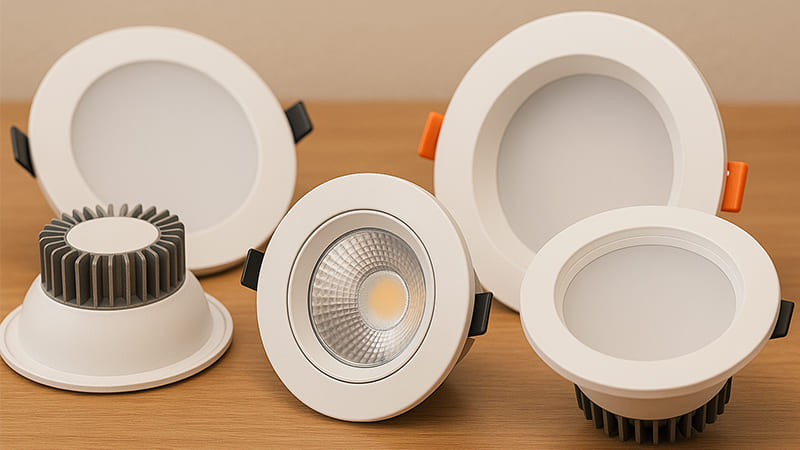
When I started in this industry, I saw many clients focus only on the unit price. But the real story is in the components. The price difference between a $15 downlight and a $75 downlight is not just profit margin; it’s a completely different product on the inside. What you are paying for are the core elements that deliver performance and reliability. Choosing the cheaper option often means you will pay more later in maintenance and energy costs. I always tell my clients to think of it as an investment in quality, not just a purchase.
The Unseen Value Drivers
The most significant price differences come from components you can’t see. A well-made downlight is a system where every part is designed to work together for a long time. Cheap lights cut corners on these essential parts. I remember a hotel project where the client initially chose a very low-cost downlight to save money. Within 18 months, over 30% of the lights had failed because of cheap drivers. The cost to replace them, including labor, was triple their initial "savings."
Here is a simple breakdown of what determines the price:
| Component |
Low-Cost Option |
High-Quality Option |
Impact on Price & Performance |
| LED Chip |
Unknown brand, low efficiency (lm/W), CRI <80. |
Reputable brand (e.g., CREE, Bridgelux), high efficiency, CRI >90. |
Better light quality, lower energy use, longer lifespan. |
| Driver |
Non-isolated, high flicker, low power factor (PF). |
Isolated, flicker-free, high PF, better safety. |
Stable performance, safety, and compatibility with dimmers. |
| Heat Sink |
Thin plastic or low-grade aluminum, poor design. |
Die-cast aluminum, engineered for heat dissipation. |
Prevents overheating, ensuring the LED chip lasts its full life. |
| Optics & Lens |
Basic plastic reflector, high glare (UGR >22). |
Anti-glare lens, engineered reflector (UGR <19). |
Better visual comfort and more efficient light distribution. |
How much does it cost to install LED downlights?
You’ve budgeted for the lights, but what about the cost of getting them installed? This labor cost is often overlooked and can quickly blow your project budget if you haven’t planned for it. Let’s figure out what you should expect to pay for professional installation.
The installation cost for a single LED downlight typically ranges from $50 to $200 per unit. This price depends heavily on whether it’s a simple replacement (retrofit) or a new installation that requires cutting holes, running new wiring, and adding junction boxes.
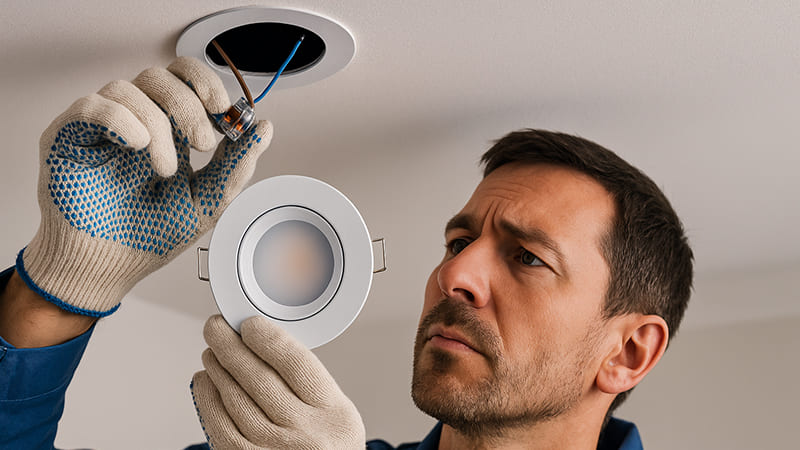
The cost of the light fixture itself is only one part of your total project expense. The labor involved can sometimes cost more than the light itself, especially with complex installations. From my experience helping clients plan large rollouts, I’ve learned that getting a detailed quote from the electrician upfront is critical. You need to know if the price is per light or per hour, and what exactly is included. A low installation quote might not include patching and painting drywall, which can leave you with unexpected costs and a messy finish.
Breaking Down the Installation Costs
The installation price is not a single number; it’s a combination of several factors. Understanding these can help you negotiate a better price and avoid surprises. A licensed electrician is essential for safety and to ensure the work is done to code, but their rates will vary based on their experience and your location.
- Retrofit vs. New Installation: A retrofit involves swapping an old fixture for a new one using existing wiring. This is the simplest and cheapest job. A new installation is more complex. It requires cutting a hole in the ceiling, running new electrical wires from a power source, and installing a switch if one isn’t already there. This requires more time, skill, and materials, so it costs more.
- Ceiling Accessibility: Installing downlights in a ceiling with an accessible attic or crawl space above is much easier and faster for an electrician. They can easily run wires and secure the fixtures. If the ceiling is closed off, like on the first floor of a two-story building, the job becomes much harder and more expensive.
- Wiring and Electrical Panel: If your home or building has old wiring, it might need to be updated to safely handle the new lights. In some cases, your main electrical panel may not have enough capacity, requiring an expensive upgrade. An electrician will check this during the initial assessment.
Here’s a typical cost breakdown for different scenarios:
| Installation Type |
Average Labor Cost Per Light |
Key Factors |
| Simple Retrofit |
$50 – $100 |
Using existing wiring and can. Quick and easy. |
| New Installation (Easy) |
$100 – $150 |
With attic access, straightforward wiring. |
| New Installation (Hard) |
$150 – $200+ |
No attic access, requires cutting drywall, complex wiring. |
What is the average cost of LED lights?
You hear that LEDs save money, but what do they actually cost upfront? With so many types available, from bulbs to panels, an "average cost" can be confusing. Let’s clarify this so you can compare products fairly and understand where your money is going.
The average cost of LED lights varies widely by type. A standard LED bulb is $2-$10. An LED downlight averages $15-$80. An LED panel light for offices costs $40-$150. The price reflects the light’s complexity, materials, and performance specifications.
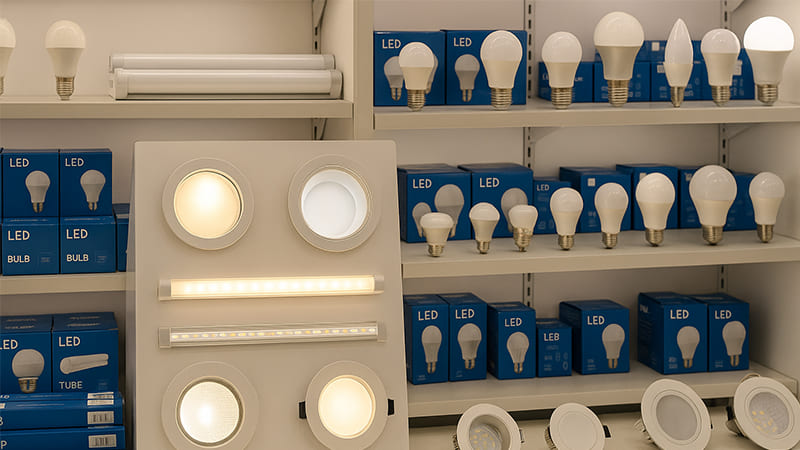
When clients ask me for the "average cost," I always explain that it’s like asking for the average cost of a vehicle. A scooter is much cheaper than a delivery truck, but they both have wheels. An LED bulb for a lamp and a specification-grade downlight for an office are completely different products designed for different jobs. The value of an LED light isn’t just in its purchase price but in its total cost of ownership, which includes energy savings and its long lifespan.
Total Cost of Ownership: The Real Metric
Focusing only on the upfront cost is a common mistake. A professional buyer, like yourself, knows that the true cost includes energy consumption and maintenance over the light’s lifetime. High-quality LEDs cost more initially but save you much more in the long run.
- Energy Savings: The key benefit of LEDs is their efficiency, measured in lumens per watt (lm/W). A cheap LED might have an efficiency of 70 lm/W, while a high-quality one can exceed 120 lm/W. This means the better LED produces the same amount of light using almost half the electricity. Over 50,000 hours of use, this adds up to significant savings on your utility bills.
- Lifespan and Maintenance: A well-made LED downlight is rated for 50,000 hours or more. A cheap one might fail after just 10,000 hours because of a poor driver or heat sink. For a commercial space, replacing failed lights means paying for new fixtures and the labor to install them. These maintenance costs can quickly eliminate any initial savings. I worked with a retail chain that replaced all their halogen downlights with cheap LEDs. They had to start replacing the replacements within two years, a maintenance nightmare they didn’t anticipate.
Let’s compare a cheap downlight to a quality one over 50,000 hours:
| Feature |
Low-Cost Downlight |
High-Quality Downlight |
Your Long-Term Savings |
| Initial Cost |
$15 |
$60 |
The quality light costs $45 more upfront. |
| Lifespan |
15,000 hours |
50,000 hours |
You would need to buy and install 3.3 cheap lights. |
| Total Replacement Cost |
$15 x 3.3 = $49.50 |
$0 |
You save nearly $50 in replacement fixture costs alone. |
| Total Installation Cost |
$75 x 2.3 replacements = $172.50 |
$0 |
You save over $170 in extra labor costs. |
| Total Cost |
$237 ($15 + $49.50 + $172.50) |
$60 |
The "cheap" light actually costs almost 4x more over its life. |
This calculation doesn’t even include the massive energy savings from the more efficient, high-quality downlight. The numbers clearly show that investing in quality from the start is the smartest financial decision.
What is the average price for a downlight install?
You’re ready to start your project and need a clear budget. You know the cost of the lights and have a general idea of installation, but what’s a fair price? Let’s get specific on what a typical downlight installation quote should look like and what it includes.
On average, you can expect to pay a licensed electrician between $75 and $150 per downlight for installation. A simple replacement will be on the lower end, while a new installation with new wiring will be on the higher end of that range.
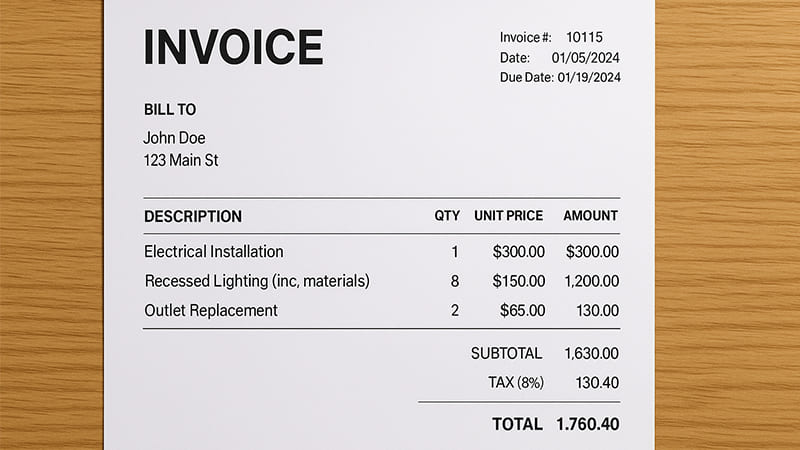
The final price can be influenced by several factors. As a manufacturer, I’ve seen how installation complexity can vary from project to project. I always advise my clients to get at least three quotes from qualified electricians. This helps you get a fair market price and find a professional you trust. Make sure each quote is itemized so you can compare them accurately. A quote that just gives a single total number is a red flag. It should detail the cost of labor, materials like wire and junction boxes, and any other charges.
Factors That Influence Your Final Bill
Getting an accurate quote requires the electrician to understand the full scope of the work. Here are the key details that will affect the price you pay. Being prepared with this information will help you get a faster and more precise estimate.
- Project Size: Installing 50 downlights will have a lower per-unit cost than installing just five. Electricians often offer a volume discount because setting up for the job takes the same amount of time whether they are installing a few lights or many. It’s more efficient for them to work on a larger project, and those savings are often passed on to you.
- Geographic Location: Labor rates for electricians vary significantly based on where you live. An electrician in a major city like New York or London will charge more per hour than one in a smaller town. This is due to differences in the cost of living, local demand, and business operating costs.
- Special Requirements: Do you need dimmer switches? Smart, programmable controls? Lights rated for wet locations like bathrooms (IP rated)? Each of these adds complexity and cost to the installation. For example, installing a standard switch is simple, but wiring a three-way or smart dimmer system requires more time and expertise.
To give you a better idea, here’s a sample quote for a new installation of 10 downlights in a living room with easy attic access:
| Item |
Quantity |
Unit Price |
Total |
| Labor (Per Light) |
10 |
$120.00 |
$1,200.00 |
| Materials (Wire, Boxes, etc.) |
1 |
$150.00 |
$150.00 |
| Dimmer Switch Installation |
1 |
$80.00 |
$80.00 |
| Estimated Total |
|
|
$1,430.00 |
Conclusion
The true cost of an LED downlight goes far beyond its initial price. It’s an investment in quality light, energy efficiency, and long-term reliability for your space.