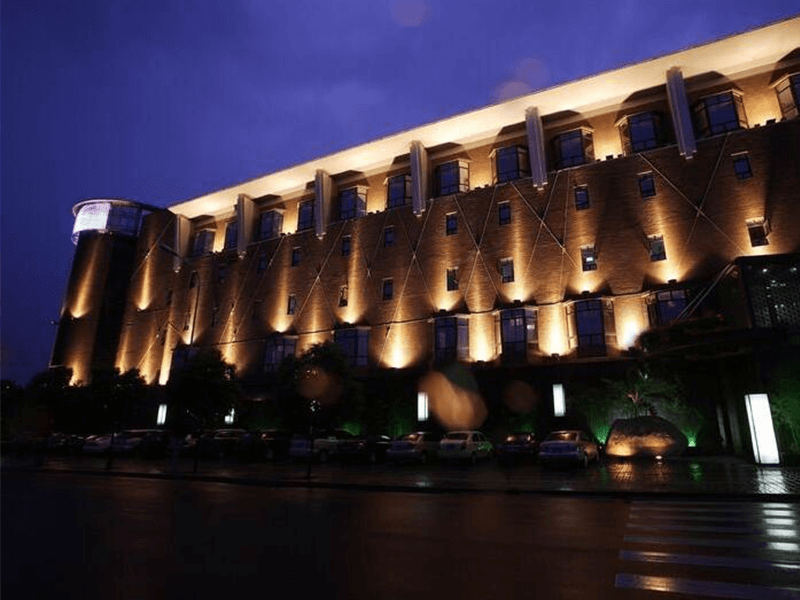
Worried about lights failing in wet or dusty areas? Moisture and dust can cause short circuits, leading to frequent replacements and safety risks. IP65 downlights provide the sealed protection you need.
IP65 downlights are best used in locations exposed to dust and low-pressure water jets. This makes them ideal for bathrooms, kitchens, outdoor soffits, and covered patios. Their high protection level ensures safety, reliability, and a long lifespan against moisture and solid particles.

You probably know that IP65 is for "wet areas," but the term is broader than most people think. Understanding the specific environments where an IP65 rating is not just a recommendation but a necessity is key to a successful lighting project. The difference between choosing IP44 and IP65 can mean the difference between a durable, safe installation and one that fails prematurely. Let’s look closely at where these robust downlights perform best, so you can specify them with confidence.
Where Can I Use IP65 Lights?
Choosing the wrong IP-rated light can lead to project callbacks and unhappy clients. It’s frustrating to see a new installation fail simply because it wasn’t protected from unexpected moisture. Let’s clarify exactly where IP65 lights are essential.
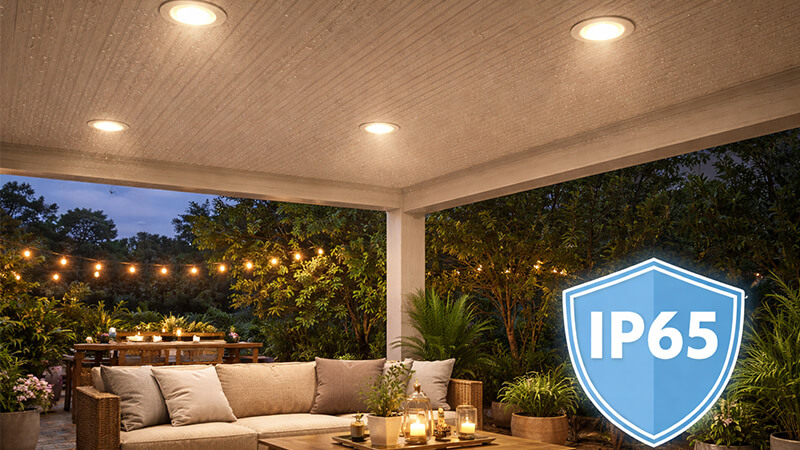
You can use IP65 lights in any area requiring protection against dust and low-pressure water jets. Common applications include bathrooms, kitchens, under eaves, covered porches, and commercial spaces like changing rooms or food preparation areas that require regular cleaning with water.
When I started in the lighting industry, one of the first things I learned was the importance of the Ingress Protection (IP) rating. It’s a simple system that tells you exactly how protected a fixture is. An IP rating has two numbers. The first tells you its protection against solids, like dust. The second tells you its protection against liquids, like water.
For an IP65-rated downlight:
- The ‘6’ means it is completely dust-tight. No dust can get inside. This is the highest level of protection against solids and is crucial for maintaining the light’s performance and lifespan, especially in dusty environments or areas with fine particles.
- The ‘5’ means it is protected against low-pressure water jets from any direction. This simulates anything from a heavy splash to being hosed down for cleaning.
This dual protection makes IP65 downlights incredibly versatile. Here’s a quick guide to help you decide where they fit best compared to other common ratings.
Common Applications by IP Rating
| IP Rating |
Solid Protection (First Digit) |
Liquid Protection (Second Digit) |
Best Use Cases |
| IP20 |
Fingers / Large objects (2) |
None (0) |
Dry indoor areas: living rooms, bedrooms, hallways, offices. |
| IP44 |
Wires / Small screws (4) |
Splashing water (4) |
Sheltered "damp" areas: Zone 2 in bathrooms (away from direct jets), some kitchens, covered and well-protected outdoor areas. |
| IP65 |
Dust Tight (6) |
Water Jets (5) |
Wet areas with direct spray: Over showers (Zone 1), kitchens, soffits, laundries, commercial wash-down areas. |
For a purchasing manager like Shaz in the UAE, the "dust-tight" aspect is just as important as the water protection. In new construction projects or in regions with fine sand, dust can easily get into lesser-rated fixtures, causing overheating and early failure. An IP65 fixture guarantees that the sensitive electronics inside remain clean and cool, ensuring the long-term reliability your clients demand.
Can IP65 Downlights Be Used in Bathrooms?
Installing lights in a bathroom can be stressful. Steam and splashes can secretly destroy fixtures not built for wet conditions, leading to flickering, failure, and safety hazards. IP65 downlights are the solution that ensures safety and durability.
Yes, IP65 downlights are perfectly suited for bathrooms. They are specifically designed for safe use in areas where direct water contact is likely, such as above showers or bathtubs (Zones 1 and 2), offering complete protection against both water jets and steam.
When clients ask me about bathroom lighting, I always explain that there are two enemies: the one you see and the one you don’t. The visible enemy is water from the showerhead. The invisible one, and often more destructive, is condensation.
The Obvious Threat: Direct Water Spray
Bathroom lighting safety is defined by zones. These zones indicate how close a light fitting is to a water source, like a shower or bath, and dictate the minimum IP rating required.
- Zone 0: Inside the bath or shower tray. Requires IP67 (submersible).
- Zone 1: Directly above the bath or shower, up to 2.25m from the floor. This area gets hit with water jets. IP65 is the standard requirement here.
- Zone 2: The area stretching 0.6m outside the bath or shower and above the basin. It’s prone to splashes. IP44 is the minimum, but I always recommend IP65 for better long-term performance.
Using an IP65 downlight in Zone 1 isn’t just a suggestion; it’s a safety requirement in many regions. Its sealed housing prevents any water from reaching the electrical connections, eliminating the risk of short circuits.
The Hidden Killer: Condensation
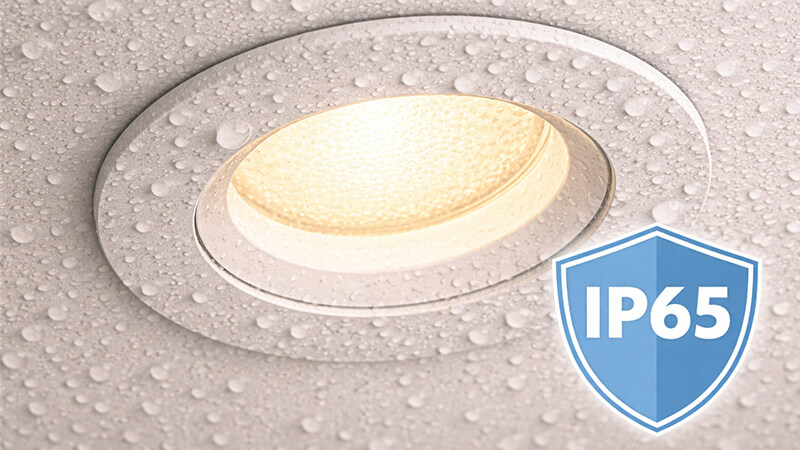
Here’s the insight many people miss: a hot shower fills the room with steam. This warm, moist air rises and comes into contact with the cooler surface of a light fixture. If the fixture isn’t perfectly sealed, that steam gets inside. As it cools, it turns back into water droplets—condensation—directly on the circuit boards and drivers. I call this the "silent killer" of bathroom lighting. It causes corrosion and leads to mysterious failures weeks or months after installation.
An IP65-rated downlight’s complete seal prevents this. It stops the moist air from ever entering the fixture. The sealed body effectively creates a buffer, protecting the internal electronics from the rapid temperature and humidity changes happening outside. This is why for high-end hotel and residential projects, we insist on IP65 fixtures in all wet areas, even if they aren’t directly in the spray zone. It’s an investment in reliability.
Is IP65 Good Enough for Heavy Rain?
You’re planning an outdoor project and need lighting that will last. But you’re worried that a standard "weatherproof" light won’t survive a serious downpour. Can IP65 really handle heavy rain, or do you need something more?
No, IP65 is not recommended for direct exposure to heavy, driving rain. While it protects against water jets, it is not designed to be fully waterproof or withstand submersion. For fixtures exposed to the open sky, an IP67 or IP68 rating is required.

This is a common point of confusion, and getting it right is critical for the success of any outdoor lighting installation. The key is understanding the difference between "water-resistant" and "waterproof." IP65 is highly water-resistant, but it is not waterproof.
Understanding Liquid Protection Levels
Let’s break down the second digit of the IP code, which defines liquid protection.
- IPx4 (Splashing Water): Protects against water splashing from any direction. Good for a sheltered porch.
- IPx5 (Water Jets): Protects against low-pressure jets of water from any direction. This is your standard IP65. It’s tested with a nozzle spray.
- IPx6 (Powerful Water Jets): Protects against high-pressure jets. Think of pressure washers or storm-driven rain.
- IPx7 (Immersion up to 1m): Can be submerged in water up to 1 meter deep for 30 minutes.
- IPx8 (Continuous Immersion): Can be submerged continuously in water under conditions specified by the manufacturer.
As you can see, there is a significant difference between the protection offered by IP65 and that of higher ratings. Heavy, driving rain, especially when combined with wind, can exert more force than the low-pressure jet used in IP65 testing. Furthermore, if a fixture is sitting in a location where puddles can form, even temporarily, it needs to be rated for immersion (IP67/IP68).
Where to Use IP65 Outdoors
So, where does IP65 fit in an outdoor scheme? It’s the perfect choice for locations that are covered but still exposed to the elements.
- Soffits and Eaves: Under the roofline, downlights are protected from direct rainfall but can be hit by wind-driven spray or require cleaning.
- Covered Porches and Patios: These areas are sheltered from above but open on the sides, making them vulnerable to moisture.
- Building Entrances and Canopies: Similar to porches, these locations need protection from angled rain and humidity.
In my experience, using IP65 lights in these specific applications provides the ideal balance of performance and cost. You get robust protection against the most likely forms of moisture without over-specifying (and over-paying for) a fully submersible IP67 or IP68 fixture where it isn’t needed.
Can IP65 be used in a sauna?
You want to install lighting in a sauna, but the extreme conditions are a major concern. The combination of intense heat and high humidity is a recipe for failure. Can a standard IP65 downlight handle this environment?
No, a standard IP65 downlight cannot be used in a sauna. While it protects against moisture, it is not designed to withstand the high operating temperatures found in saunas, which can cause the driver and LED chip to overheat and fail prematurely.

This is a mistake I’ve seen others make, and it always ends badly. A sauna is one of the most challenging environments for any electronic device. You are dealing with two distinct and powerful forces: extreme heat and intense humidity. An IP rating only addresses the humidity part.
Why Standard IP65 Fails in Saunas
A typical LED downlight, even a high-quality one, is designed to operate within a specific temperature range, usually from around -20°C to +45°C (-4°F to 113°F). The electronic driver, which powers the LEDs, is particularly sensitive to heat. When the ambient temperature gets too high, the driver cannot cool itself effectively. This leads to a cascade of problems.
- Driver Overheating: The driver’s internal components will degrade rapidly, causing the light to flicker or fail completely.
- LED Damage: The LED chips themselves are also affected. Excessive heat reduces their efficiency (lumen output) and dramatically shortens their lifespan, a process known as lumen degradation.
- Material Warping: The plastic and metal components of the downlight itself can warp or melt under the sustained high temperatures of a sauna, which can often exceed 80°C (176°F).
The IP65 rating, while excellent for keeping steam out, does nothing to protect the fixture from the ambient heat. In fact, the perfect seal of an IP65 light can sometimes be a disadvantage in this scenario, as it traps heat inside the fixture, accelerating its own destruction.
What is the Correct Lighting for a Sauna?
To light a sauna safely and effectively, you need a specialized fixture. These lights are specifically engineered for this environment and have several key features:
| Feature |
Description |
Why It’s Necessary for Saunas |
| High-Temperature Rating |
The fixture is certified to operate safely at temperatures of 100°C or higher. |
Prevents overheating, component failure, and fire risk. |
| Remote Driver |
The heat-sensitive electronic driver is located outside the sauna in a cooler environment. |
Protects the most vulnerable part of the system from extreme heat. |
| Durable Materials |
Constructed from materials like heat-resistant glass, ceramic, and high-grade stainless steel. |
Prevents melting, warping, and corrosion. |
| Appropriate IP Rating |
Often IP-rated to handle the high humidity and potential water splashes (e.g., when water is thrown on rocks). |
Ensures protection against moisture ingress, just like IP65. |
When a client requests sauna lighting, you must source these specialized products. It ensures the safety of the users, the longevity of the installation, and the integrity of your reputation as a knowledgeable supplier.
Conclusion
IP65 downlights are essential for wet and dusty locations like bathrooms and covered outdoor areas, offering vital protection against water and condensation to ensure long-term safety and reliability.