Are you sure your LED downlights are as perfect as they seem? Some hide flaws that can cost you money or even affect well-being. Let’s uncover these hidden disadvantages.
The main disadvantages of LED downlights include the potential for poor color quality, a blue light hazard from cheap models, and sensitivity to heat. Poor heat management can significantly shorten their long lifespan, and the initial purchase price is often higher than traditional options.

I’ve built my career on understanding every detail of LED lighting. Many people see the benefits, like energy savings and long life. And those are real. But as a manufacturer, I know that not all LEDs are created equal. Knowing the potential downsides is the only way to protect your investment and ensure you get the quality you pay for. A smart buyer like Shaz, a purchasing manager I know from the UAE, always looks beyond the sales pitch. He knows that understanding the weaknesses is the key to finding the strongest products. Let’s dig into what you need to watch out for.
What is the main disadvantage of LED lights?
You are investing in LEDs to save money and improve your space. But a hidden risk, the blue light hazard in cheap lights, could be harming the people using them.
The most significant disadvantage is the potential for excessive blue light in low-quality LEDs. This is caused by using cheap materials to cut costs, which can lead to eye strain and disrupt natural sleep cycles, a major concern for health and productivity in any environment.
The Hidden Risk of Blue Light
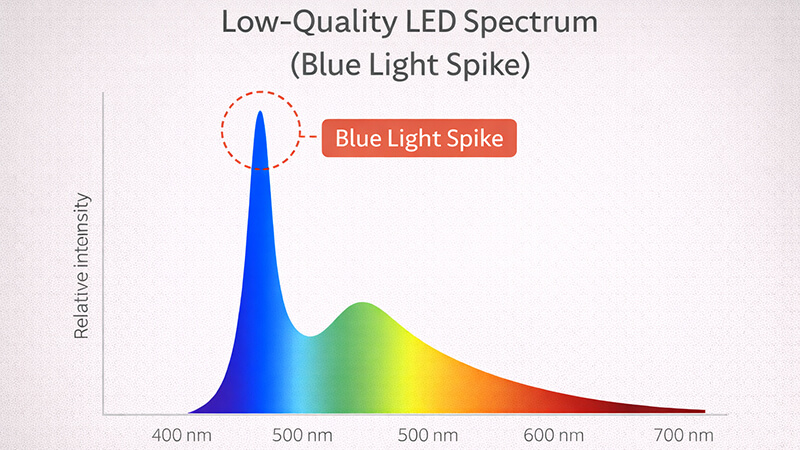
The biggest issue with many cheap LEDs is not something you can easily see. It is the quality of the light itself. Standard LEDs create white light by using a blue LED chip coated with a yellow phosphor. To save money, some manufacturers use low-grade phosphors. This results in an unbalanced light spectrum with a sharp, unnatural spike in the blue wavelength. Our bodies are not used to this type of light, especially for long periods. It can lead to digital eye strain, headaches, and can even interfere with our sleep patterns by suppressing melatonin production.
Early in my career, I visited a factory where workers on the assembly line complained of constant headaches. We tested the lighting and found it was from cheap, high-blue-light LEDs. After we replaced them with higher quality lights with a more balanced spectrum, the complaints stopped. This taught me a powerful lesson about how much light quality matters for people’s well-being.
That is why better technology is so important.
Full-Spectrum Technology: The Solution
Advanced lighting now uses a different approach to solve this problem. Instead of a blue chip, high-quality manufacturers like us use a violet chip combined with a mix of red, green, and blue phosphors. This is called full-spectrum technology. The result is a light spectrum that is much more complete and continuous. It closely mimics the smooth, balanced spectrum of natural daylight. This significantly reduces the dangerous blue light spike and improves color rendering, making everything look more natural and vibrant.
Here’s a simple breakdown:
| Feature |
Standard (Cheap) LED |
Full-Spectrum LED |
| Light Source |
Blue Chip + Yellow Phosphor |
Violet Chip + RGB Phosphors |
| Spectrum |
Incomplete with a sharp blue peak |
Continuous and balanced, like sunlight |
| Blue Light Hazard |
High |
Low |
| Color Rendering |
Often average (CRI 80) |
Excellent (CRI 95+) |
| Health Impact |
Can cause eye strain and disrupt sleep |
Promotes well-being and visual comfort |
| Cost |
Low |
Higher |
For a purchasing manager making decisions for large projects, choosing full-spectrum LEDs is not just about better light. It is an investment in the health and productivity of the people who will live or work under them.
What are the disadvantages of downlights?
Downlights give you that clean, modern look everyone wants. But without careful planning, they can create dark, gloomy spaces and harsh glare, undermining the goal of your lighting project.
The main disadvantages of downlights are their fixed, directional light, which can create strong shadows and uneven lighting. They also demand precise placement and can be difficult to install or modify, potentially increasing labor costs and offering little future flexibility.

Design and Installation Challenges
Downlights are popular for their minimalist aesthetic, but their function comes with specific challenges. Because they only shine light downwards, they can create what we call the "cave effect." This happens when the walls receive little light and the ceiling is left completely in shadow, making a room feel smaller and less inviting. Another problem is glare. If the downlight’s light source is not properly recessed or shielded, it can shine directly into people’s eyes, causing discomfort. This is measured by the Unified Glare Rating (UGR), and a low UGR is critical for comfortable spaces.
I remember a hotel contractor client in Dubai who learned this the hard way. He installed hundreds of standard downlights in long corridors based only on a simple grid pattern. The result was a series of bright "pools" of light on the floor with dark patches in between. The hallways felt gloomy and unwelcoming. We had to fix it by replacing them with downlights that had a wider beam angle and adding some wall-washing fixtures to brighten the vertical surfaces. It was a costly lesson in the importance of a proper lighting plan, not just picking a product.
Installation and Maintenance Hurdles
The challenges don’t stop at design. Installing downlights requires cutting permanent holes into a ceiling. This decision is not easily reversed. You also have to consider building codes. For example, if the ceiling is a fire barrier, you must use more expensive fire-rated downlights to maintain safety. Insulation can also be an issue; you must ensure there is proper clearance around the fixture to prevent overheating, unless you use specific IC-rated (Insulation Contact) models.
Then there is maintenance. Most LED downlights today are integrated units, meaning the "bulb" is part of the fixture. If the LED fails, you have to replace the entire unit. Worse, if the driver (the power supply) fails, it is often located above the ceiling. For a maintenance team in a large commercial building, accessing and replacing a faulty driver in a hard-to-reach ceiling can be a time-consuming and disruptive task. This potential maintenance headache is something every facility manager needs to consider.
Is LED light good or bad?
You hear so many things about LED light, it’s easy to get confused. This makes it difficult to know if you’re making the right choice for your business or project.
LED light is overwhelmingly good due to its amazing energy efficiency and long life. However, its quality varies hugely. A "bad" LED has poor color rendering and can flicker, while a "good" LED provides excellent, reliable, and healthy light. Your choice determines the outcome.
Weighing the Pros and Cons
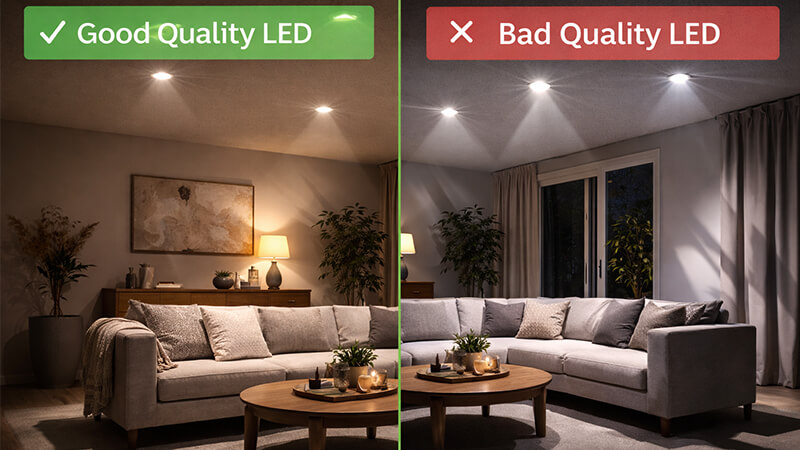
The question of whether LED light is "good" or "bad" really comes down to which LED you are talking about. The technology itself is a massive leap forward. But like any product, there are high-quality and low-quality versions on the market. The difference between them is huge, and it directly impacts your bottom line and the experience of people in your space. A purchasing manager like Shaz knows this well; he doesn’t just buy "LEDs," he sources LEDs that meet specific quality standards.
The good side of LEDs is clear. They use up to 80% less energy than old incandescent bulbs, which means significant savings on electricity bills. They also last for a very long time, often 50,000 hours or more. This drastically reduces maintenance and replacement costs, which is a huge benefit for any commercial operation. Plus, they offer incredible design flexibility with different shapes, sizes, colors, and smart controls like dimming.
However, the bad side is where you need to be careful. Low-cost LEDs often cut corners in critical areas. They might have a low Color Rendering Index (CRI), making colors look dull and washed out. They can have invisible flicker, which contributes to headaches and eye fatigue. And as we discussed, they can produce harmful levels of blue light. Choosing a bad LED can negate all the potential benefits and create a poor-quality environment.
Here is a simple comparison to help you see the difference:
| Aspect |
Good Quality LED |
Bad Quality LED |
| Energy Efficiency |
Excellent (High lumens per watt) |
Good (Still better than old tech) |
| Lifespan |
Very Long (50,000+ hours) |
Shorter (Fails prematurely due to heat) |
| Color Quality (CRI) |
High (90+), colors look natural |
Low (Below 80), colors look dull |
| Light Quality |
Stable, no flicker, balanced spectrum |
Can have invisible flicker, high blue light |
| Reliability |
Consistent performance |
Performance degrades, color shifts over time |
| Initial Cost |
Higher |
Very Low |
| Total Cost |
Lower over time (energy + maintenance) |
Higher over time (replacements + energy) |
Ultimately, LED technology is good. But you must choose a good quality LED product to reap the rewards.
Why do my LED lights burn out so fast?
You invested in LEDs expecting them to last for years, but they are failing early. This is frustrating and costly, making you question the technology’s reliability. Let’s fix this.
Your LED lights burn out fast primarily due to overheating. LEDs are very sensitive to heat. Poor fixture design, improper installation that traps heat, or using them in hot environments without adequate ventilation will cause the components to degrade and fail prematurely.
The Number One Killer: Heat
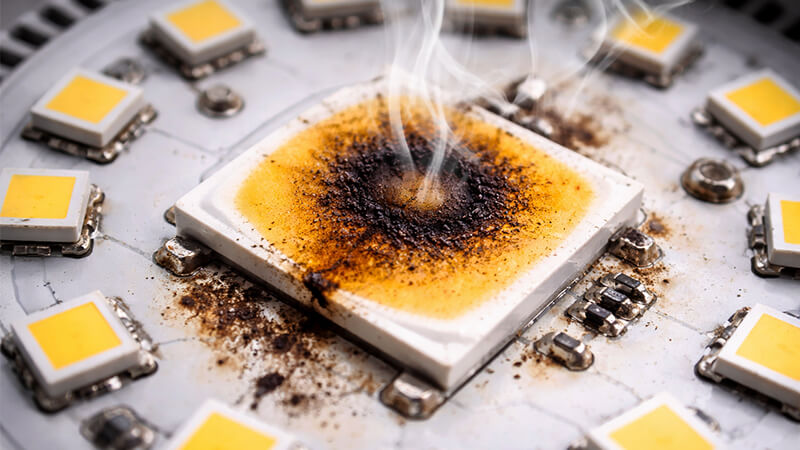
When an LED light fails years before its rated lifespan, the cause is almost always heat. It is a common misconception that LEDs don’t produce heat. They do, but they produce it differently than old bulbs. While an incandescent bulb radiates heat out with the light, an LED creates heat at the back of the LED chip itself. This heat must be drawn away and dissipated, or the chip will cook itself. This critical job is done by the heat sink, which is usually the metal body of the fixture.
As someone who has designed and manufactured lights for years, I’ve seen exactly what happens. If a manufacturer tries to save money by using a small or poorly designed heat sink, it simply cannot get rid of the heat fast enough. The temperature inside the fixture rises, and this heat damages the sensitive electronic components, including the LED chips and the driver. The chips will dim, their color might shift, and eventually, they will fail completely.
Common Causes of Overheating
The quality of the heat sink is the manufacturer’s responsibility, but several other factors can lead to early failure:
- Poor Installation: Recessed downlights need space for air to circulate. If insulation is packed tightly around a non-IC-rated fixture, it’s like wrapping it in a blanket. Heat gets trapped, and the light will fail quickly.
- High Ambient Temperatures: Using a standard indoor LED in a very hot environment, like a factory ceiling or a poorly ventilated attic, will push it beyond its operating temperature limit. You need fixtures specifically designed for high-temperature environments in these cases.
- Low-Quality Components: It’s not just the heat sink. The driver, which converts AC power to the low-voltage DC that LEDs use, is also very sensitive to heat. Cheap drivers use lower-quality components that can’t handle temperature stress and are often the first part to fail.
Here’s a quick checklist to diagnose why your LEDs might be failing:
| Potential Cause |
What to Check |
Solution |
| Poor Heat Sink |
Is the fixture body very small or made of plastic? |
Choose fixtures with a substantial aluminum body. |
| Blocked Ventilation |
Is insulation packed around the fixture in the ceiling? |
Ensure proper clearance or use IC-rated fixtures. |
| High Room Temp |
Is the light used in a hot area (e.g., above 35°C/95°F)? |
Use fixtures rated for high ambient temperatures. |
| Faulty Driver |
Is the light flickering or just dead? |
A failed driver is a common cause. This points to a low-quality product. |
When you are sourcing lights for a project, always ask the supplier about their thermal management. A good manufacturer will be proud to show you their heat sink design and provide temperature testing data. This is how you ensure the lights you buy will actually deliver that long life you’re paying for.
Conclusion
While LED downlights offer great benefits, their disadvantages—like blue light risk, heat sensitivity, and installation challenges—come from low-quality choices. To ensure long life and healthy light, choose wisely.