Struggling with dim, unsafe shower lighting? Worried about electrical risks in wet areas? You need a solution that is both bright and completely waterproof for your peace of mind.
Yes, you can install an LED downlight above a shower, but it’s crucial to use one with the correct IP rating. For the area directly over a shower (Zone 1), a downlight must have a minimum IP65 rating to protect against water jets from any direction.
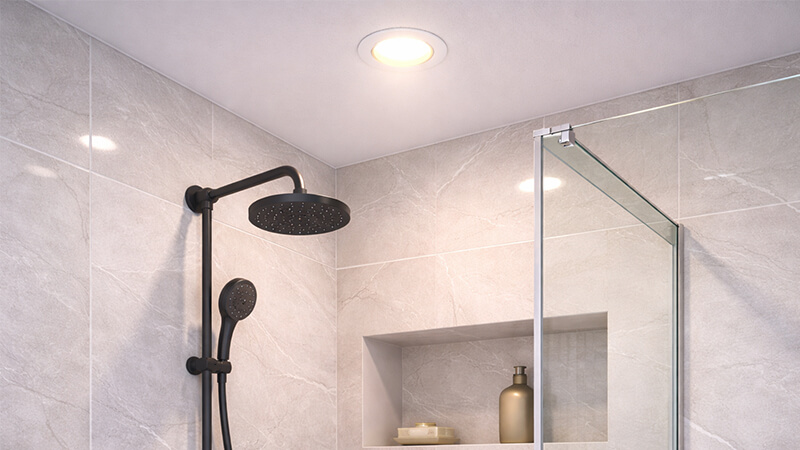
Choosing the right light is about more than just brightness; it’s about safety, compliance, and creating the right atmosphere. As a manufacturer, I’ve seen countless projects succeed or fail based on this one decision. Let’s break down exactly what you need to know to make the right choice for your project.
Can you put downlights above a shower?
Planning a bathroom renovation? Confused about lighting regulations for wet zones? Installing the wrong fixture can lead to serious safety hazards and costly compliance failures. You need clear guidance.
Yes, downlights are a popular choice for showers. However, you must use a fixture specifically rated for wet locations. This is determined by its Ingress Protection (IP) rating, which indicates its resistance to water and solid particles. Always check local electrical codes for specific requirements.

When I talk to purchasing managers like Shaz from the UAE, their first question is always about compliance. They know that installing lights in a bathroom isn’t a simple task. Water and electricity are a dangerous mix, so building codes have very strict rules. To make sense of these rules, we first need to understand bathroom electrical zones.
Understanding Bathroom Electrical Zones
Regulators divide a bathroom into zones based on how likely water is to be present. The closer a zone is to a water source like a shower or bath, the stricter the requirements for any electrical equipment within it.
- Zone 0: This is the area inside the bathtub or shower tray itself. Any fitting used here must be low voltage (max 12V) and be totally immersion-proof, with a rating of at least IP67.
- Zone 1: This is the area directly above the bath or shower, up to a height of 2.25 meters from the floor. This is where you would install your shower downlight. It requires a light with at least an IP65 rating.
- Zone 2: This area extends 0.6 meters around the perimeter of the bath or shower and to a height of 2.25 meters from the floor. Here, an IP44-rated light is usually sufficient.
What is an IP Rating?
An IP (Ingress Protection) rating is a two-digit number. The first digit tells you how well the fixture is protected against solid objects like dust. The second digit tells you how well it’s protected against water. For a shower, the second digit is the most important one. An IP65 rating means the light is dust-tight (the ‘6’) and protected against water jets from any direction (the ‘5’). This is exactly what you need to withstand the spray from a shower head.
| Zone |
Location |
Minimum IP Rating |
| Zone 0 |
Inside the bath or shower |
IP67 |
| Zone 1 |
Directly above the bath/shower |
IP65 |
| Zone 2 |
Area bordering the bath/shower |
IP44 |
Always remember, these are general guidelines. Local electrical codes can vary, so you must always consult a qualified electrician before starting any installation.
Can you put LED lights above a shower?
Considering LEDs for your bathroom? Concerned they might not handle the moisture and steam? Using a standard LED could lead to flickering, failure, or even a safety risk.
Absolutely. LED lights are an excellent choice for showers because they are energy-efficient and long-lasting. You must select an IP-rated LED fixture, specifically designed for wet environments. These sealed units protect the sensitive electronics from moisture, ensuring safe and reliable operation for years.
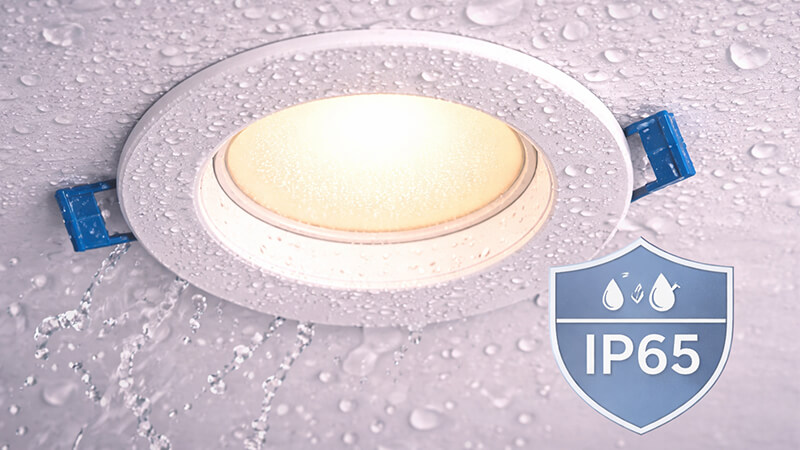
LEDs have completely changed the lighting industry, and bathrooms are no exception. From my experience in manufacturing, I can tell you that a well-made LED downlight is the perfect solution for shower lighting. Let’s explore why they are such a great fit and what you need to consider.
Why LEDs are a Superior Choice
LEDs offer several key advantages over old-fashioned halogen bulbs, especially in a wet and steamy shower.
- Energy Efficiency: LEDs use up to 90% less energy than halogen bulbs. This translates to lower electricity bills, which is a major selling point for any project.
- Long Lifespan: An LED downlight can last for 30,000 to 50,000 hours. A halogen bulb might only last 2,000 hours. This means far less maintenance and fewer replacements, which is critical in a sealed, hard-to-reach fixture.
- Low Heat Output: Halogen bulbs get extremely hot, which can be a hazard in a small, enclosed space. LEDs run much cooler, making them a significantly safer option.
Low Voltage vs. Mains Voltage
When choosing an LED downlight for a shower, you’ll see both mains voltage (e.g., 230V) and low voltage (e.g., 12V) options. Mains voltage fixtures connect directly to your home’s wiring. Low voltage systems require a separate component called a driver (or transformer) to reduce the voltage. While both can be safe if properly rated, low voltage systems often provide an extra layer of safety by keeping the higher voltage further away from the wet area.
Don’t Forget the Driver
If you choose a low-voltage system, the driver is just as important as the light fixture itself. The driver must also be protected from moisture. This usually means installing it outside of the bathroom’s wet zones, for example, in the ceiling void above, well away from the shower area. I always advise my clients to think of the light and driver as a complete system. The reliability of the entire setup depends on both components being installed correctly and in the proper location. A failing driver is just as bad as a failing light.
Are LED lights safe in a shower?
Worried about electricity and water mixing in your shower? The fear of electric shock is real. Installing an uncertified light fixture is a dangerous gamble you can’t afford to take.
Yes, LED lights are perfectly safe for a shower when they are correctly specified and installed. Safety is guaranteed by using a fixture with a high IP rating (like IP65) and ensuring it is installed by a qualified electrician according to local electrical codes.
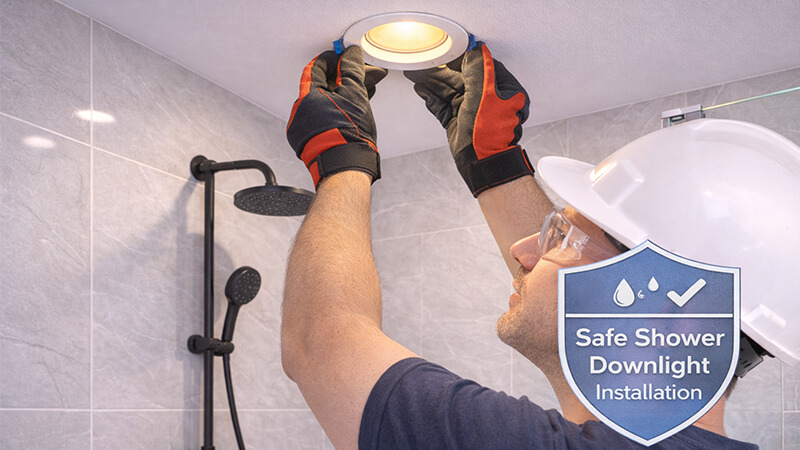
Safety is the number one priority. No one wants to compromise on that. As a manufacturer, ensuring our products are safe is the most important part of my job. An IP rating is the starting point for shower safety, but it’s not the whole story. True safety comes from a combination of good design, high-quality materials, and proper certification.
Beyond IP Ratings: Material and Build Quality
A cheap light might have an IP65 rating on the box, but if it’s made from poor materials, it won’t stay safe for long. The housing should be made of corrosion-resistant materials, like powder-coated aluminum or a durable polymer. The clear cover or lens must be sealed with a high-quality silicone gasket that won’t crack or shrink from the heat and steam. I’ve seen cheap gaskets become brittle and fail, allowing moisture to seep in and cause a short circuit. Quality manufacturing ensures every component can withstand the harsh bathroom environment for its entire lifespan.
The Hidden Danger of Glare
Here is a safety issue many people overlook: glare. Low-quality lights often ignore anti-glare design. In a wet bathroom, a harsh, bright light source will reflect off the shiny tiles, mirror, and water droplets. This creates a blinding glare. This isn’t just uncomfortable; it’s dangerous. The glare can cause disorientation or dizziness, which is a huge risk on a slippery, wet floor. When we design our iPHD lights, we use deep-set LED chips and specialized lenses to control the light beam. This creates comfortable, useful illumination without the dangerous glare, making the entire space safer.
Certification Matters
How can you be sure a product is truly safe? Look for third-party certifications. Marks like CE, RoHS, or UL mean the product has been independently tested to meet strict safety and environmental standards. For any professional involved in sourcing lighting, like Shaz, demanding products with these certifications is a simple and effective way to filter out unsafe, low-quality options and protect their clients and their company’s reputation.
What kind of light can go over a shower?
Overwhelmed by lighting choices for your shower? Don’t know which features to prioritize? Choosing the wrong type can ruin the look and function of your bathroom design.
The best light for over a shower is a dedicated, IP65-rated LED downlight. Look for features like a high Color Rendering Index (CRI) for accurate color, a suitable color temperature (CCT) for ambiance, and anti-glare design for comfort and safety.
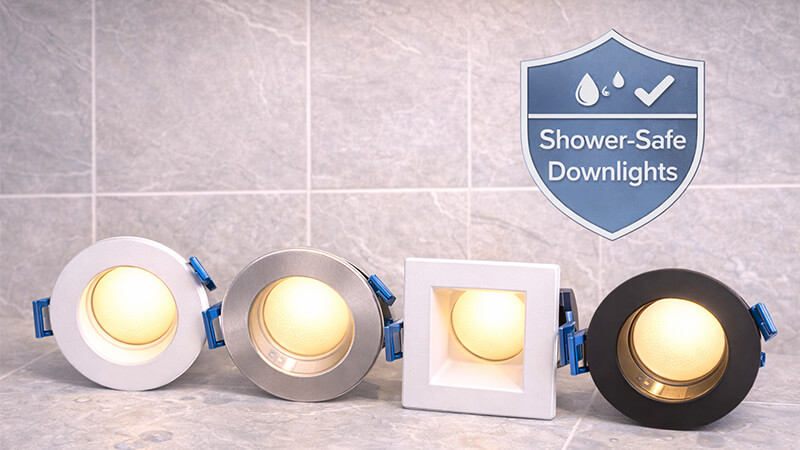
Once you’ve confirmed the essential safety requirements, you can focus on choosing a light that looks and feels great. The right light can turn a simple shower into a spa-like experience. Here are the key features I discuss with clients when they are selecting the perfect shower downlight for their projects.
Key Features to Specify
Beyond the non-negotiable IP65 rating, several other features determine the quality of the light and the atmosphere it creates. A professional buyer will have a checklist ready.
| Feature |
Recommendation & Why |
| Color Temperature (CCT) |
3000K (Warm White) creates a relaxing, spa-like feel. 4000K (Cool White) provides a cleaner, more modern, and energizing light. The choice depends on the design goal. |
| Color Rendering Index (CRI) |
Look for CRI >90. This means the light shows colors, especially skin tones, accurately and naturally. A low CRI can make everything look washed out and dull. |
| Anti-Glare (UGR) |
A Unified Glare Rating (UGR) of <19 is ideal for visual comfort. This ensures the light is easy on the eyes and prevents the hazardous glare we discussed earlier. |
| Dimmable |
A dimmable fixture offers great flexibility. You can have bright light for cleaning or getting ready, and a soft, low light for a relaxing evening shower. |
Another important feature, especially for apartments or multi-story homes, is a fire rating. When you cut a hole in a ceiling to install a downlight, you compromise the ceiling’s ability to act as a fire barrier. A fire-rated downlight is designed with an intumescent material that expands when heated, sealing the hole and helping to slow the spread of fire between floors. Many building codes now require these, so it’s a critical feature to check.
Making the Final Choice
Choosing the right shower light is a systematic process. First, satisfy the legal safety requirements: IP65 rating and any local fire-rating rules. Second, define the desired mood and function through CCT and dimming options. Finally, insist on quality-of-life features that separate premium products from basic ones, like a high CRI and excellent anti-glare design. Following these steps ensures you get a light that is safe, beautiful, and a pleasure to use for years to come.
Conclusion
In short, yes, you can put an LED downlight in a shower. Just ensure it has an IP65 rating, quality anti-glare design, and is installed by a professional.