Frustrated that you can’t just swap out a dead LED downlight? This seeming inconvenience is actually a crucial safety feature, not a design flaw. It’s there to protect you.
Yes, for integrated LED downlights, you should hire an electrician. Unlike traditional bulbs, these units are connected directly to your home’s wiring. An electrician ensures the replacement is done safely, avoiding the significant risk of electric shock from mishandling live wires.
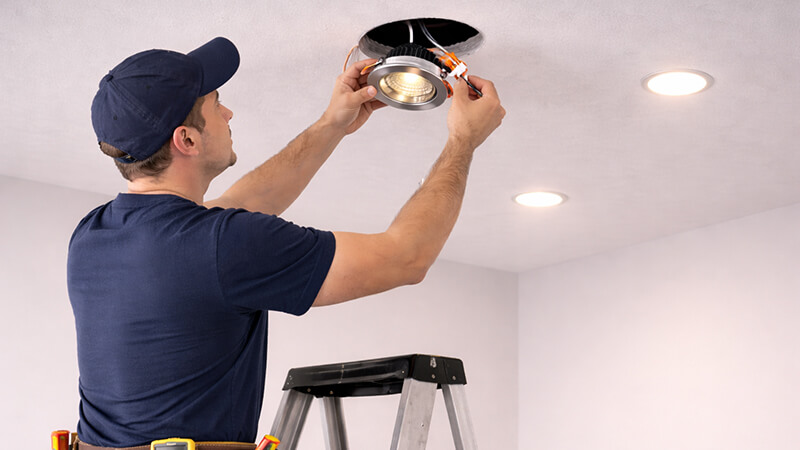
I understand the frustration. In my years of manufacturing LEDs, many clients like Shaz have asked why we moved away from simple screw-in bulbs. It seems like a step backward. But there’s a profound product philosophy at play here, one that places your well-being at its core. Let’s break down why this change was not just necessary, but a major step forward in lighting safety.
Why are some LED lights non-replaceable?
Wondering why you can’t just replace the "bulb" in your new LED fixture? This integrated design isn’t a flaw; it’s a deliberate engineering choice for superior performance and safety.
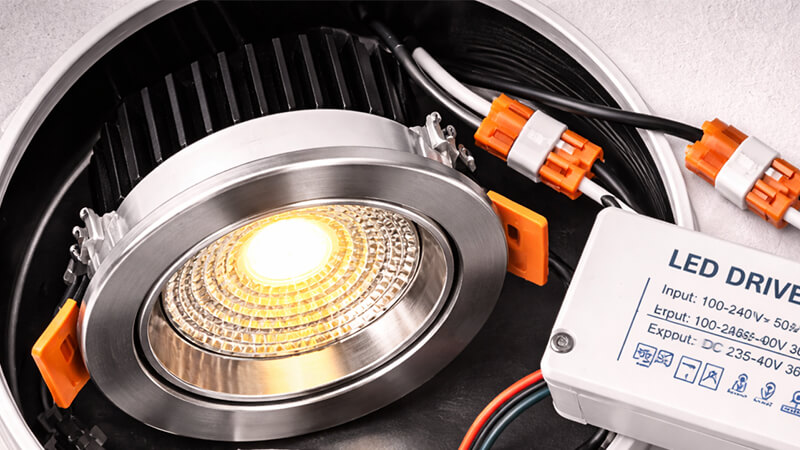
Many modern LED lights are non-replaceable because they are integrated systems. The LED chip, driver, and heat sink are designed as one unit. This improves thermal management, extends lifespan, and ensures optimal performance, which is impossible with separate, replaceable components.
In the early days of lighting, everything was about replaceable parts. The incandescent bulb was a simple component you could easily swap. But LED technology is fundamentally different. It’s not just a filament that glows; it’s a complex electronic system that needs all its parts to work in perfect harmony.
Think of it like your smartphone. You don’t open the case to replace a single processor chip if it fails. The entire device is a sealed, integrated unit designed for optimal performance and reliability. At iPHD, we apply this same philosophy to high-quality LED lighting because it delivers a better, safer product.
An integrated LED light combines the LED emitter (the chip), the driver (the power supply), and the heat sink (the cooling system) into one cohesive fixture. This isn’t just to make it compact. It’s because these three parts are deeply codependent. The driver must supply the exact voltage and current the chip needs. The heat sink must be perfectly sized and positioned to draw damaging heat away from the sensitive LED chip. If any one of these parts is mismatched, which often happens with separate replaceable LED bulbs, the lifespan and performance drop dramatically. As a manufacturer, I’ve seen countless "replaceable" LED bulbs fail prematurely because they were put into enclosed fixtures with poor ventilation, causing them to overheat. An integrated design solves this problem by guaranteeing the perfect operating environment from the factory.
Integrated vs. Replaceable: A Comparison
This table shows why an integrated approach is superior for performance and longevity.
| Feature |
Integrated LED Fixture |
Replaceable LED Bulb |
| Performance |
Optimized for maximum light output and efficiency. |
Variable, depends on the fixture it’s placed in. |
| Lifespan |
Longer, due to superior thermal management. |
Shorter, often limited by heat buildup. |
| Design |
Sleek, minimalist, and compact designs possible. |
Limited by the shape and size of the bulb base. |
| Safety |
High, as electrical parts are sealed away. |
Lower, potential for mismatch and user error. |
By creating a single, sealed unit, we deliver a product that is more reliable, lasts longer, and performs better. The trade-off is that it’s no longer a simple part you can swap out yourself, and this is an intentional choice for both quality and safety.
Can I replace LED downlights myself?
Thinking about replacing that LED downlight yourself to save a few dollars? It looks like a simple task, but it involves direct contact with your home’s electrical wiring, a serious risk.
Technically, you can, but I strongly advise against it unless you are trained in electrical work. Replacing an integrated downlight requires disconnecting and reconnecting mains voltage wiring. An error can lead to short circuits, fire hazards, or severe electric shock.
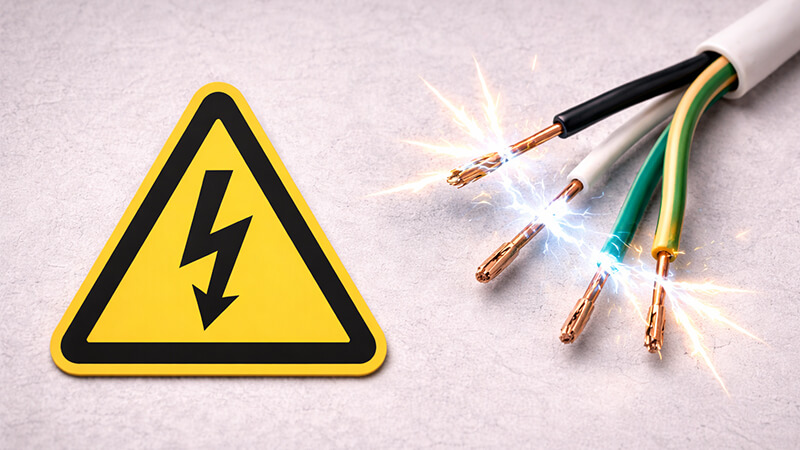
I’ve spoken with many skilled purchasing managers like Shaz who are very hands-on and knowledgeable. The temptation to tackle a seemingly small job like this is understandable. The fixture itself might only cost a small amount, and an electrician‘s fee can seem high in comparison. But the cost of a mistake—whether it’s damage to your home or personal injury—is infinitely higher. The biggest danger comes from a common but false belief about how home electricity works. Many people think that flipping the wall switch to "off" makes the fixture safe to touch. This is a dangerous assumption that could lead to a serious accident.
The Wall Switch vs. The Breaker
A standard wall switch often only breaks the connection to the "hot" wire, which interrupts the circuit and turns off the light. However, the "neutral" wire can still be connected to the grid. In some faulty or older wiring systems, the switch might even be wired on the neutral side, leaving the fixture’s internal components fully live with electricity even when the light is off. Touching a live wire in that state, even if you think the power is off, can be fatal. This is why the first and most important rule for any professional electrician is to go to the main electrical panel and turn off the circuit breaker for that entire area. This physically disconnects all power, ensuring the wires are completely dead and safe to handle.
A Professional’s Safety Checklist
An electrician doesn’t guess or take chances. They follow a strict, life-saving protocol:
- Isolate: They turn off the specific circuit breaker at the main panel.
- Lockout/Tagout: They often place a lock or a clear warning tag on the breaker so nobody can accidentally turn it back on while they are working.
- Test: They use a calibrated voltage tester on the actual wires at the fixture to confirm there is zero power. They test every combination: hot-to-neutral, hot-to-ground, and neutral-to-ground.
- Work: Only after confirming with their tools that there is no voltage do they begin disconnecting the old fixture.
This process is non-negotiable for professionals because they understand the risks. For the average person, skipping even one of these steps can lead to disaster.
What happens when an integrated LED light burns out?
Your sleek integrated LED has finally dimmed. Now you’re worried about the hassle and mess of replacing the entire unit. But the process is simpler than you might think.
When an integrated LED light burns out, the entire fixture needs to be replaced. This involves disconnecting the old unit from the mains wiring and installing a new one. A qualified electrician can typically do this quickly, often in under 30 minutes, with minimal disruption.
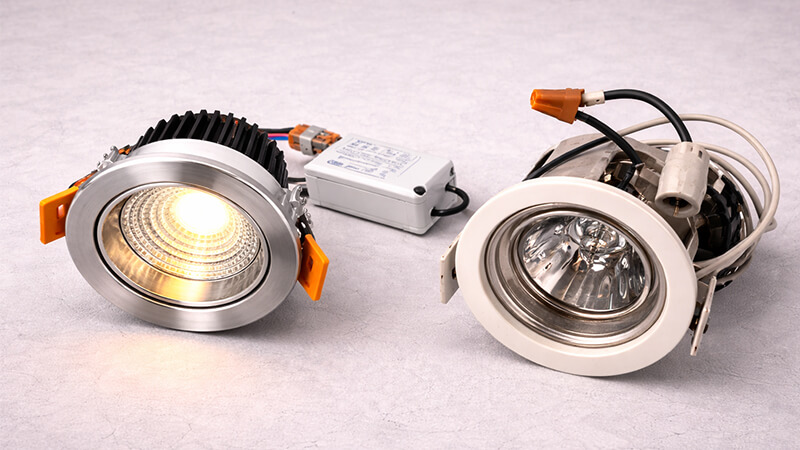
The term "burn out" is really a holdover from the incandescent era. Unlike a filament that breaks and causes the light to fail suddenly, LEDs typically don’t fail that way. Instead, they slowly dim over a very long period. This process is called lumen depreciation, and it is so gradual you may not even notice it for years. A quality LED downlight from a reputable manufacturer like iPHD, rated for 40,000 or 50,000 hours, could last over a decade even with heavy daily use. A sudden failure is very rare and almost always points to a problem with the external driver component, not the LED chip itself. This is another reason I always stress the importance of quality manufacturing—a reliable driver is the key to a long-lasting and dependable fixture.
The Replacement Process
When it is finally time for a replacement, the process is quite standardized and clean.
- Power is Cut: An electrician will first ensure all power to the fixture is shut off at the main circuit breaker.
- Fixture is Removed: Most downlights are held in the ceiling by spring-loaded clips. The electrician will carefully pull the fixture down from its hole.
- Wiring is Disconnected: The old fixture’s wires are disconnected from the home’s wiring, which is usually done inside a small junction box above the ceiling.
- New Fixture is Connected: The new fixture is wired in, and the connections are made secure and properly insulated with wire nuts or terminal blocks.
- Fixture is Installed: The new downlight is pushed back into the ceiling hole, where its clips will spring out and secure it firmly in place.
- Power is Restored and Tested: The breaker is turned back on, and the new light is tested to ensure it works perfectly.
While you do replace the whole unit, it’s important to remember how infrequently this happens compared to old bulbs.
Long-Term Value
| Light Type |
Average Lifespan |
Replacements in 20 years (approx.) |
| Incandescent |
1,000 hours |
40+ |
| Halogen |
2,000 hours |
20+ |
| Quality Integrated LED |
40,000 hours |
1 |
The "inconvenience" of one professional replacement every 15-20 years is a small price to pay for decades of reliable, efficient, and high-quality light.
Is it safe to touch wires if the switch is off?
Confident that turning off the wall switch makes it safe to handle wires? This is a dangerously common mistake that can have severe, even fatal, consequences. Let me explain why.
No, it is never safe to touch electrical wires just because the wall switch is off. Faulty wiring, mislabeled circuits, or stored energy in some components can still cause a severe shock. Always shut off power at the main circuit breaker and verify with a tester.
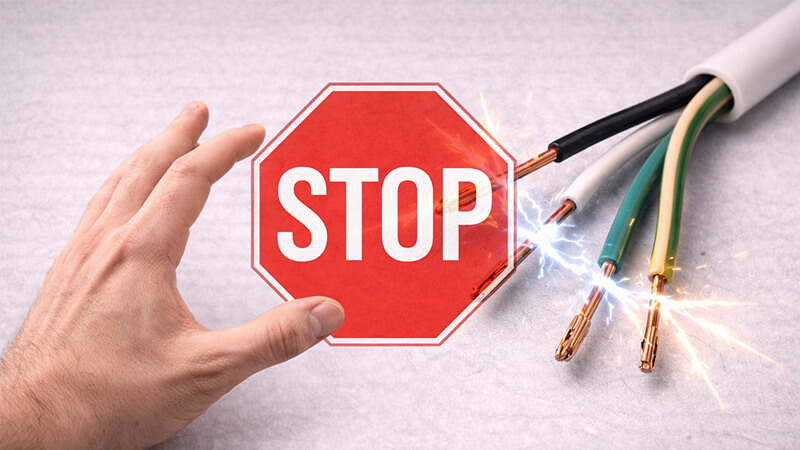
This question gets to the very heart of why integrated LED fixtures are designed the way they are. As someone who has spent his life in the lighting industry, I can tell you that user safety is the number one priority that drives this design philosophy. The answer to this question is an absolute, unequivocal no. Relying on a wall switch for your safety is like trusting a single, frayed knot on a climbing rope. It might hold, but the risk of failure is catastrophic, and it is a risk you should never take.
The Hidden Dangers in "Off" Wires
There are several reasons why a wire can be live with electricity even when the light switch is in the "off" position.
- Improper Wiring: In older homes or from past DIY jobs, the switch may be installed on the neutral wire instead of the hot (live) wire. This will turn the light off, but the fixture’s internal wiring remains constantly energized and extremely dangerous to touch.
- Shared Neutral Circuits: In some commercial or residential wiring, multiple circuits share a single neutral wire. Turning off one circuit’s breaker might not de-energize the neutral wire, which can still carry current from another active circuit and deliver a shock.
- Induced Voltage: Even in a properly de-energized wire, if it runs parallel to a live wire for a long distance, it can have a "phantom voltage" induced in it from the magnetic field of the live wire. While this is often a low current, it can still deliver a painful and surprising shock that could cause you to fall from a ladder.
The Design as a Safety Barrier
This is precisely the problem we, as responsible manufacturers, aim to solve. We know that the first rule for electricians is to kill the power at the main breaker. But we also know that most homeowners will not do this. They will flip the wall switch and assume it’s safe.
So, the integrated design is our solution. By sealing the dangerous high-voltage components inside a unit that requires a professional to handle, we create a mandatory safety barrier. We are essentially designing the fixture in a way that forces a safe procedure. It’s a design choice that says, "The risk of you touching these wires is too great, so we are not going to let you." It may seem inconvenient, but it’s a calculated decision to prevent a potentially fatal accident. It moves the fixture from being a collection of "serviceable parts" to a "safe, sealed whole."
Conclusion
In conclusion, replacing integrated LEDs requires an electrician. This design isn’t an oversight; it’s an essential safety feature that protects you from the hidden dangers of electrical work.