Worried your lighting choices look outdated? The wrong lights can make a beautiful room feel flat. Modern downlights offer a sleek solution to elevate your space with style and function.
Yes, downlights are still very fashionable, but their role has evolved. Instead of just flooding a room with light, modern design uses them strategically to highlight features, create ambiance, and add depth. The key is using them for accent and task lighting, not just general illumination.
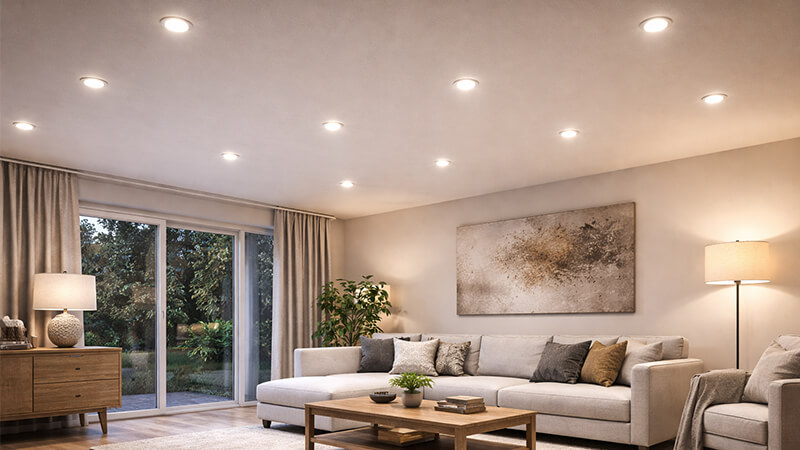
Many people think downlights are just for making a room bright. They install them in a simple grid and call it a day. But if you only use them to light up the floor, you are missing their best feature. You’re wasting their power to shape how a space feels and how valuable it looks. In my years of manufacturing, I have seen how the right placement can transform a room completely. Let us look at how this applies to different areas and trends.
Are downlights still fashionable for the living room?
Does your living room lighting feel flat and uninviting? Generic fixtures often fail to create mood. Strategic downlighting can bring your living room to life with focused, beautiful light.
Absolutely. In the living room, downlights are fashionable when used as part of a layered lightingg plan](https://www.pooky.com/blogs/inspiration/home-lighting-design-a-guide-to-layering-light?srsltid=AfmBOorqQ10qpOIyuP3aJJgDoihsTjwJ9pYUwoy6ODlsK4uUBr03iyWi)[^1]. They work best for accenting artwork, washing walls with light, or providing focused task lighting over a reading chair, rather than being the single source of light.
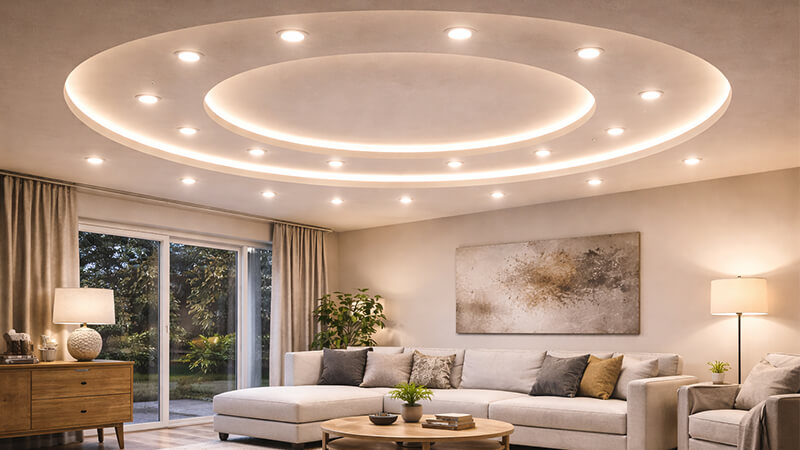
The old way of lighting a living room was to place a grid of downlights across the entire ceiling. This approach is outdated because it creates flat, uniform light with harsh shadows. It makes a room feel more like an office than a comfortable home. As a lighting manufacturer, I now work with purchasing managers like Shaz to create sophisticated, layered lightingg plan](https://www.pooky.com/blogs/inspiration/home-lighting-design-a-guide-to-layering-light?srsltid=AfmBOorqQ10qpOIyuP3aJJgDoihsTjwJ9pYUwoy6ODlsK4uUBr03iyWi)[^1]s for high-end residential projects. The modern approach is more artistic. We use light to create an experience.
The Three Layers of Living Room Light
A great living room lighting design has three layers:
- Ambient Light: This is the overall, general illumination of the room. It makes the space usable, but it shouldn’t be the only light source.
- Task Light: This is focused light for specific activities, like reading a book or working on a puzzle.
- Accent Light: This is directional light used to highlight specific features, such as artwork, architectural details, or a textured wall. This is where downlights truly shine.
Using Downlights in a Modern Way
Instead of a grid, we now use downlights surgically. We might use a few wide-beam downlights for the ambient layer, but the real magic is in the accent and task layers. We use adjustable downlights with a narrow beam to pinpoint a sculpture. We use wall-washer downlights to graze a stone fireplace, bringing out its texture. This creates visual interest and depth. It guides your eye around the room. This is how you use light to increase the perceived value of a space. You are no longer just lighting the floor; you are highlighting the elements that make the space unique and beautiful.
| Lighting Goal |
Outdated Method |
Modern Method |
| General Illumination |
A rigid grid of many downlights |
Fewer, wider-beam downlights combined with other fixtures |
| Highlighting Art |
No specific light, relying on general light |
An adjustable downlight with a narrow beam focused on the art |
| Creating Ambiance |
A single dimmer for all lights |
Layered lighting, wall washing, and dim-to-warm technology |
| Making a Room Feel Bigger |
Adding more bright lights overhead |
Using wall-washing downlights to illuminate vertical surfaces |
What are outdated lighting trends to avoid?
Are you worried your lighting choices will quickly look old? Following outdated trends can waste money and make your beautiful design feel cheap. Knowing what to avoid is key.
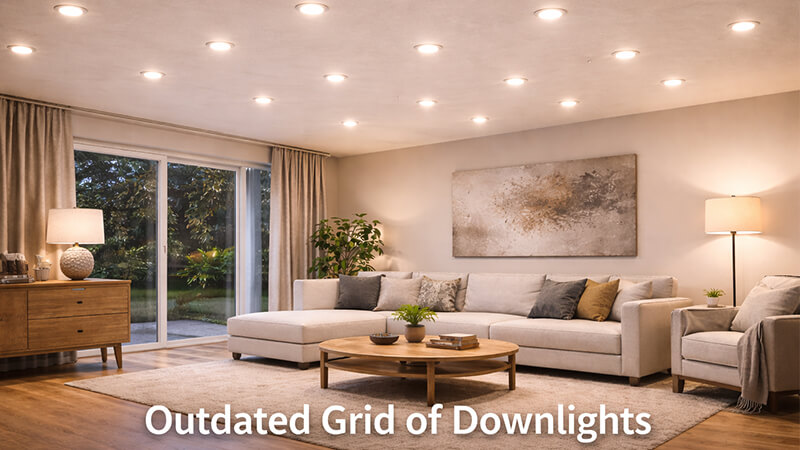
Avoid rigid, symmetrical grids of downlights that create a "landing strip" effect. Also, move away from using a single, harsh central fixture as the only light source. Overly ornate fixtures and visible, cool-white fluorescent bulbs are also trends that are firmly in the past.
In my business, I can see trends shift based on the types of products my clients order. For years, the standard order was for hundreds of the same basic 4-inch downlight with a cool, bluish light. Today, experienced buyers for large projects request a diverse portfolio of lighting for a single home. They understand that the "one-size-fits-all" approach is dead. Here are the biggest trends to leave behind.
The Problem with a Rigid Grid
The most common mistake I see is a ceiling covered in a symmetrical grid of downlights. People think more lights mean better light, but the opposite is true. This creates a very flat and uninteresting light. It casts harsh shadows on people’s faces and fails to highlight any of the room’s features. It treats your sofa the same as your walkway, and your beautiful painting the same as a blank wall. It is an inefficient and uninspired way to light a space. A project I consulted on replaced a grid of 12 downlights with just 6 strategically placed ones. The room instantly looked more luxurious and used less energy.
The Single Central Fixture
Another outdated trend is relying on a single, bright ceiling fixture in the center of the room. We sometimes call this a "boob light" for its common shape. This approach creates glare in the middle of the room while leaving the corners dark and gloomy. It offers no flexibility. You have one level of light for all activities, from watching a movie to cleaning the floor. A modern design replaces this with layers of light, providing both function and mood.
Other Outdated Choices
- Wrong Color Temperature: Using cool, blue-white light (above 4000K) everywhere in a home is a thing of the past. It feels sterile and clinical. Modern homes use warmer light (2700K-3000K) to create a cozy, inviting atmosphere.
- Visible Bulbs: Exposed compact fluorescent (CFL) "curly" bulbs are very dated. Modern design is about seeing the effect of the light, not the light source itself.
- Overly Ornate Fixtures: Huge, elaborate chandeliers in standard-height rooms can look out of place. The trend is toward cleaner lines and fixtures that complement the architecture, not overwhelm it.
What is the trend for ceiling lights?
Want your ceilings to look modern and clean? The wrong lights can clutter your ceiling and feel dated. Today’s trends focus on minimalism, integration, and layered, intelligent lighting solutions.
The biggest trend is layered lighting that combines different fixture types. This includes minimalist, trimless downlights that blend into the ceiling, linear recessed lighting for clean lines, and discrete accent lights. Smart, tunable lighting that can change color temperature and brightness is also very popular.
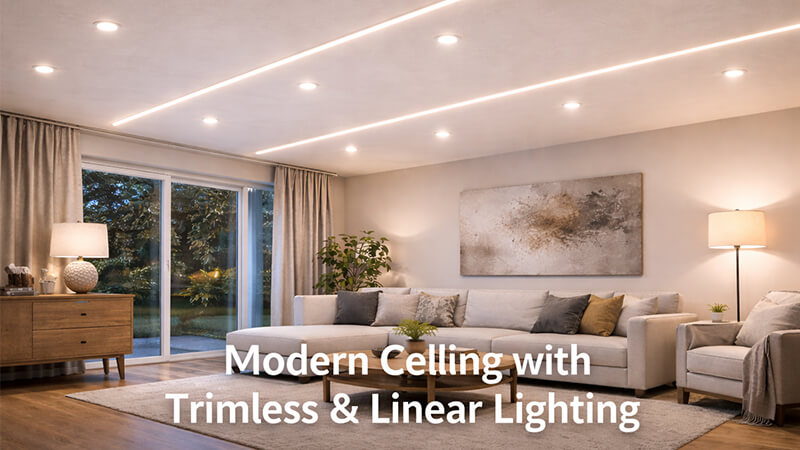
At my manufacturing facility, we have invested heavily in research and development to lead these new trends. Ten years ago, the most important specification was efficiency, or lumens per watt. Now, when I speak with clients in places like the UAE, the conversation is about the quality of light and seamless integration. They want lighting that becomes part of the architecture itself.
Trend 1: The "Quiet Ceiling"
The goal of a quiet ceiling is to make the light fixtures disappear. The focus should be on the light, not the hardware. To achieve this, we have developed trimless downlights. These fixtures are plastered directly into the ceiling before painting. When finished, all you see is a clean, sharp opening where the light emerges. There is no visible trim or bezel. We are also seeing a demand for smaller apertures, some as small as one inch. This minimalist approach creates an incredibly clean, high-end, and architectural look. It makes the light feel like it is magically appearing from the ceiling.
Trend 2: Linear and Integrated Lighting
Another major trend is the move towards linear lighting. Instead of round holes in the ceiling, designers are using recessed linear profiles to create clean lines of light. These can be used to define a space, lead the eye, or wash a wall with an even glow. This trend also includes cove lighting, where LED strips are hidden in a recess to provide soft, indirect ambient light. This technique makes the ceiling feel like it is floating and adds a sense of height and openness to the room. Light is no longer an object you hang from the ceiling; it is a material you build with.
Trend 3: Human-Centric and Smart Lighting
Perhaps the biggest shift is towards lighting that adapts to our needs. We call this human-centric lighting. My factory now produces downlights with "tunable white" technology. This allows the user to change the color temperature of the light throughout the day, from a cool, energizing white in the morning to a warm, relaxing glow in the evening. This mimics the natural rhythm of the sun and can improve well-being. "Dim-to-warm" is another popular feature, where the light gets warmer in color as it dims, just like an old incandescent bulb. Paired with smart controls through apps or voice assistants, this gives homeowners complete control over their environment.
Do downlights increase house value?
Thinking about upgrading your lighting to increase your home’s value? Poor lighting can make a property feel dark and cheap. A great downlight installation can boost appeal and perceived value.
Yes, a modern, well-designed downlight system can increase house value. It makes a home feel more luxurious, spacious, and up-to-date. Buyers respond positively to layered lighting that highlights a home’s best features, which translates to a higher perceived value and potentially a better sale price.
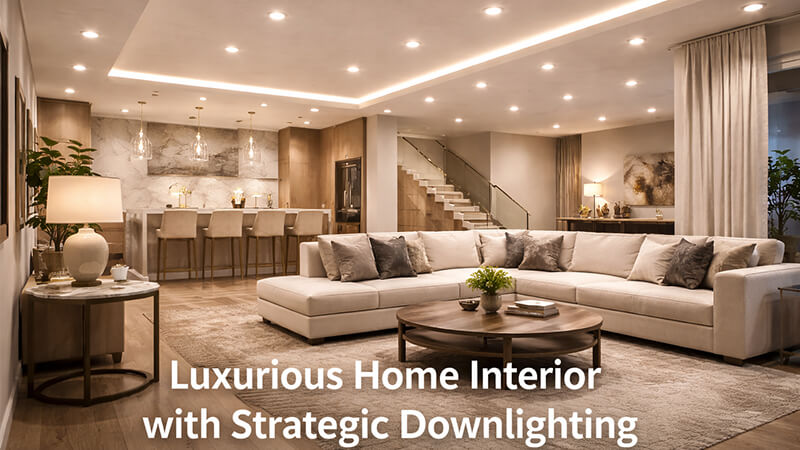
I have seen this happen many times with my clients who are project contractors. They can build a beautiful home with high-end materials, but if they install cheap, basic lighting, the entire project feels flat. Good lighting is an investment that pays for itself. It is no longer just a utility; it is a design feature that savvy buyers actively look for, just like an updated kitchen or a spa-like bathroom.
From Basic Feature to Luxury Upgrade
Think about it from a homebuyer’s perspective. Imagine you walk into two identical houses.
- House A has one single, glaring fixture in the center of each room. The corners are dark, and the beautiful finishes do not stand out.
- House B has a layered lighting design. Downlights are used to wash a textured stone wall with a soft glow. Adjustable accent lights make the kitchen island’s quartz countertop sparkle. Hidden cove lighting creates a relaxing, resort-like feel in the master bedroom.
Which house feels more expensive? Which house feels more like a home? It is always House B. This is the power of using downlights to manipulate perception and increase value. You are not just selling a house; you are selling a lifestyle and an experience.
How Smart Lighting Adds Tangible Value
A buyer might not know the technical term for "wall washing," but they will feel that the room is bigger and more inviting. They may not know what "accent lighting" is, but they will notice that the home’s best features are beautifully showcased. This emotional response translates directly to perceived value.
| Lighting Strategy |
Impact on Perceived Value |
| Wall Washing |
Makes rooms feel significantly larger, brighter, and more open. |
| Accent Lighting |
Highlights expensive finishes, art, and architectural details, making them focal points. |
| Layered Ambiance |
Creates a luxurious, sophisticated atmosphere that feels custom-designed. |
| Smart Controls & Efficiency |
Adds a modern, tech-savvy appeal and a practical benefit of lower energy bills. |
A well-lit home feels cared for, modern, and move-in ready. For a relatively small investment compared to a full renovation, upgrading to a modern, layered downlight system can provide one of the highest returns when it is time to sell.
Conclusion
Downlights are definitely still fashionable. The key is to use them strategically for layering light, creating mood, and highlighting features, not just for basic illumination.