Confused by lighting terms? Ordering the wrong lights wastes time and money. Let me explain the key difference, so you always make the right choice for your project.
No, they are not the same, but the terms are often used together. ‘Recessed’ refers to the installation method, where the light is set into the ceiling. ‘Downlight’ describes the lamp type, which directs light downwards. A downlight is often installed in a recessed way.
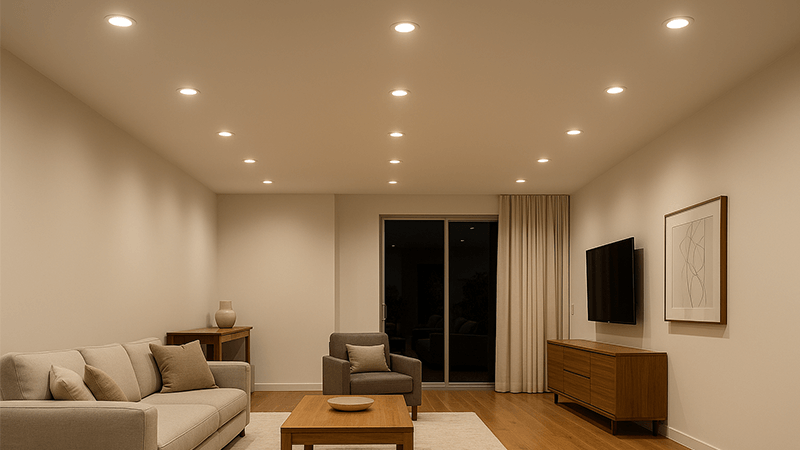
I’ve seen this confusion cause so many problems for clients over my years in the lighting industry. A purchasing manager, much like you, once ordered thousands of "recessed lights" for a hotel project. He didn’t specify the fixture type. The factory sent the recessed housings, but not the downlight modules he needed. It was a simple miscommunication that caused a major delay. But it’s an easy mistake to avoid once you understand the basics. Let’s look deeper into the specific questions you have. This will help you source your next project with complete confidence.
What is the difference between recessed light and downlight?
Do suppliers use "downlight" and "recessed light" interchangeably? This confusion can lead to costly errors and project delays. I’ll give you a clear, simple breakdown you won’t forget.
The key difference is simple. ‘Recessed’ is the installation style—mounted flush inside a ceiling. ‘Downlight’ is the type of fixture that shines light downward. So, a downlight is a fixture that is very often installed in a recessed manner, becoming a ‘recessed downlight‘.
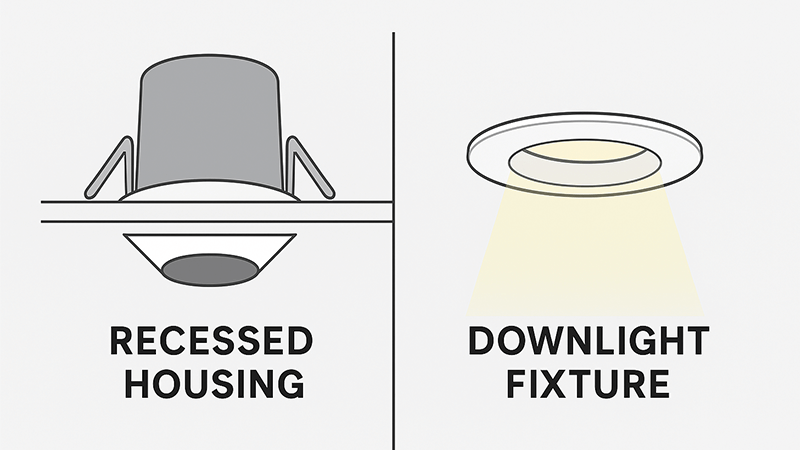
To really master this, you need to think like a manufacturer. When we receive a purchase order, we break it down into components. For us, "recessed" and "downlight" refer to two different things that are often sold together. Let me explain this in more detail.
Recessed: The Installation Method
Think of "recessed" as a verb, an action. It means to install something into a surface so it sits flush. In lighting, this means cutting a hole in the ceiling and placing the fixture inside. The main components of a recessed installation are the housing and the trim.
The housing is the metal can or frame that is installed inside the ceiling. This is the part that holds the light fixture and connects to the building’s wiring. There are different types of housings, like "New Construction" housings which are installed before the ceiling drywall, and "Remodel" housings which can be installed in an existing ceiling.
The trim is the visible part of the fixture. It’s the ring and sometimes the reflector you see when you look up at the ceiling. The trim finishes the look and helps shape the light.
Downlight: The Light Fixture
Now, think of "downlight" as the actual product, the lamp itself. It’s a specific type of luminaire designed to cast light in a downward direction. Its purpose is to direct light, usually in a conical beam.
The key thing to remember is that downlights don’t have to be recessed. I have manufactured many surface-mounted downlights for projects with concrete ceilings where recessing is not possible. There are also pendant downlights that hang from the ceiling. However, the most common application by far is to pair a downlight fixture with a recessed housing. This combination is what people usually mean when they say "recessed light" or "downlight".
Here is a table to make it clear:
| Feature |
Recessed Lighting |
Downlight |
| Definition |
An installation method |
A type of light fixture |
| Function |
Hides the fixture body in the ceiling |
Directs light downwards |
| Example |
A light installed flush with the drywall |
The lamp unit that creates the light beam |
| Common Name |
Often called "can light" or "pot light" |
Often just called "downlight" |
| Combined Term |
Recessed Downlight (The most common product) |
Recessed Downlight (The most common product) |
So, when you are sourcing, be specific. If you need a complete unit, ask for a "recessed downlight." If you only need the lamp module, ask for a "downlight module." This clarity will save you from headaches.
What is the rule for recessed lighting?
Are you worried about placing lights incorrectly? Bad spacing can ruin a design, creating dark spots or overpowering glare. I will show you the simple rules to follow.
A good general rule is to divide the ceiling height by two to get the distance between each recessed light. For a standard 8-foot ceiling, you would place your lights about 4 feet apart. Also, keep them 1.5 to 3 feet away from the walls.
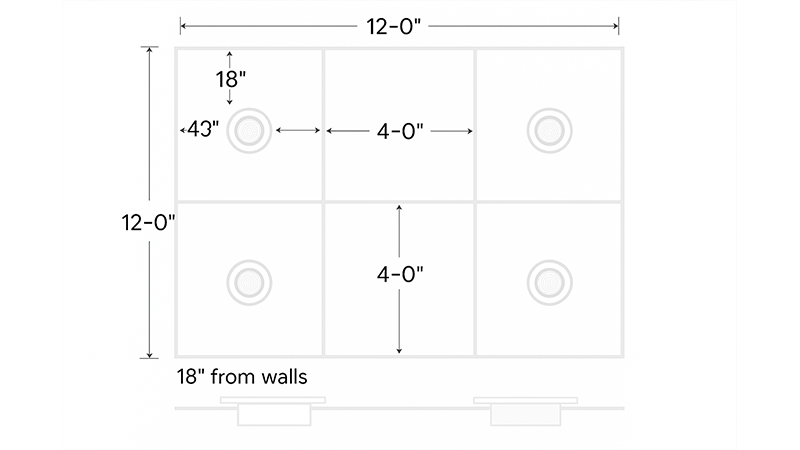
Following this rule is a great start, but for a truly professional result, you need to consider a few more factors. I always advise my clients to think about the purpose of the room and the type of light they need. The rules change depending on whether you are creating general light, task light, or accent light.
General Lighting (Ambient)
This is the main source of light for a room. The goal is to create a uniform, comfortable brightness. The rule I mentioned above is perfect for this.
- Calculation: Ceiling Height / 2 = Spacing Between Lights
- Example (9-foot ceiling): 9 / 2 = 4.5 feet between each light.
- Wall Distance: Place the first row of lights about 2-3 feet from the wall.
I remember a project for a large office space. The contractor just put lights everywhere. The result was a mess of bright and dark spots. We had to create a new plan. We used this simple formula to map out a grid. It instantly created a smooth, even layer of light that made the entire space feel more professional and comfortable.
Task Lighting
This is focused light for specific activities, like cooking, reading, or working. For task lighting, you place the lights directly above the work area. The spacing rule changes.
- Placement: Directly over the counter, desk, or reading chair.
- Spacing: You might place them closer together, perhaps 2-3 feet apart, to concentrate the light.
- Beam Angle: Use a narrower beam angle (e.g., 24° or 36°) to focus the light and avoid spilling it into other areas.
Here is a quick reference for common task areas:
| Task Area |
Recommended Placement |
Notes |
| Kitchen Counter |
Centered over the edge of the counter |
This prevents your body from casting a shadow on your workspace. |
| Office Desk |
Two lights, one on each side of the desk |
This reduces shadows and provides even light across the work surface. |
| Reading Nook |
Directly over the chair |
A single, focused light is often enough. Use a gimbal (adjustable) downlight. |
Accent Lighting
This type of lighting is used to highlight architectural features or artwork. The placement is all about creating drama and drawing attention.
- Rule of Thumb: Place the light so the beam hits the object at a 30-degree angle. This minimizes shadows and glare.
- Distance from Wall: To achieve this angle, a good starting point is to place the light 2 to 3 feet away from the wall you want to illuminate.
- Fixture Type: Use an adjustable or "gimbal" recessed downlight. This allows you to aim the light precisely.
For a luxury villa project in Dubai, we used accent lighting to highlight a series of paintings. By using adjustable recessed lights, the client could perfectly aim each one. The result was stunning. The art became the hero of the room, exactly as the designer intended.
Do you need an electrician to install LED downlights?
Thinking about a DIY installation? It might seem easy, but electrical work is risky and can lead to big problems. I will explain why a professional is almost always necessary.
Yes, in most cases, you absolutely need a qualified electrician to install LED downlights. It involves working with mains voltage, which is dangerous. Also, incorrect installation can be a fire hazard and may void your home insurance or the product’s warranty.
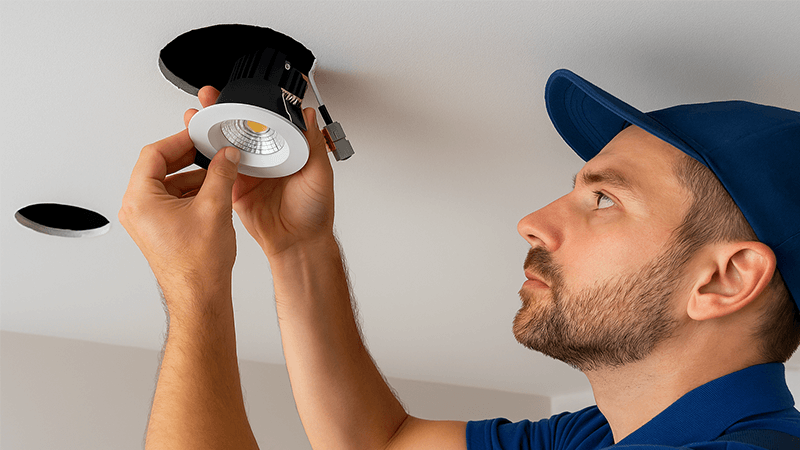
I know it’s tempting to save money by doing it yourself. I’ve been in the lighting business for over 15 years, and I’ve seen the consequences of DIY electrical work. I once had a client who tried to install 50 downlights himself in his new store. He got the wiring wrong. It not only damaged all 50 lights, which my factory had to replace, but it also created a serious fire risk. His entire project was delayed by weeks, costing him far more than hiring an electrician would have.
Why Safety and Regulations Come First
Working with electricity is not like painting a wall. A small mistake can have severe consequences.
- Personal Safety: The biggest risk is electric shock, which can be fatal. An electrician is trained to work safely with live circuits, using a multimeter to check for power and following strict safety protocols.
- Fire Hazard: Improper wiring is a leading cause of electrical fires. Loose connections, using the wrong gauge of wire, or overloading a circuit can cause wires to overheat. An electrician understands electrical loads and ensures all connections are secure and up to code.
- Building Codes: Most countries have strict electrical codes and regulations. In places like the UAE, these are very serious. An installation that doesn’t meet code can fail an inspection. This could force you to redo the work and pay fines. Electricians are certified and know the local codes.
The Role of the Electrician
Hiring a professional is about more than just safety. It’s about ensuring a quality, long-lasting installation.
Here’s what a qualified electrician does:
| Task |
Description |
Why It’s Important |
| Planning the Layout |
They can help you apply the spacing rules we discussed to your specific room. |
Ensures optimal light coverage and visual appeal. |
| Cutting the Holes |
They use a special holesaw to make clean, perfectly-sized cuts in the ceiling. |
A sloppy cut is hard to fix and looks unprofessional. |
| Running the Wires |
They safely run the correct type of electrical cable from the power source to each light location. |
Ensures the circuit can handle the load and meets all legal codes. |
| Making Connections |
They connect the downlights to the wiring securely, using proper connectors. |
Prevents loose connections, which are a major fire risk. |
| Testing the System |
After installation, they test the entire circuit to ensure everything is working correctly and safely. |
Gives you peace of mind that the job is done right. |
There is one exception: low-voltage plug-in systems. Some modern LED downlights are part of a kit where a special driver plugs into a regular outlet, and the lights connect to the driver with simple connectors. If the system is fully "plug-and-play" and doesn’t require touching the building’s main wiring, you might be able to install it yourself. However, for any hardwired downlight, always hire a professional. It’s an investment in safety and quality.
What is another name for recessed lights?
Are you finding different names for the same product? This can be very confusing when sourcing from international suppliers. Let me clarify the common terms you will encounter.
Recessed lights are most commonly called "can lights" or "pot lights." The name "can light" comes from the can-shaped metal housing that is installed into the ceiling. The term "pot light" is used for the same reason and is especially common in Canada.
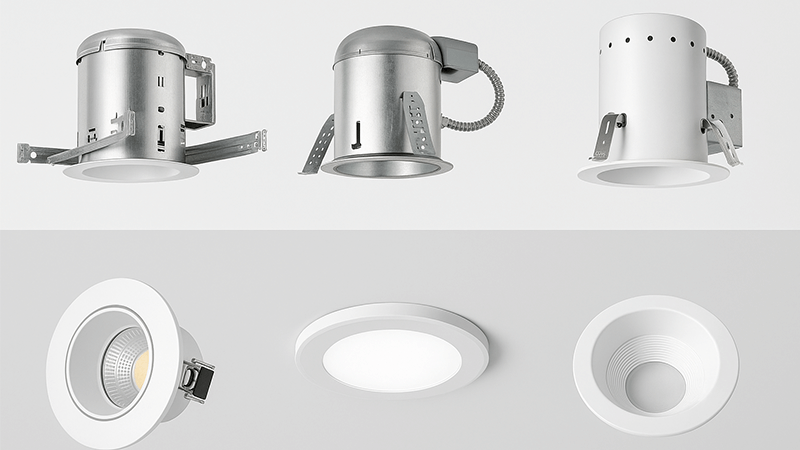
When I first started exporting my products, I was surprised by all the different names my clients used. A customer from the USA would ask for "can lights," while a partner in Canada would order "pot lights." A client from the UK might call them "downlighters." They were all talking about the same thing: a recessed downlight. Understanding these regional differences is key for clear communication. As a purchasing manager, knowing these terms will make you a more effective and knowledgeable sourcer.
A Global Dictionary of Lighting Terms
The names people use are often very descriptive. They usually refer to a part of the fixture or its function. This can help you remember them. Let’s break down the most common synonyms you’ll hear in the industry.
- Can Light: This is the most popular term in the United States. It’s short for "canister light" and refers directly to the cylindrical metal housing, or "can," that is hidden in the ceiling. When someone asks for a "6-inch can," they are talking about the housing for a 6-inch recessed light.
- Pot Light: This is the Canadian equivalent of "can light." The logic is the same—the housing looks like a small pot installed in the ceiling. If you are working with Canadian suppliers or contractors, this is the term you should use.
- Downlighter: This term is very common in the United Kingdom and other parts of Europe. It focuses on the function of the light—shining down. It’s a very logical name and is often used interchangeably with "downlight."
Less Common and Technical Terms
Beyond the popular names, there are a few more technical or older terms you might see on specification sheets or in architectural plans.
| Term |
Region/Context |
Meaning and Origin |
| High-Hat |
USA (Older Term) |
This name comes from the shape of older, bulkier housings. They had a frame that looked like the brim of a high-hat, with the can sticking up. |
| Troffer Light |
Commercial/Office |
This is a different type of recessed light, not a downlight. It’s a rectangular fixture fitted in a dropped ceiling grid (e.g., 2×4 feet). |
| Luminaire Encastré |
French-speaking regions |
This is the direct French translation, meaning "recessed luminaire." You will see this in Quebec, Canada, or when dealing with French companies. |
I always tell my team to confirm with pictures. If a client uses a term you don’t know, just ask for a photo or a spec sheet. In my experience, a simple picture resolves all confusion. When you are creating a purchase order, it’s also a good idea to include the most common names. For example, you could write: "Product: 4-inch Recessed LED Downlight (also known as Can Light/Pot Light)." This level of detail shows your expertise and ensures there is no misunderstanding with your supplier.
Conclusion
The difference between "recessed" and "downlight" is simple: one is an installation method, the other a fixture type. Mastering this and other terms will make you a lighting expert.