High electricity bills from outdoor lighting a concern? Old flood lights are power-hungry. Thankfully, modern LED technology offers a very efficient solution for powerful, wide-area illumination.
Yes, modern flood lights, especially those using LED technology, are highly energy-efficient. Compared to traditional halogen or metal halide lamps, LED flood lights consume up to 80% less energy while providing the same or better brightness. This makes them a cost-effective choice for long-term use.
The jump from traditional to LED technology is huge. But energy efficiency is more than just the type of bulb. Many factors determine how much power your flood lights will actually use. Let’s break down the details so you can make the best choice for your projects.
Do flood lights use a lot of electricity?
Seeing a high wattage on a flood light can make you assume a massive bill. This might make you hesitate on big projects. But the real cost depends on the technology.
The amount of electricity a flood light uses depends entirely on its type. An old 500W halogen flood light uses a lot of power. A modern 50W LED flood light, which produces similar brightness, uses ten times less. Choosing LED is the key to low electricity consumption.
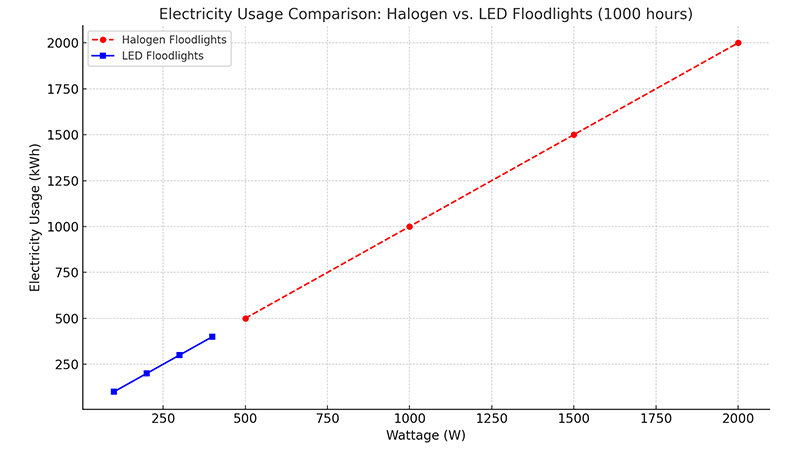
When I first started in this industry, the biggest complaint from clients was the operational cost of their security and area lighting. A business might install dozens of 1000W metal halide flood lights. The monthly electricity bill was enormous. Today, we can achieve better, more reliable lighting with a 200W LED fixture. The difference is incredible. This shift changes everything for purchasing managers like you. It means you can propose lighting solutions that not only have a lower purchase price over time but also offer significant long-term savings for the end-user. It’s a powerful selling point.
Understanding Wattage vs. Brightness
The key is to stop thinking only in watts and start thinking in lumens per watt (lm/W). This is the true measure of efficiency. It tells you how much light you get for every watt of electricity you pay for.
| Light Technology |
Typical Wattage (for ~20,000 lumens) |
Efficacy (Lumens/Watt) |
Energy Use |
| Halogen |
1500W |
~15 lm/W |
Very High |
| Metal Halide |
400W |
~80 lm/W |
High |
| LED |
150W |
~140 lm/W |
Very Low |
As you can see, an LED light uses dramatically less electricity to produce the same amount of brightness. This is the main reason why they have become the industry standard. When you are sourcing products, always ask for the lm/W specification. A higher number means better efficiency and bigger savings for your client.
What are the disadvantages of flood lights?
Thinking about installing powerful flood lights? You might worry about issues like light pollution or maintenance. These are valid concerns that can affect a project’s success and long-term costs.
The main disadvantages of flood lights, especially older models, are high energy use, short lifespan, and potential for light pollution. Modern LED flood lights solve the energy and lifespan issues, but improper installation can still cause glare and trespass, creating problems for neighbors.
Every lighting solution has trade-offs. While LED flood lights are fantastic, they aren’t perfect. Understanding their potential downsides helps you plan better and select the right products. I remember a project where a client installed very powerful flood lights aimed incorrectly. The light was spilling into a residential area, and they received many complaints. We had to go back and add shields and re-aim every fixture. It taught me that the product is only half the solution; proper application is just as important.
Key Drawbacks and How to Mitigate Them
Let’s look at the common issues and how to manage them effectively.
1. Light Pollution and Glare
This is the most common complaint. When light is not directed properly, it can create glare for drivers or shine into places it’s not wanted, like a neighbor’s window.
- Solution: Choose fixtures with good optics, like specific beam angles (e.g., 30°, 60°, 90°). Use full cut-off designs that direct all light downward. Also, consider adding shields or visors to block stray light. Proper aiming during installation is critical.
2. Maintenance and Lumen Depreciation
Every light source gets dimmer over time. For flood lights mounted high up on poles, maintenance can be difficult and expensive. Another big issue I’ve seen is dirt buildup.
- Solution: I always tell my clients this: after long-term use, dust, bird droppings, and grime will build up on the lens and housing. This can easily reduce brightness by 20-30%. Regular cleaning is essential to maintain efficiency. Also, choose high-quality LEDs with an L70 rating of 50,000 hours or more. This guarantees the light will maintain at least 70% of its initial brightness for that period.
What is the most energy-efficient lighting system?
You need the best performance with the lowest running costs. This makes you question which lighting technology truly saves the most energy. You want a system, not just a bulb.
An integrated LED lighting system is the most energy-efficient option available today. This includes high-efficacy LED fixtures combined with smart controls like motion sensors, photocells, and dimming capabilities. This ensures light is only used when and where it’s needed, maximizing energy savings.
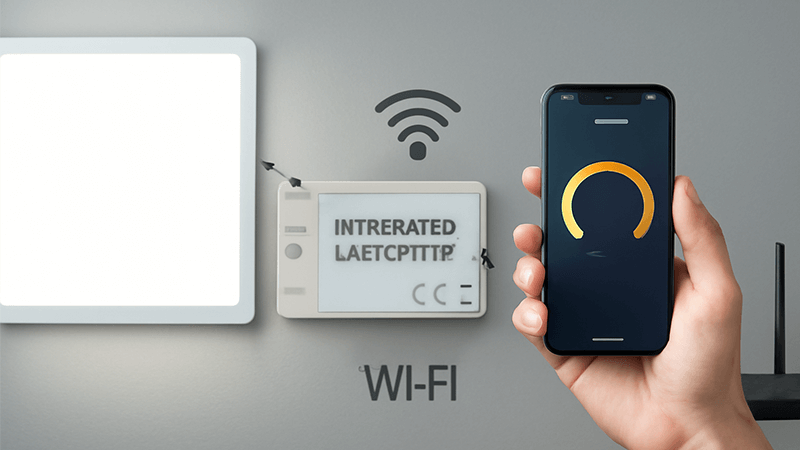
In my years of manufacturing, I’ve seen technology evolve from simple on/off switches to complex, automated systems. The most successful projects I’ve been a part of are those that treat lighting as a complete system. Simply swapping a metal halide lamp for an LED lamp saves energy, yes. But adding a motion sensor to that LED lamp in a low-traffic area can save an additional 50-80%. It’s about being smart with the technology. The goal is to deliver the right amount of light at the exact moment it’s needed, and not a single watt more.
Components of an Efficient System
An efficient system is more than just the light source. It’s about how you control it. Let’s break down the key parts.
High-Efficacy LED Fixtures
This is the foundation. You need a good light engine.
- What to look for: Look for fixtures with a high lumens-per-watt (lm/W) rating, typically over 130 lm/W for modern flood lights. Also, check for a good heat sink design. LEDs are sensitive to heat, and proper thermal management ensures a long, efficient life.
Smart Controls
This is where you achieve maximum savings.
- Motion Sensors: Perfect for security lighting and areas with intermittent traffic. The light can stay at a low level (e.g., 20%) and then ramp up to 100% when motion is detected.
- Photocells (Dusk-to-Dawn): These sensors automatically turn lights on when the sun goes down and off when it comes up. This simple tool prevents daytime energy waste.
- 0-10V Dimmers: This allows you to set the maximum brightness level. If a site is too bright, you can dim all fixtures by 20%, saving energy without compromising safety.
- Timers and Schedules: Programmable timers ensure lights are off during scheduled closing times or holidays.
By combining these elements, you create a system that actively works to reduce electricity consumption far beyond what a simple LED fixture can do on its own.
Can LED lights run up an electric bill?
You’ve heard that LEDs save money, but you might worry about large-scale projects. If you install hundreds of lights, can the bill still be surprisingly high? This is a practical concern.
Yes, any light can run up an electric bill if used improperly or if the wrong product is chosen. Using too many LED lights, choosing models with unnecessarily high wattage, or leaving them on 24/7 will result in a significant electricity cost, despite their efficiency.
I’ve seen this happen. A client once replaced their old 400W fixtures one-for-one with 400W LED fixtures. They were impressed by how bright the area was, but they didn’t see the savings they expected on their bill. The problem was that a 150W LED would have been more than enough. They were "over-lighting" the space and wasting energy. The efficiency of an LED is a tool, but you have to use the tool correctly. It’s not just about swapping old tech for new; it’s about re-evaluating the lighting needs of the space and designing a solution that is appropriate, not excessive.
How to Prevent High Bills with LEDs
Even with efficient technology, smart planning is crucial to keep costs low.
1. Conduct a Lighting Audit
Before you buy anything, understand what you need.
- Action: Analyze the area that needs lighting. What is the required brightness level (measured in foot-candles or lux)? What is the purpose of the light—safety, security, aesthetics? Don’t just replace a 1000W metal halide with the brightest LED you can find. A lighting professional can help you calculate the exact needs.
2. Choose the Right Wattage and Optics
Bigger is not always better.
- Action: Select a fixture that meets the required lux levels, not one that greatly exceeds them. Use photometric data from the manufacturer to see how the light will be distributed. Using the correct beam angle can mean you need fewer fixtures to light the same space effectively.
3. Implement Smart Controls
This is the most effective way to cut down on waste.
- Action: As we discussed, use sensors and timers. Why have a parking lot at 100% brightness at 3 a.m. if no one is there? A system that dims to 20% and brightens on motion is much more cost-effective. Leaving lights on when they are not needed is the fastest way to run up a bill, no matter what kind of light you use.
Conclusion
Modern LED flood lights are very energy-efficient. To maximize savings, choose the right wattage, use smart controls, and perform regular maintenance. This ensures low operational costs for any project.