Struggling with bathroom lighting choices? Moisture can cause short circuits and failures, leading to costly and dangerous problems. Understanding the correct wet rating is the key to a safe, long-lasting installation.
Yes, some bathroom lights must be wet-rated, especially those inside showers or tub enclosures exposed to direct water spray. For most other areas, like above the vanity or on the main ceiling, a damp rating is sufficient to handle steam and condensation safely and effectively.
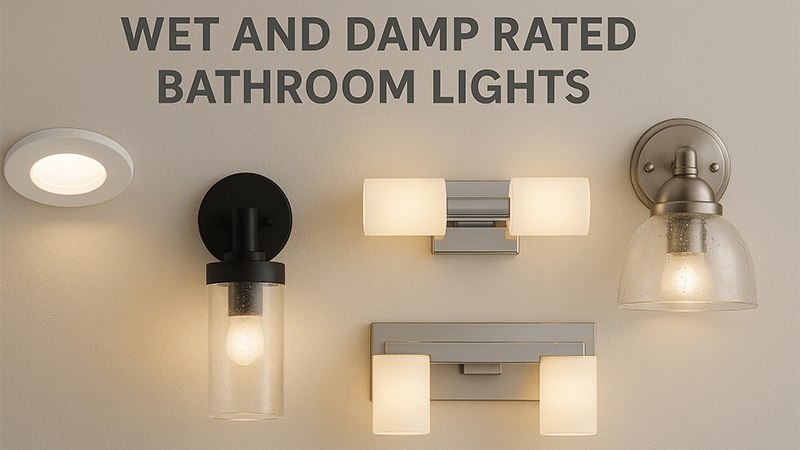
Choosing the right bathroom light goes beyond just picking a nice style. It is about safety, durability, and creating a space that will last for years. As a purchasing manager, you know that call-backs for failed products are a nightmare. The terms ‘wet rated’ and ‘damp rated’ can seem confusing, but getting them right is critical. Let’s break down exactly what you need to know for each part of the bathroom so you can source with confidence.
Do bathroom lights need to be damp rated?
Confused if ‘damp rated’ is enough? Choosing the wrong fixture for a steamy bathroom leads to early failure and frustrated clients. Let’s pinpoint exactly where damp-rated lights are the perfect choice.
Yes, almost all lights in a bathroom should be at least damp-rated. This applies to general ceiling lights and fixtures above the vanity mirror. A damp rating ensures the fixture can safely handle indirect moisture, like steam from a hot shower, without rusting or short-circuiting over time.
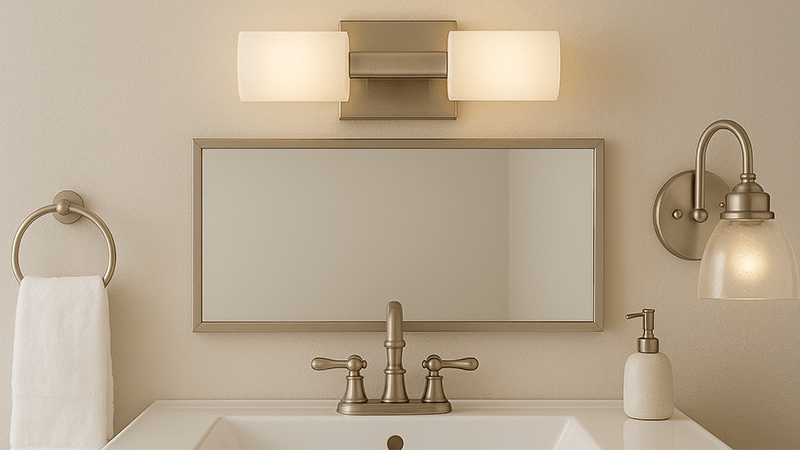
A damp rating is the baseline for quality bathroom lighting. Think of it as the minimum requirement for a fixture to survive in a high-humidity environment. These lights are designed with seals and materials that prevent moisture in the air from getting into the electrical components. This is crucial for the areas outside the direct spray of water, which is actually most of the bathroom.
I remember working with a project contractor in Dubai. He was sourcing lights for a new hotel. He initially wanted to use standard, non-rated downlights throughout the bathrooms to save on costs. I explained that while they might work for a few months, the constant steam from showers would quickly corrode the internal wiring and drivers. This would lead to flickering lights, premature failures, and a huge maintenance headache for the hotel. We switched his specification to damp-rated fixtures for the main ceiling areas. The initial cost was slightly higher, but he avoided the much larger expense and reputational damage of replacing hundreds of lights within the first year. This is what I mean when I say quality lighting becomes part of the building itself, not just a replaceable bulb. It ensures performance and peace of mind for you and your end-user.
Do bathroom lights need to be water resistant?
Does ‘damp rated’ mean water resistant? Using a damp-rated light where a water-resistant one is needed can lead to immediate failure and safety risks. Let’s clarify this crucial difference now.
Yes, bathroom lights need to be water-resistant to varying degrees depending on their location. ‘Water-resistant’ is a general term, while specific IP ratings tell you the exact level of protection. Fixtures inside a shower need a high level of water resistance, like an IP65 rating.
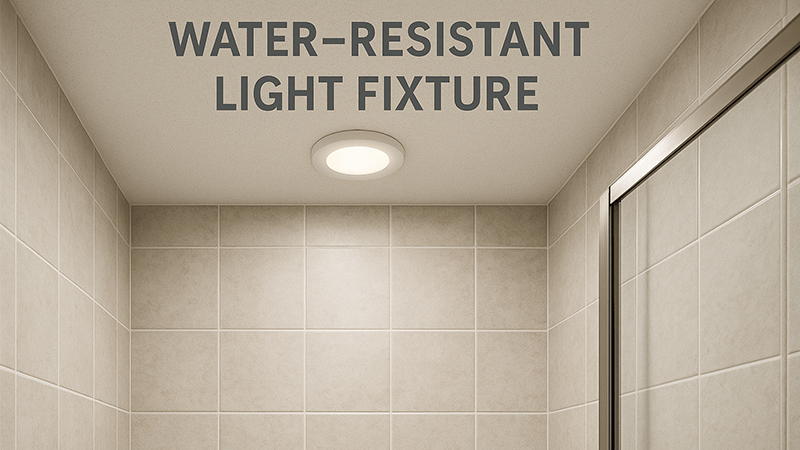
The term ‘water-resistant’ can be tricky because it is not a technical standard. To really understand a light’s ability to resist water, we must look at its Ingress Protection, or IP, rating. This two-digit number gives us a precise measure of protection. The first digit is for solid objects (like dust), and the second is for liquids (water). For bathroom lighting, the second digit is the most important one.
A damp-rated light might have an IP rating of IP44. The second ‘4’ means it is protected against splashing water from any direction. This is perfect for a vanity light that might get splashed from the sink. However, a light inside a shower needs much more protection. It will be directly hit by jets of water. For that, you need a wet-rated fixture, which typically has a rating of IP65 or higher. The ‘5’ in IP65 means it is protected against low-pressure water jets from any direction. This is a significant step up in protection. Choosing the correct IP rating isn’t just a recommendation; it’s a fundamental safety requirement that ensures the fixture will operate correctly and not pose an electrical hazard to the user. It is the difference between a product that works and one that is a liability.
What is the waterproof rating for bathroom lights?
Sourcing for a project and need to specify the right waterproof rating? Getting the IP rating wrong can mean your whole order is non-compliant and unsafe for its intended use.
The required waterproof rating for bathroom lights depends on the ‘zone.’ Zone 0 (inside the bath/shower) requires at least IP67. Zone 1 (above the bath/shower) needs IP65. Zone 2 (areas around the shower/sink) requires IP44. Outside these zones, no IP rating is required.
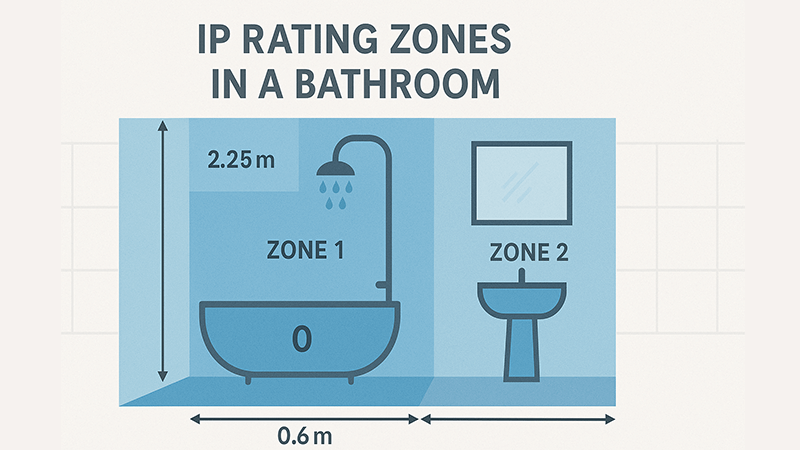
To make things simple and safe, electrical regulations divide a bathroom into different zones. Each zone has a minimum IP rating requirement based on how much water the light fixture is likely to encounter. As a purchasing manager like Shaz, understanding these zones is critical for sourcing compliant products for your market.
Here is a simple breakdown:
| Zone |
Location Description |
Minimum IP Rating |
My Recommendation |
| Zone 0 |
Inside the bathtub or shower tray itself. |
IP67 |
This is for submersible fixtures. It’s rare but necessary for things like jacuzzi lights. Always use low-voltage (12V) here. |
| Zone 1 |
The area directly above the bath or shower, up to 2.25m from the floor. |
IP65 |
This is the most common area for dedicated shower lights. An IP65 rating protects against direct water jets. This is non-negotiable. |
| Zone 2 |
The area stretching 0.6m outside the bath or shower and above the sink. |
IP44 |
This covers most vanity lights and downlights near the shower. IP44 protects against splashes, which is essential for safety and longevity. |
| Outside Zones |
Any area outside of zones 0, 1, and 2. |
No Requirement |
While not required, I always recommend at least an IP20 fixture with a good finish to prevent corrosion from general humidity. |
I always advise clients to be cautious. If you are ever in doubt, choose the higher IP rating. The cost difference between an IP44 and an IP65 downlight is often small, but the increase in safety and product lifespan is huge. Providing a clear specification based on these zones will ensure you get quotes for the correct, safe, and durable products every time.
Can you put an IP20 light in a bathroom?
Tempted to use a standard IP20 light to save costs on a bathroom project? This choice can lead to rust, electrical faults, and a reputation for supplying poor-quality products.
You should not put a standard IP20 light in most bathroom areas. IP20 offers no protection against moisture. It is only suitable for areas far from any water source, like a high ceiling in a large, well-ventilated bathroom. For safety and durability, IP44 is the minimum recommended.
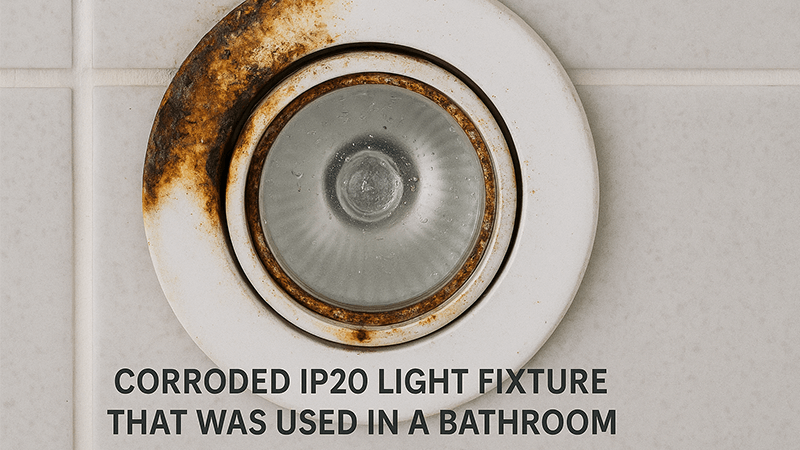
Using an IP20-rated light in a bathroom is a risk I never recommend my clients take. The ‘2’ means it is protected from fingers, and the ‘0’ means it has zero protection against water. In a bathroom, steam is everywhere. It will get inside that IP20 fixture, condense on the cool metal and electronic components, and cause rust and short circuits. The light will fail, and it will happen much sooner than anyone expects.
I see this as a core part of my mission. We are not just selling light fittings; we are providing elements of an environment. A light should have the same lifespan as the building it is in. When you specify a proper IP44 or IP65 fixture, you are doing more than just meeting a safety code. You are making a long-term investment in quality. You are preventing future maintenance problems for the owner and protecting your reputation as a supplier of reliable products. Choosing to reject IP20 for bathrooms is not about following a tedious rule. It is a profound understanding of what quality means. It is about delivering on the promise that the lighting you provide will be safe, beautiful, and durable for years to come. That is the kind of long-term thinking that builds strong partnerships.
Conclusion
In summary, choosing the right IP-rated light for each bathroom zone is not just a rule. It is essential for safety, longevity, and delivering a quality project that lasts.