Worried your LED downlights are getting too warm? Concerned this heat could be a sign of poor quality or danger? It’s a common fear, but the truth might surprise you.
Yes, LED downlights do get warm, and this is a sign of a well-designed product. An effective cooling system, or heatsink, draws heat away from the sensitive LED chip and releases it through the fixture’s body. A warm downlight means it’s working correctly to protect its lifespan.
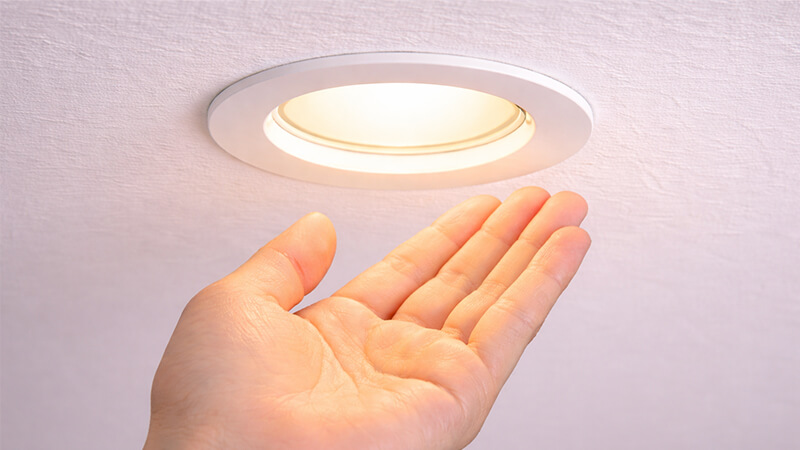
You might think that heat is always a bad sign when it comes to electronics. For years, we were taught that heat is the enemy of performance and longevity. And in many cases, that’s true. But with high-quality LED lighting, the story is a bit different. The warmth you feel is not a symptom of a problem; it’s evidence of the solution in action. The real danger lies in the heat you can’t feel, trapped deep inside the light. Let’s explore why this warmth is actually a feature, not a flaw, and what it tells you about the quality of your lighting.
Do LED downlights generate heat?
Worried that your LED downlight feels warm? Thinking this means it’s wasting energy or about to fail? This is a common misunderstanding that can lead to unnecessary concern.
Yes, all LED downlights generate heat. While they are highly efficient at turning electricity into light, some energy is always lost as heat. The key is how a downlight manages this heat. A warm fixture shows that the heat is being properly managed and moved away from the core components.
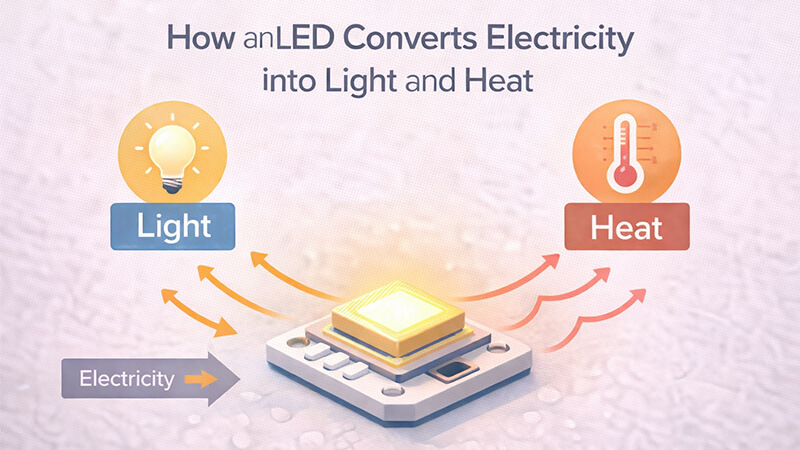
When I first started in the LED lighting industry, one of the biggest selling points was how "cool" they were compared to old incandescent bulbs. And it’s true, they run much cooler. But "cooler" doesn’t mean "cold." It’s important to understand where this heat comes from and why managing it is the secret to a long-lasting, high-quality LED product. The design of a top-tier LED downlight is not about eliminating heat, but about how elegantly it guides and dissipates it.
How LEDs Create Light and Heat
At the heart of every LED is a semiconductor chip. When electricity passes through this chip, it excites electrons, which then release energy in the form of photons—the light we see. This process is called electroluminescence. However, it’s not 100% efficient. Some of the electrical energy doesn’t convert into light and is instead released as heat. This is a fundamental law of physics: no energy conversion is perfect. The difference is the ratio of light to heat.
Comparing Heat Across Different Light Types
Old-fashioned incandescent bulbs were basically heaters that happened to glow. They converted about 90% of their energy into heat and only 10% into light. Halogens were a bit better but still incredibly hot. LEDs flip this ratio completely. A high-quality LED converts about 80-90% of its energy into light, leaving only 10-20% as heat. This is why you can have a very bright LED that uses very little wattage and produces far less heat overall.
Here’s a simple table to show the difference:
| Light Bulb Type |
Energy to Light |
Energy to Heat |
Typical Operating Temperature |
| Incandescent |
~10% |
~90% |
Up to 200°C (392°F) |
| Halogen |
~15% |
~85% |
Up to 300°C (572°F) |
| LED |
~80-90% |
~10-20% |
30°C – 60°C (86°F – 140°F) |
So, while LEDs do generate heat, they generate much less of it. The warmth you feel is a small, controlled amount of thermal energy being released, which is a world away from the dangerous heat of older technologies.
Is it normal for LED lights to get hot?
You’ve touched your LED fixture and it feels quite warm, maybe even hot. Does this mean you bought a cheap product or that something is wrong? This is a valid concern for any buyer.
Yes, it is completely normal for a quality LED light to get warm or hot. This warmth is proof that its thermal management system—the heatsink—is working. It is pulling heat away from the sensitive LED chip, which is essential for ensuring a long and stable lifespan for the light.
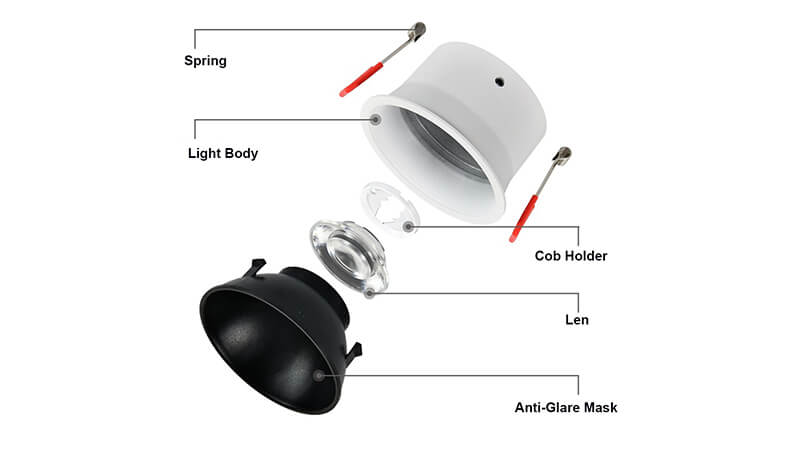
I remember visiting a client, Shaz, in the UAE. He was concerned because a batch of downlights he’d installed felt very warm to the touch. He thought they were defective. I explained that he should be more worried if they felt cold. A cold fixture might mean the heat is trapped inside, slowly cooking the LED chip and shortening its life. Those seemingly simple metal parts—the heatsink and aluminum PCB—are actually the light’s "respiratory system." They breathe the heat out.
The Critical Role of the Heatsink
The single most important factor for an LED’s lifespan is keeping the semiconductor chip cool. The heat generated at the chip, if not removed, will degrade the chip and the phosphors that create the light’s color. This leads to a drop in brightness and a shift in color temperature over time. This is where the heatsink comes in.
- Conduction: The heat starts at the tiny LED chip. It’s transferred through a thermal interface material to a metal-core printed circuit board (MCPCB), usually made of aluminum. This board quickly spreads the heat out.
- Convection & Radiation: The MCPCB is attached to the main body of the downlight, which acts as the heatsink. This part is often designed with fins to increase its surface area. The heat travels to the outer casing, where it is released into the surrounding air through convection (air movement) and radiation.
A warm outer casing is direct evidence that this entire chain is working perfectly. The heat has successfully traveled from the core to the outside.
Good vs. Bad Thermal Management
How can you, as a buyer, tell the difference? It’s not just about temperature, but about design and materials. A well-designed heatsink is not just a block of metal; it’s an engineered component.
| Feature |
Good Thermal Management (Warm Fixture) |
Poor Thermal Management (Cool or Very Hot Fixture) |
| Heatsink Material |
High-grade aluminum (e.g., ADC12 Die-cast) for excellent conductivity. |
Low-grade recycled aluminum or even plastic, which traps heat. |
| Design |
Fins and channels to maximize surface area for air contact. |
A smooth, simple shape that doesn’t dissipate heat well. |
| Weight & Feel |
Feels solid and substantial due to the amount of metal used. |
Feels lightweight and flimsy, indicating a lack of thermal mass. |
| Performance |
Stable brightness and color over thousands of hours. |
Noticeable dimming or color shifting after only a few months. |
So, when you touch a downlight and it feels warm (typically between 30°C and 60°C), you can be confident. It’s a healthy sign that the product is engineered to last.
Are LED downlights a fire hazard?
Heat from any electrical device naturally raises safety concerns. Are these warm LED downlights a fire hazard in your ceiling? This fear is understandable, especially with news about fires from faulty electronics.
Properly manufactured and installed LED downlights are not a significant fire hazard. They operate at temperatures far below the ignition point of common building materials. Risks only arise from extremely low-quality products, incorrect installation, or when non-rated lights are improperly covered by insulation.
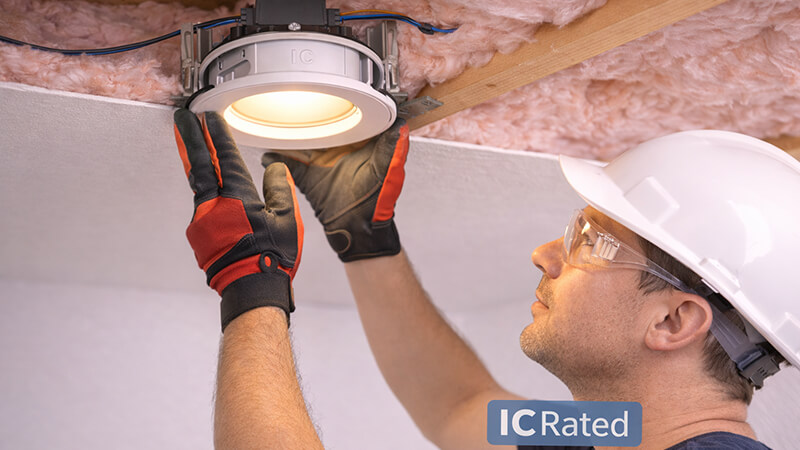
Safety is the number one priority in my factory. We follow strict international standards for a reason. While a high-quality LED is inherently safe, the market is flooded with cheap alternatives that cut corners on safety features. As a purchasing manager, knowing what to look for is your best defense against risk. The danger isn’t with LED technology itself, but with poor execution of it.
Why LEDs are Safer than Older Lights
The biggest difference is the operating temperature. A halogen bulb can reach over 300°C (572°F), hot enough to ignite nearby wood, dust, or insulation. An LED downlight’s surface temperature rarely exceeds 60°C (140°F), which is hot to the touch but nowhere near the flashpoint of materials like wood (~300°C) or insulation. This massive reduction in waste heat is a fundamental safety feature of LED technology.
IC Rating: The Key to Ceiling Safety
The most critical safety feature for downlights is the IC rating.
-
IC-Rated (Insulation Contact): These downlights are designed with a special housing, often a "can" or a double-walled structure, that allows them to be in direct contact with ceiling insulation without overheating. They are tested to ensure that even when fully buried in insulation, their temperature remains within safe limits. For any project with ceiling insulation, IC-rated fixtures are non-negotiable.
-
Non-IC Rated: These downlights require a certain amount of clearance—typically at least 3 inches—from any insulation. They rely on open air around them to dissipate heat. If they are accidentally covered, heat can build up and create a potential hazard.
-
IC-Rated for Remodels (Canless): Modern wafer or canless downlights are often IC-rated by default. They are so efficient and have such good thermal management that they don’t need a large can to keep them cool, even when insulation is present.
As a buyer, always verify the IC rating of the products you source, especially for residential and commercial projects where insulation is common.
Other Safety Certifications to Look For
Beyond the IC rating, look for marks from reputable testing laboratories. These certifications mean the product has been independently tested for electrical safety and performance.
- UL (Underwriters Laboratories): The gold standard in North America.
- CE (Conformité Européenne): Required for products sold in the European Economic Area, indicating conformity with health, safety, and environmental protection standards.
- RoHS (Restriction of Hazardous Substances): Ensures the product is free from specific hazardous materials.
Choosing a certified product from a reliable manufacturer is the simplest way to ensure you are installing a safe and dependable lighting system.
Can LED lights catch fire if left on?
You’ve installed hundreds of LED lights for a big project. Can you be confident that leaving them on for extended periods, even 24/7, won’t create a fire risk?
It is extremely unlikely for a high-quality, properly installed LED light to catch fire, even if left on continuously. They are designed for long-term operation. Fires are almost always caused by external factors like faulty wiring, overloaded circuits, or using cheap, uncertified products that lack proper safety mechanisms.
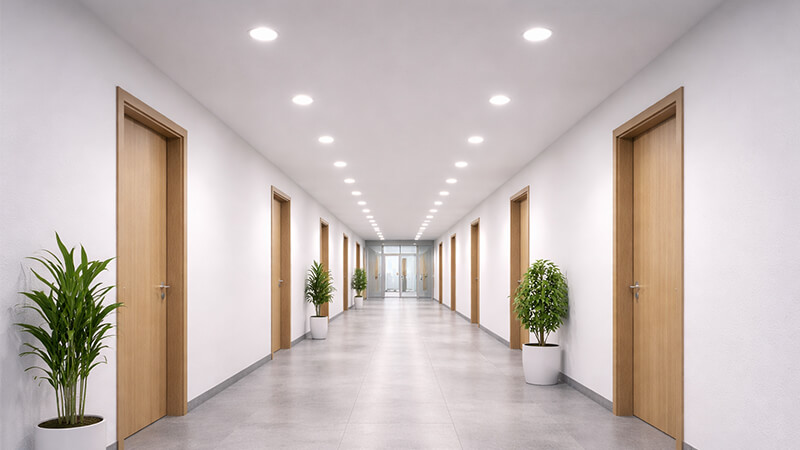
One of my clients manages a chain of 24-hour convenience stores. Their lights are never turned off. For them, this question isn’t theoretical—it’s about daily operational safety. We supplied them with our premium downlights, and I was able to assure them because I know exactly what safety features are built into them. The risk isn’t from leaving the LED on; it’s from what can go wrong around it.
Internal vs. External Causes of Failure
An LED downlight is more than just a chip; it’s a system. The main components are the LED array, the heatsink, and the driver (the power supply). A well-made system has multiple safeguards.
-
The LED Driver: This is the most complex part and often the first point of failure in cheap lights. A high-quality driver has built-in protections:
- Over-voltage Protection: Protects the light from power surges.
- Short-circuit Protection: Prevents a fire if the wiring fails.
- Over-temperature Protection: The driver will automatically reduce power or shut down if it gets too hot.
-
Wiring and Connections: This is the most common cause of electrical fires. Loose connections, damaged wires, or using the wrong gauge of wire for the electrical load can create sparks or extreme heat at the connection point. This is an installation issue, not a fault of the LED itself.
-
Environmental Factors: Placing a non-IC rated light too close to insulation, as discussed, is a major risk. Another is using an indoor-rated light in a wet or damp location, which can lead to short circuits.
How to Mitigate the Risks
The strategy to prevent fires has little to do with turning the lights off and everything to do with quality control from purchase to installation.
- Source from Reputable Manufacturers: A good manufacturer (like iPHD) invests in quality drivers, robust thermal design, and independent safety certifications. Ask your supplier for specification sheets that detail the driver’s protections.
- Ensure Professional Installation: Always use qualified electricians who understand local building codes. They will ensure all wiring is secure, circuits are not overloaded, and the correct type of downlight (e.g., IC-rated) is used for the location.
- Conduct Quality Checks: When you receive a shipment, inspect a few units. Do they feel solid? Is the wiring secure? Does the product have the certification marks you paid for?
Here’s a checklist for ensuring fire safety:
| Area of Concern |
Action Required |
Why It’s Important |
| Product Sourcing |
Verify UL/CE certification and ask for driver specification sheets. |
Ensures the product has passed independent safety tests and has internal protections. |
| Installation |
Use a licensed electrician and confirm correct IC-rating usage. |
Prevents fires from faulty wiring, which is the leading cause of electrical fires. |
| Circuit Load |
Calculate the total wattage on each circuit to prevent overloading. |
An overloaded circuit breaker can fail, leading to overheating wires. |
| Environment |
Use IP-rated fixtures for damp/wet locations. |
Prevents water from causing short circuits and electrical shock. |
Leaving a quality LED on is what it was designed for. By focusing on the quality of the product and the installation, you can be confident in its safety, 24/7.
Conclusion
A warm LED downlight is a healthy one. It shows that heat is being effectively moved away from the core, ensuring a long and reliable life for the fixture.