Struggling to choose the right lights for a commercial project? The wrong choice can lead to a dull space and unhappy clients. A well-lit environment, however, boosts productivity and sales.
The best lighting strategy uses a mix of fixtures. Use LED panel lights for general ambient brightness. Then, add downlights and linear lights to highlight specific areas, guide attention, and add visual interest. This layered approach creates a functional and dynamic space.
I’ve been in the lighting business for a long time. I started on the factory floor and now run my own manufacturing company, iPHD. I’ve seen countless projects succeed or fail based on one thing: lighting choices. Many purchasing managers think they need to pick just one "best" type of light for a whole project. This is a common mistake. The real secret is to use different lights together. Think of it like a painter using different brushes. You wouldn’t use one giant brush for a whole painting, right? You use some for the background and others for the fine details. Let’s break down how to use each light to create the perfect picture for any commercial space.
What is the best type of lighting for an office?
Your office feels flat and uninspiring, and employees are complaining about eye strain. This lack of proper lighting can hurt morale and productivity. A dynamic lighting plan is the solution.
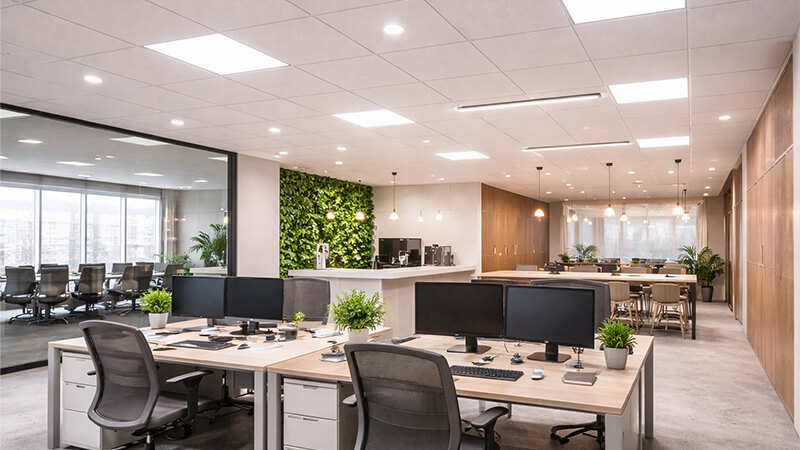
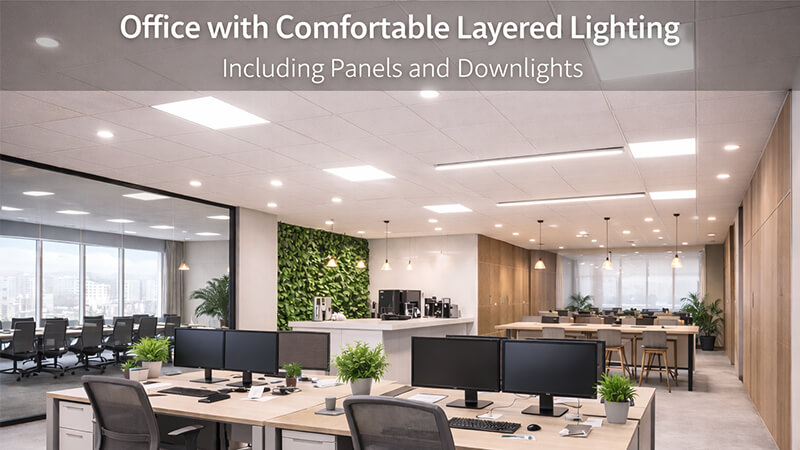
The best office lighting uses a layered approach. Use LED panels with a low UGR (<19) for comfortable, glare-free ambient light. Add downlights for task areas and to accent features like logos. Use linear lights over conference tables or collaborative zones for even illumination.
When I work with clients on office projects, the first thing I tell them is to stop thinking about filling the space with uniform light. That’s how you get a boring, sterile environment. We need to think about what happens in each part of the office. The goal is to create a space that is both comfortable for long hours and visually interesting.
I remember a client in Dubai who was designing a new corporate headquarters. The initial plan from their contractor was just a grid of LED panel lights. It was functional but had zero personality. People would get their work done, but they wouldn’t feel energized or inspired by the space. We revised the plan completely. We kept the panel lights for the main circulation areas to provide a solid base of ambient light. But we made some important additions.
Layering Light for a Productive Office
Good office lighting is about creating different zones with light. It supports the tasks people are doing in each area.
-
Ambient Layer: This is your foundation. LED panel lights are perfect for this. They provide broad, even light across large areas. For offices, it’s critical to choose panels with a low Unified Glare Rating (UGR), ideally under 19. This prevents the screen glare and eye fatigue that kill productivity. We used 60x60cm panels with UGR<19 throughout the main open-plan areas.
-
Task Layer: This is for focused work. We added adjustable downlights above individual workstations. This gave employees direct light for their tasks, reducing shadows from the overhead ambient light. Over the large conference room table and collaborative workbenches, we installed suspended linear lights. They provide excellent, even light across a long surface, ensuring everyone can see clearly during meetings.
-
Accent Layer: This is where you add character. We used narrow-beam downlights to "wash" the wall behind the reception desk, making the company logo pop. We also used them to highlight architectural columns and artwork in the hallways. It took the space from a simple office to a branded, professional environment.
This table shows how we chose the right light for each office zone:
| Office Zone |
Primary Lighting Goal |
Recommended Fixture |
Why it Works |
| Open-Plan Area |
General, comfortable illumination |
LED Panel Light (UGR<19) |
Provides wide, even, and glare-free light for the whole space. |
| Individual Desk |
Focused task lighting |
Adjustable Downlight |
Delivers concentrated light directly on the work surface. |
| Conference Table |
Even light for groups |
Suspended Linear Light |
Illuminates the entire length of the table without shadows. |
| Reception/Lobby |
Make a good first impression |
Accent Downlights |
Highlights the company logo, artwork, and architectural features. |
The result was transformative. The office felt more spacious, modern, and professional. More importantly, the employees were happier and more comfortable. The client told me months later that the feedback on the new office was amazing, and everyone loved the lighting. That’s the power of layering.
What type of light is best for an office desk?
Working at a desk with poor lighting causes eye strain, headaches, and mistakes. A single overhead light often creates shadows on your keyboard and papers, making work frustrating.
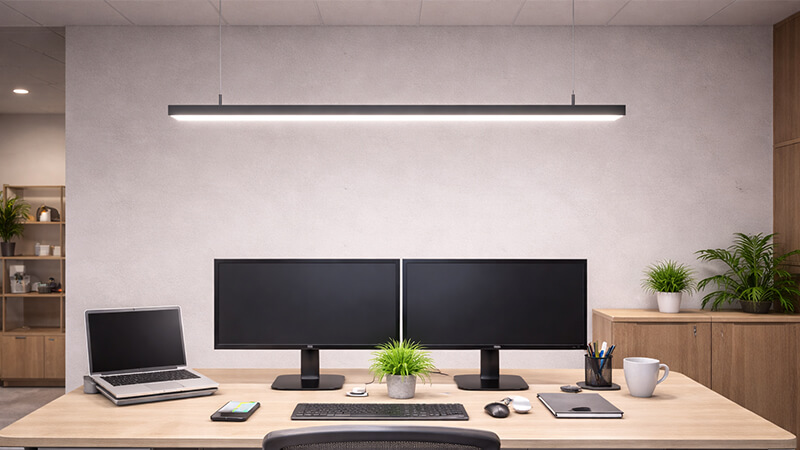
For an office desk, a dedicated task light is best. A suspended linear light provides wide, even illumination over the entire desk, minimizing shadows. An adjustable downlight is also a great option, offering focused light that you can direct precisely where you need it.
Choosing the light for a desk is more than just making things bright enough to see. It’s about the quality of the light. You are looking at that surface for eight hours a day. The light needs to be comfortable, clear, and free of annoying shadows. I often see beautiful, expensive desks ruined by a single, badly placed ceiling light. The person’s own head and shoulders cast a shadow right where they need to work. That’s why dedicated task lighting is not a luxury; it’s a necessity for any serious workspace.
When a purchasing manager like Shaz asks me for the "best" light for a desk, I tell him it depends on the desk setup. Is it a single desk, or a long bench with multiple people? The answer changes the recommendation.
Choosing Between Linear and Downlights for Desks
Both linear lights and downlights can be excellent for task lighting, but they serve slightly different purposes. The choice depends on the workspace design and budget.
-
Linear Lights: The Workhorse for Modern Offices
Suspended linear lights are my top recommendation for most modern office desks, especially for long tables or rows of workstations. When you hang a linear fixture about 75-90 cm above the desk surface, it spreads a beautiful, even layer of light. This wide distribution is its biggest advantage. It eliminates the problem of shadowing almost completely. It also creates a clean, contemporary look that designers love. For a project with many desks in an open area, linear lighting creates a sense of rhythm and structure.
-
Downlights: The Precision Tool
An adjustable downlight is a more targeted solution. It’s perfect for individual cubicles or desks that are separated. The key is placement. You need to position it correctly to avoid casting shadows. A common mistake is placing it directly overhead. The best spot is slightly in front of the user, angled toward the main work area (the keyboard and documents). This provides bright, focused light right where it’s needed. Adjustable downlights are also great because they are discreet and keep the ceiling looking clean.
Here are the key factors to consider when selecting desk lighting:
| Feature |
Linear Light |
Downlight |
My Recommendation |
| Light Distribution |
Wide and even |
Focused and directional |
Linear for long tables; Downlight for individual desks. |
| Shadow Control |
Excellent |
Good (if placed correctly) |
Linear is more forgiving and generally better for reducing shadows. |
| Aesthetics |
Modern, architectural |
Minimalist, discreet |
Depends on the design. Linear makes a statement; downlights blend in. |
| CRI (Color) |
Must be >90 |
Must be >90 |
High CRI is non-negotiable. It ensures colors look true and text is crisp. |
| CCT (Temperature) |
4000K |
4000K |
4000K (neutral white) is ideal for focus and productivity without being too harsh. |
For one client, we did a side-by-side comparison. We set up one row of desks with suspended linear lights and another with carefully placed adjustable downlights. The feedback from employees was that both were a huge improvement. However, those under the linear lights felt the light was "softer" and more comfortable over the whole day. The choice often comes down to balancing that feeling of comfort with the overall design aesthetic and project budget.
What type of lighting is best for a shop?
A poorly lit shop looks cheap and uninviting. Products appear dull, and customers walk right past without a second glance. This directly hurts your sales and brand image.
The best lighting for a shop uses high-CRI accent lights, like adjustable downlights or track lights, to make products pop. Use panels or general downlights for comfortable ambient light in aisles, and consider linear lights to add a modern, guiding element.
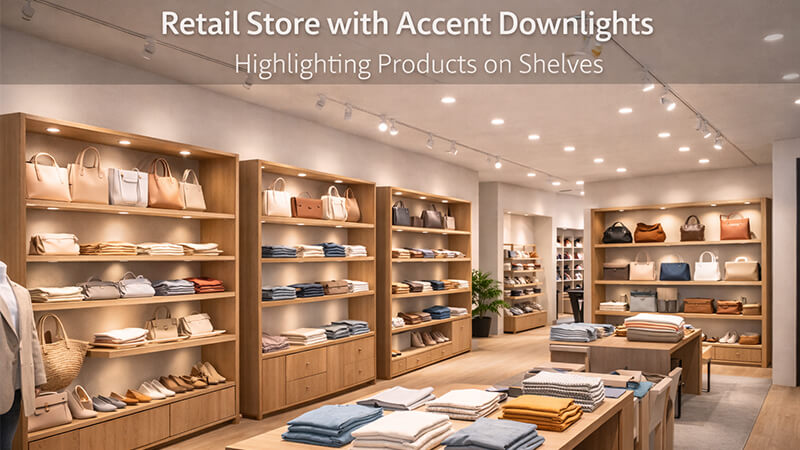
In retail, light is a sales tool. It’s that simple. When I walk into a store, I can immediately tell if they understand this. Great retail lighting guides your eyes, creates a mood, and most importantly, makes the products look irresistible. The biggest mistake I see is using flat, uniform light everywhere. It’s like shouting everything at once; nothing stands out. You have to be strategic and create contrast. You want bright spots on your key products and slightly dimmer paths in between. This contrast naturally draws the customer’s attention.
I worked with a boutique clothing store owner who was frustrated with low sales despite having great products. Her store was lit with a few old fluorescent panels. The whole place had a flat, boring glow. The clothes on the racks looked lifeless. We completely changed the strategy.
Lighting to Sell: The Retail Formula
A successful retail lighting plan is all about accenting the merchandise. You build layers of light to create a journey for the customer.
-
The Star of the Show: Accent Lighting
This is your most important layer. Its only job is to highlight products. Adjustable LED downlights or track lights are the heroes here. The key is to use fixtures with a narrow beam angle (around 24 to 36 degrees) to create focused pools of light directly on the merchandise. We installed track lighting above the clothing racks and shelving units. We aimed each light to hit a specific display, a mannequin, or a stack of folded sweaters. The most critical specification here is the Color Rendering Index (CRI). For retail, you must use lights with a CRI of 90 or higher, preferably 95+. This ensures that the colors of the clothes—the deep reds, the bright blues—look exactly as they should. Low CRI light makes colors look washed out and cheap.
-
Setting the Scene: Ambient Lighting
Once your products are highlighted, you need to provide enough light for customers to navigate the store comfortably. This is the job of ambient lighting. Here, you can use recessed downlights with a wider beam angle or even some LED panels. The key is to make this layer less intense than the accent lighting. If the aisles are as bright as the products, the products won’t stand out. We used general downlights in the main walkways, providing a soft, comfortable light that made the store feel welcoming without competing with the merchandise.
-
Adding Style: Decorative & Architectural Lighting
This layer adds personality. For the boutique, we used suspended linear lights over the cash wrap counter. This defined the space and gave it a modern, high-end feel. Linear lights can also be integrated into shelves or used to create lines of light on the ceiling that guide customers through the store.
Here’s how these lights work together in a retail setting:
| Retail Zone |
Primary Lighting Goal |
Recommended Fixture |
Why it Works |
| Product Displays |
Make products stand out |
High-CRI Accent Downlight/Track Light |
Focused, high-quality light makes colors vibrant and attracts the eye. |
| Aisles/Walkways |
Safe and comfortable navigation |
General Downlight or Panel Light |
Provides a base level of light without overpowering the accent lights. |
| Fitting Rooms |
Flattering and clear view |
High-CRI Vertical Light/Downlight |
Good color rendering and placement to minimize shadows are essential. |
| Checkout Counter |
Define the space, task lighting |
Suspended Linear Light or Pendants |
Creates a focal point and provides clear light for transactions. |
After we re-lit the boutique, the owner called me a month later. She said it was like having a brand-new store. Customers were staying longer, touching the merchandise, and sales had increased by nearly 30%. That wasn’t magic; it was just good lighting strategy.
Why do interior designers hate downlights?
You’ve seen it before: a ceiling peppered with downlights in a perfect grid. It’s a common solution, but it often looks cluttered and creates a harsh, flat light.
Interior designers don’t hate downlights; they hate the misuse of downlights. They dislike when downlights are used as the only light source, creating a boring grid ("ceiling acne") with no purpose. Good design uses downlights intentionally for specific tasks like accenting art or washing walls.
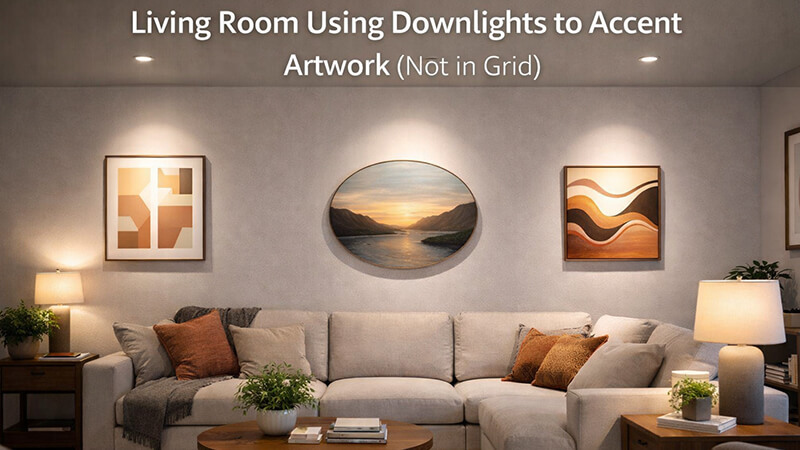
I’ve had many conversations with interior designers over the years. This topic comes up a lot. When a designer says they "hate downlights," what they’re really saying is they hate lazy lighting design. The problem isn’t the fixture itself. A downlight is a fantastic tool. The problem is when it’s the only tool used. Contractors sometimes love grids of downlights because they are easy to plan and install. You just measure out a grid, cut holes, and you’re done. But this approach completely ignores what the light is supposed to be doing. It lights up the floor, not the things you actually want to see in the room.
A talented designer I know calls this the "ceiling acne" problem. It makes the ceiling look busy and draws your attention upward, away from the beautiful furniture and architecture of the space. True lighting design is about painting with light, and that requires purpose behind every single fixture.
Using Downlights with Purpose, Not by Default
A well-designed space uses downlights surgically. They are placed with intention to achieve a specific effect. Instead of a uniform grid, a designer thinks about layers and focal points.
-
Mistake 1: The Grid Layout
The biggest crime is arranging downlights in a rigid grid across the entire ceiling. This creates a flat, shadowless light that feels like a supermarket or a laboratory. It provides illumination but no atmosphere. It also often results in light being wasted in unimportant areas, like the middle of a floor.
-
Mistake 2: Bad Placement
Placing downlights too close to a wall can create ugly semi-circular patterns of light called "scallops." Placing them directly over seating can make people feel like they are being interrogated. Good placement is everything.
Here’s how designers use downlights correctly:
| Technique |
How It’s Done |
The Effect |
| Wall Washing |
Place a row of downlights a short distance from a wall and aim them to create a smooth, even brightness from ceiling to floor. |
Makes a room feel larger and brighter. It highlights the texture of a wall (like brick or stone) and provides soft, indirect ambient light. |
| Accent Lighting |
Use one or two adjustable downlights to focus a beam of light onto a specific object, like a painting, a sculpture, or a floral arrangement. |
Creates a focal point and adds drama and visual interest to a room. It tells people, "Look here, this is important." |
| Task Lighting |
Position a downlight directly over a task area, such as a kitchen counter, a reading chair, or a vanity mirror. |
Provides bright, focused light exactly where it is needed for a specific activity, without illuminating the entire room. |
Instead of 20 downlights in a grid, a designer might use just 5 or 6. They would place two to wash a feature wall, one to accent a piece of art, and two over the kitchen island for task lighting. They would then fill in the general ambient light with other sources, like cove lighting, floor lamps, or a central pendant. The result is a room that feels rich, complex, and inviting. So, the next time you think about downlights, don’t ask "how many do I need?" Instead, ask "What do I want each light to do?"
Conclusion
The secret to great commercial lighting is simple: don’t just use one type of light. Combine panel lights for ambient basics, then use downlights and linear lights for impactful task and accent lighting.