Are you confused why some downlights fail in a year while others last for decades? The hidden answer lies not in what you can see, but in the material’s thermal quality.
A typical LED downlight is made of an aluminum body for heat dissipation, a polycarbonate (PC) or glass diffuser to spread light, an LED chip, and an electronic driver. The crucial factor for longevity is the quality of the aluminum, which dictates how effectively heat is managed.
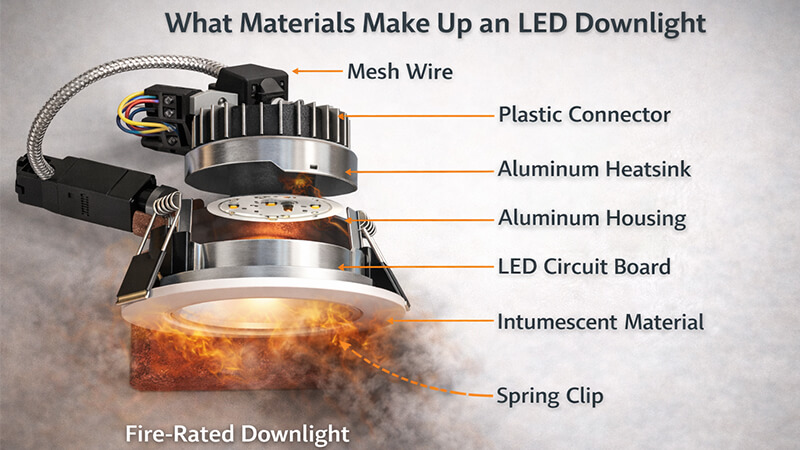
Most people focus on whether a downlight uses aluminum, plastic, or glass. They miss the "thermal gene" hidden within different grades of aluminum. The real difference isn’t just about "what material is used," but about "how that material talks to heat." This conversation between the material and the LED chip is the key to a long and reliable life for any downlight. Understanding this will change the way you source your products forever.
What material are LED lights made of?
You see "aluminum" or "plastic" on a spec sheet, but this doesn’t explain performance differences. It feels like you’re missing the most important part of the story.
LED lights primarily use aluminum for heat sinks, polycarbonate (PC) for lenses and diffusers, and semiconductor materials for the LED chip itself. The driver, which powers the light, contains its own mix of electronic components housed in plastic or aluminum.
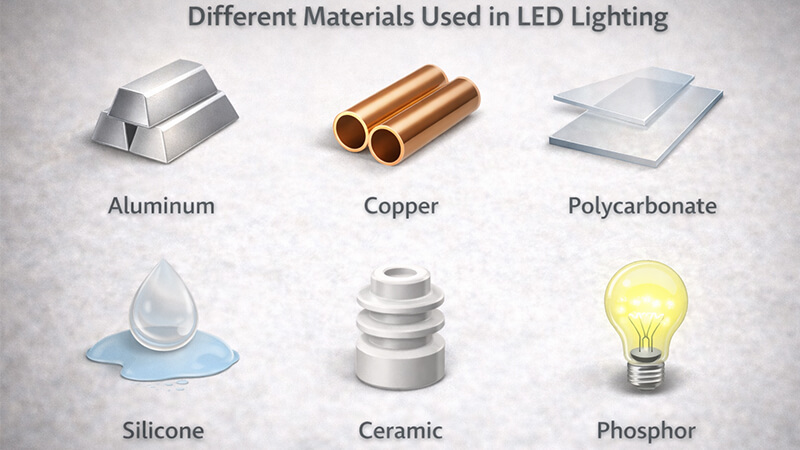
Let’s look deeper than just the names of the materials. The most critical component for an LED downlight‘s health is the heat sink. While most are made of aluminum, not all aluminum is created equal. The choice here directly impacts the fixture’s lifespan. I’ve seen factories use cheap, recycled aluminum to cut costs. This material is full of impurities, which can reduce thermal conductivity by over 30%. The heat gets trapped, slowly cooking the LED chip and causing it to fail much faster. On the other hand, high-purity, die-cast aluminum provides an excellent pathway for heat to escape, keeping the chip cool and stable.
The diffuser is also important. It’s usually made from polycarbonate (PC) because it’s durable and has great light transmission properties. Cheaper plastics can turn yellow over time and become brittle, but a quality PC diffuser maintains its clarity and strength. It’s another small detail that separates a premium product from a cheap one.
Material Quality Comparison
| Material |
High-Quality Choice |
Low-Quality Choice |
Impact on Performance |
| Heat Sink |
Die-Cast Aluminum (ADC12) |
Recycled Aluminum |
High quality dissipates heat, extending chip life. Low quality traps heat, causing premature failure. |
| Diffuser |
Polycarbonate (PC) |
Polystyrene (PS) or Acrylic (PMMA) |
PC is impact-resistant and won’t yellow. Cheaper plastics can discolor and become brittle. |
| Driver Housing |
Flame-Retardant PC or Aluminum |
Standard ABS Plastic |
Provides better heat resistance and safety, preventing overheating and potential fire hazards. |
Are downlights a fire hazard?
You are responsible for installing hundreds of lights in a building. The fear of one overheating and causing a fire is a constant worry for any professional in this field.
Modern LED downlights are very safe and pose a minimal fire risk when certified and installed correctly. Look for "fire-rated" downlights, which are specifically designed to maintain the fire barrier of your ceiling for a specified time, usually 30, 60, or 90 minutes.
The fear of fire often comes from experiences with old halogen bulbs. Those could reach temperatures hot enough to ignite materials. Modern LEDs are completely different. They generate a fraction of the heat. The primary safety feature to look for now is a "fire rating." This doesn’t mean the light is fireproof. It means the downlight is built to seal the hole it’s placed in during a fire, stopping flames from spreading through the ceiling void into the room above. This is a critical safety requirement in many buildings.
The material of the heat sink plays a role here too. A downlight with a poor heat sink made from low-grade aluminum can cause the LED chip and internal driver to run hotter than they should. While it’s unlikely to cause a fire on its own, this extra heat contributes to a shorter lifespan and can degrade the internal components, increasing long-term risk. A well-designed heat sink keeps everything cool, adding another layer of safety. Always check for certifications like CE, RoHS, and UL, as these ensure the product has been tested to meet strict safety and performance standards.
Safety Feature Breakdown
| Feature |
Importance |
What to Look For |
| Fire Rating |
Critical for multi-story buildings. Maintains the ceiling’s fire barrier. |
A rating in minutes (e.g., 90-min). Look for BS 476 certification. |
| IC Rating |
Stands for "Insulation Contact." Allows insulation to be placed directly over the fixture. |
An "IC" or "IC-F" marking on the product spec sheet. |
| Quality Heat Sink |
Prevents overheating of the chip and driver. |
Solid, die-cast aluminum construction, not thin or recycled metal. |
| Certifications |
Third-party verification of safety and quality. |
CE, RoHS, UL, or other regional safety marks. |
How many years do downlights last?
Manufacturers love to advertise lifespans of 50,000 hours. But you have seen lights fail in just two years, which makes those numbers feel completely meaningless and untrustworthy.
A quality LED downlight can last 25,000 to 50,000 hours, which is 10-20 years for typical use. This lifespan depends almost entirely on the quality of the heat sink and the electronic driver, not just the LED chip.
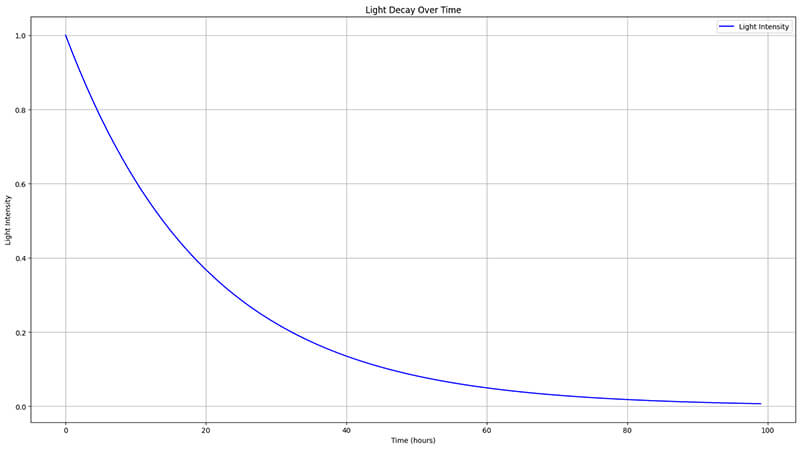
This is where the material’s "conversation with heat" is everything. An LED chip doesn’t just burn out like an old filament bulb. Instead, it slowly degrades. Its light output fades over time. The industry measures this with a standard called L70, which is the point where the light has lost 30% of its initial brightness. The 50,000-hour rating refers to this L70 point.
Heat is the number one enemy of an LED’s lifespan. If the heat sink is made from cheap recycled aluminum with poor thermal efficiency, it can’t draw the heat away from the chip fast enough. The chip’s internal temperature rises, and this heat dramatically accelerates the degradation process. Two lights can look identical, but one with a superior die-cast aluminum heat sink will easily reach its 50,000-hour potential. The one with the cheap heat sink might lose 30% of its brightness in less than 10,000 hours. The second point of failure is the driver. It’s a small power supply with its own sensitive electronic components. If the driver is not designed to handle heat well, or if it’s made with cheap parts, it will often fail long before the LED chip ever does.
Lifespan Influencing Factors
| Factor |
High-Quality Downlight |
Low-Quality Downlight |
Explanation |
| Heat Sink Material |
Pure Die-Cast Aluminum |
Impure Recycled Aluminum |
Efficiently pulls heat away from the LED chip, preventing degradation. |
| Driver Components |
Reputable brands (e.g., Rubycon capacitors) |
Generic, unbranded components |
High-quality components withstand heat and electrical stress for longer. |
| Operating Temperature |
Runs cool to the touch |
Hot to the touch |
A sign of poor thermal management that will lead to early failure. |
| Resulting Lifespan |
40,000 – 50,000 hours (L70) |
10,000 – 15,000 hours (L70) or complete failure |
The combination of good materials leads to a genuinely long-lasting product. |
Why shouldn’t you have LED lights on at night?
You want to leave a light on at night for security or comfort. But you have heard that some LED light can be bad for your sleep and your health.
The issue is not with LED technology, but with blue-rich light at night. This light can suppress your body’s melatonin production, disrupting sleep. To avoid this, choose LED lights with a warm color temperature (3000K or less).
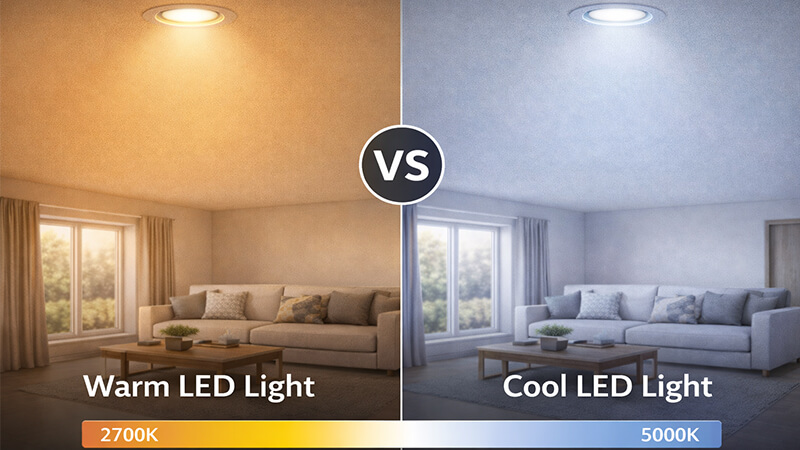
Our bodies have an internal clock that is heavily influenced by light. Bright, blue-toned light signals to our brain that it’s daytime, making us feel alert and awake. In the evening, the absence of this blue light allows our brain to produce melatonin, the hormone that helps us sleep. The problem is that many standard LED lights, especially those with a "cool white" or "daylight" color, are rich in this blue spectrum. Using them late at night can trick your brain into thinking it’s still daytime, making it harder to fall asleep and reducing the quality of your rest.
This is why choosing the right Correlated Color Temperature (CCT) is so important, especially for homes and hotels. CCT is measured in Kelvin (K). A lower number means a warmer, more yellow light, while a higher number means a cooler, bluer light. For evening use, a CCT of 2700K to 3000K is ideal. It mimics the warm glow of a sunset or a traditional incandescent bulb and has a minimal effect on sleep. In contrast, a 5000K light is great for an office or workshop where you need to be alert, but it’s a poor choice for a bedroom. So, you absolutely can use LED lights at night. Just be sure to choose the right color.
CCT Guide for Healthy Lighting
| CCT Range |
Color Name |
Best For |
Effect on Sleep |
| 2200K – 2700K |
Warm Glow |
Bedrooms, relaxation areas, restaurants |
Very low impact, promotes relaxation. |
| 3000K |
Warm White |
Living rooms, hotel rooms, general home use |
Low impact, comfortable and inviting. |
| 4000K |
Neutral White |
Kitchens, bathrooms, offices, retail |
Can disrupt sleep if used late at night. |
| 5000K+ |
Cool White/Daylight |
Garages, hospitals, task areas |
High impact, suppresses melatonin significantly. |
Conclusion
Ultimately, a downlight’s material is more than just a name on a spec sheet. It is about the quality of that material and how it manages heat to ensure safety and longevity.