Struggling with outdated, costly lighting? Poor lights cause eye strain and high energy bills, making spaces uncomfortable. LED downlights offer a brilliant solution, boosting comfort while slashing costs.
LED downlights offer huge benefits. They save energy, last much longer, and provide better light quality. They also reduce maintenance costs and are more environmentally friendly than traditional options like halogen or CFL bulbs. A smart choice for any project.
So, you see the basic benefits. But what does this mean for your projects and your bottom line? I’ve spent my career in the lighting industry, and I can tell you the real value is in the details. It’s not just about changing a bulb; it’s about upgrading the entire experience of a space. Let’s look closer at how they stack up against older tech and what specific advantages you can expect. Let’s break down why switching is one of the best decisions you can make for any commercial or residential project.
Are LED downlights better?
Wondering if the hype about LED downlights is true? Sticking with old halogen bulbs means frequent replacements and high heat output. LED downlights are genuinely superior, offering unmatched longevity and safety.
Yes, LED downlights are significantly better. They surpass traditional options like halogens in lifespan, energy efficiency, and safety. They produce less heat, contain no hazardous materials, and offer superior light quality, making them a clear winner for any modern lighting installation.
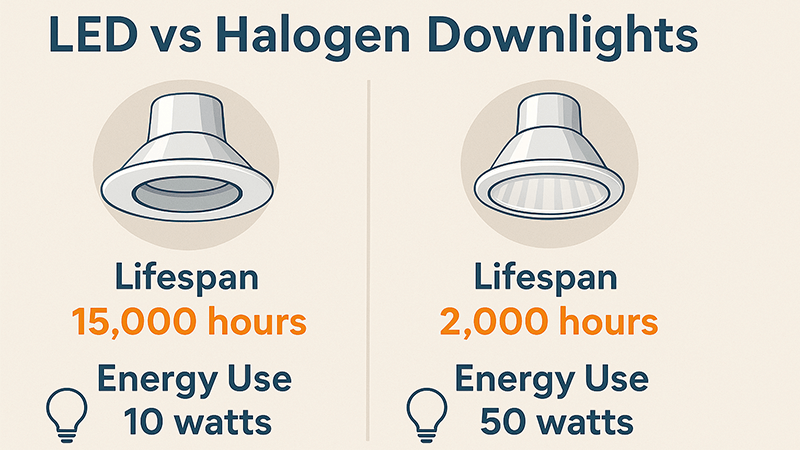
As someone who has seen the evolution of lighting firsthand, the jump to LED technology is not just an upgrade; it’s a revolution. The difference is clear when you look at the facts. Halogen downlights were the standard for years, but they come with serious drawbacks. They get incredibly hot, which can be a fire hazard and also puts a strain on air conditioning systems. They also have a very short lifespan, often lasting only 1,000 to 2,000 hours. For a purchasing manager like you, Shaz, this means constant reordering and labor costs for replacements.
LED downlights solve all these problems. They run cool to the touch, making them much safer. Their lifespan is extraordinary, often reaching 50,000 hours or more. That’s years of operation without needing a single replacement. For your large-scale projects, this means massive savings in maintenance budgets and a more reliable lighting system for your clients.
Comparing Key Performance Metrics
Let’s look at a direct comparison. The numbers speak for themselves and show why LED is the only logical choice for new projects and retrofits.
| Feature |
LED Downlight |
Halogen Downlight |
| Average Lifespan |
30,000 – 50,000 hours |
1,000 – 2,000 hours |
| Energy Efficiency |
~80% less energy |
High energy consumption |
| Heat Output |
Very Low (cool to touch) |
Very High (fire risk) |
| Durability |
High (Solid State) |
Low (Fragile Filament) |
| Maintenance |
Almost none |
Frequent replacement |
This isn’t just about saving money on electricity. It’s about reducing the total cost of ownership, which includes purchasing, maintenance labor, and replacement frequency. For any large project, these "soft" costs add up quickly.
What are the main advantages of using LED lighting?
Thinking about a lighting upgrade? The initial cost of LEDs might seem high, but sticking with old technology costs you more in the long run. The true advantages are in the performance.
The main advantages are unmatched energy efficiency, extremely long lifespan, and superior durability. LEDs also provide instant, high-quality light with better color rendering. Plus, they offer design flexibility and enhanced safety, making them a smart, sustainable investment for any application.
When I started my first lighting business, my goal was to help clients grow by providing quality. LED technology became the cornerstone of that mission. The advantages go far beyond just saving energy. Let’s dive deeper into what makes them the superior choice, especially from a professional perspective.
First, the quality of light is something you can’t ignore. Modern LEDs offer a high Color Rendering Index (CRI), usually above 80 or 90. This means colors under the light appear true and natural, just as they would in daylight. For retail stores, art galleries, or high-end residential spaces, this is not a luxury—it’s a requirement.
Second is the "invisible" quality factor. I’m talking about flicker and glare. In my experience, this is what separates a cheap LED from a professional-grade one. Low-quality lights often have invisible flicker from poor drivers, which can cause headaches and eye strain for people working under them all day. Likewise, harsh glare makes a space feel uncomfortable. At iPHD, we focus on designs with deep-set light sources and anti-glare optics like honeycomb louvers. The goal is to create a comfortable environment where you see the beautiful light, not the harsh bulb. This is what I call the "invisible killer" of cheap lights, and it’s a critical detail for any quality-focused project.
Core Technical Benefits Explained
For a technical buyer, understanding these specific advantages is key to justifying the investment. Here’s a breakdown of what really matters.
| Advantage |
Technical Explanation |
Impact on Projects |
| Energy Efficiency |
Converts ~95% of energy into light, with only 5% wasted as heat. |
Drastically lower electricity bills and reduced carbon footprint. |
| Longevity |
Solid-state lighting (SSL) technology with no fragile filaments to burn out. |
Minimal maintenance and replacement costs, improving long-term ROI. |
| Light Quality |
High CRI (80-95+) and stable color temperature over its lifespan. |
Accurate color representation, enhancing aesthetics and product appeal. |
| Instant On/Off |
No warm-up or cool-down period needed. Full brightness instantly. |
Perfect for areas needing immediate light, like hallways or security zones. |
| Durability |
Made from robust materials, highly resistant to shock and vibration. |
Lower risk of damage during shipping, installation, and use. |
These technical strengths translate directly into business value. You are not just buying a light; you are investing in reliability, performance, and a better environment for the end-user.
What are the benefits of downlights?
Trying to create a clean, modern look? Bulky, traditional fixtures can clutter a ceiling and create uneven lighting. A cluttered design can ruin an otherwise perfect space.
Downlights provide a sleek, minimalist aesthetic by recessing into the ceiling. They offer focused, directional light ideal for task and accent lighting. This creates a clean, modern look while effectively illuminating specific areas without taking up visual space.
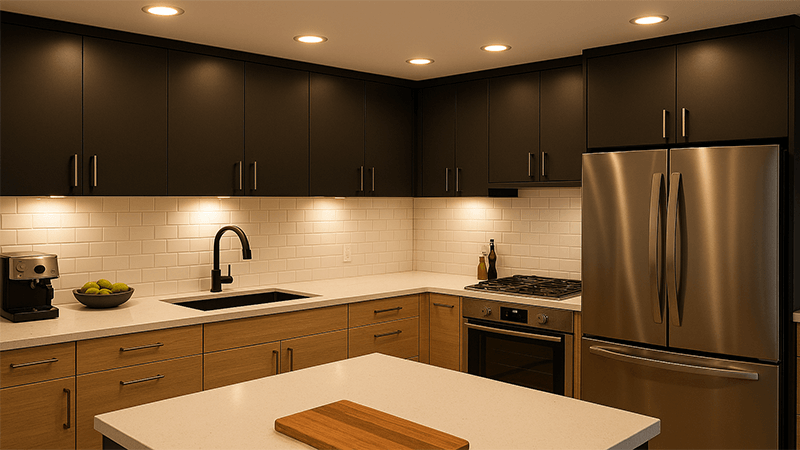
The downlight itself is a brilliant design. As a manufacturer, I appreciate its functional elegance. Its primary benefit is its ability to disappear. By recessing the fixture into the ceiling, you achieve a smooth, uncluttered surface. This minimalist approach is perfect for modern architecture and interior design, where clean lines are highly valued. It allows the focus to remain on the room’s architecture and furnishings, not on the light fixtures themselves.
Beyond aesthetics, downlights are masters of functional lighting. They allow you to be very precise with your lighting plan. You can use them for three main types of lighting:
Three Layers of Lighting with Downlights
- General (Ambient) Lighting: By arranging multiple downlights in a grid pattern, you can provide smooth, even illumination across an entire room. This is the foundation of any good lighting design.
- Task Lighting: You can place downlights directly over specific areas where tasks are performed. Think about over a kitchen counter, a reading nook, or a workstation. This provides focused light exactly where it is needed, improving visibility and reducing eye strain.
- Accent Lighting: Use adjustable or "gimbal" downlights to highlight architectural features, artwork, or decorative objects. This creates visual interest and adds depth and drama to a space.
For a purchasing manager, this versatility is a huge asset. Instead of sourcing many different types of fixtures, you can often fulfill multiple lighting needs within a project using a single, consistent family of downlights. This simplifies purchasing, inventory, and installation. It also ensures a cohesive design aesthetic throughout the entire project, which is a detail that discerning clients always appreciate.
Do LED downlights use a lot of electricity?
Worried about your project’s energy budget? High electricity consumption from lighting can lead to massive operational costs for your clients. This makes your proposal less competitive.
No, LED downlights use very little electricity. They are incredibly efficient, consuming up to 80-90% less energy than traditional halogen or incandescent downlights. This significant reduction in power usage leads to substantial savings on electricity bills.
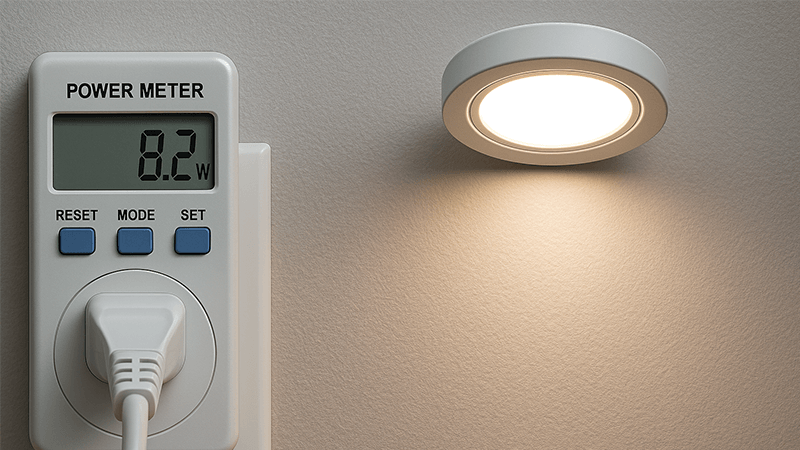
This is one of the most powerful selling points for LED technology, and the numbers are truly impressive. I remember when we first started retrofitting commercial buildings. The clients were shocked when they saw their first electricity bill after the switch. The savings are not small; they are substantial and immediate. Let’s put this into perspective with a simple comparison.
A traditional 50-watt halogen downlight can be replaced by a 7-watt LED downlight that produces the same amount of light (or even more). That’s an energy saving of over 85% for just one light. Now, imagine a large project—an office building, a hotel, or a retail chain—with hundreds or even thousands of downlights. The savings multiply very quickly.
For you, Shaz, this is a critical point to make to your clients. You can build a compelling business case based purely on the return on investment (ROI) from energy savings. The initial investment in higher-quality LED downlights is often paid back in just one or two years through lower electricity bills.
Calculating Your Savings
Let’s run a quick calculation to see the impact. We will compare a single 50W Halogen with a 7W LED.
| Metric |
50W Halogen Downlight |
7W LED Downlight |
| Power Consumption |
50 Watts |
7 Watts |
| Hours of Use (per day) |
10 hours |
10 hours |
| Daily Consumption |
0.5 kWh |
0.07 kWh |
| Annual Consumption |
182.5 kWh |
25.55 kWh |
| Annual Cost (@ $0.15/kWh) |
$27.38 |
$3.83 |
As you can see, the annual cost to run a single LED downlight is a fraction of the cost of a halogen. When you present a proposal for a project with 100 downlights, you’re showing the client an annual saving of over $2,300. Over the 15-20 year lifespan of the LEDs, we are talking about tens of thousands of dollars in savings. This makes the choice to go with LED not just an environmental one, but a financially brilliant one.
Conclusion
In short, choosing LED downlights brings huge gains in efficiency, lifespan, and light quality. This upgrade delivers long-term value, enhances any space, and provides significant cost savings.