Last Updated on: December 16, 2025Confused by IP ratings for your lighting projects? Choosing the wrong one leads to early failures and costly replacements. An IP44 downlight provides specific protection that is ideal for certain areas.
An IP44 downlight is a light fixture protected against solid objects larger than 1mm and water splashes from any direction. This makes it a safe and durable choice for indoor areas with potential moisture, like kitchens or specific bathroom zones.
I’ve been in the lighting industry for a long time, and I’ve seen many purchasing managers like Shaz get stuck on IP ratings. There’s a common belief that a higher number is always the better choice. But the reality is much more complex. It’s not just about keeping water out; it’s about building a fixture that lasts in its intended environment. To help you make the right call for your projects, let’s break down the most common questions I hear.
Is IP44 fully waterproof?
Worried your IP44 light won’t survive a real splash? This fear can lead to over-specifying and overspending. But IP44 offers reliable protection exactly where it’s designed for.
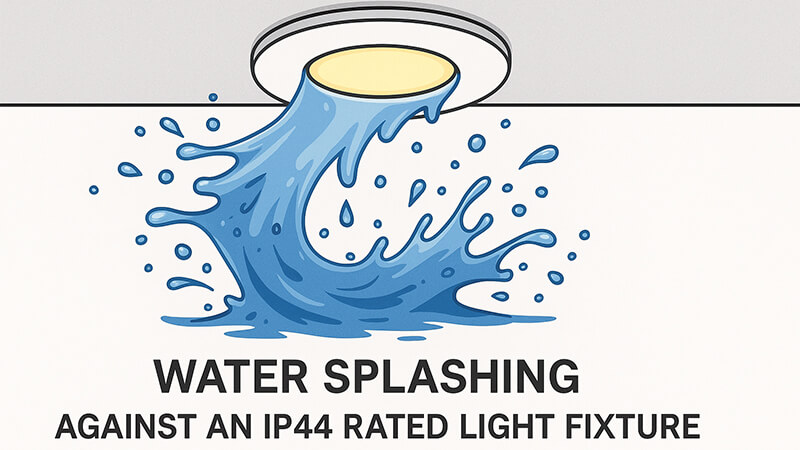
No, IP44 is not fully waterproof. It is water-resistant, meaning it can handle splashes of water from any direction. It cannot be submerged or exposed to powerful water jets. It’s built for moisture-prone indoor areas, not for underwater or direct heavy rain applications.
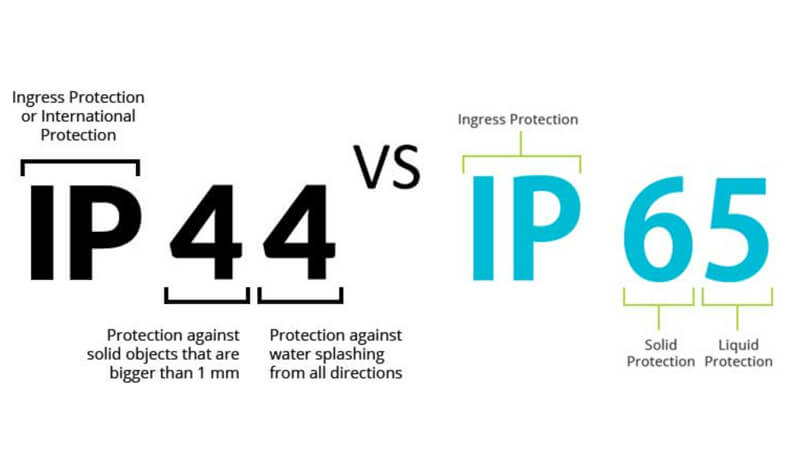
To really understand this, we need to look at what "IP" means. IP stands for Ingress Protection. It’s a universal standard that tells you how well a device is sealed against solids and liquids. The rating has two numbers.
Breaking Down the IP Code
The first number tells you about protection from solids, like dust or fingers. The second number is about protection from liquids, like water.
- First Digit (Solids): For IP44, the ‘4’ means it’s protected against solid objects greater than 1 millimeter. This prevents things like most wires, screws, and large insects from getting inside.
- Second Digit (Liquids): The second ‘4’ means it’s protected against water splashes from any direction. Think of steam in a bathroom or a splash from a kitchen sink.
I remember a client in the UAE working on a large residential tower. The contractor installed standard IP20 downlights near the vanities in every bathroom to save costs. Within a year, we got calls about failures. The constant steam and occasional splashes caused corrosion. We replaced them with our IP44 downlights, and those fixtures have been running without issue for years. It’s a perfect example of matching the right rating to the right environment. "Waterproof" implies full submersion, which is what IP67 or IP68 ratings are for. IP44 is reliably "splash-proof."
| Bathroom Zone |
Description |
Minimum IP Rating |
Is IP44 Suitable? |
| Zone 0 |
Inside the bath or shower |
IP67 |
No |
| Zone 1 |
Area directly above the bath/shower |
IP65 |
No |
| Zone 2 |
Area 0.6m outside bath/shower perimeter |
IP44 |
Yes, ideal |
| Outside Zones |
Any area outside Zones 0, 1, and 2 |
IP20 |
Yes, but IP44 offers extra protection |
Which is better, IP44 or IP65?
You might assume that IP65 is always the superior choice, right? This common belief can lead you to install lights that trap heat and fail early. The "better" choice completely depends on the application.
Neither rating is universally "better"; they serve different purposes. IP65 offers higher protection against dust and water jets, making it suitable for outdoor and industrial use. IP44 is ideal for indoor zones with moderate moisture, where its design can actually help extend the fixture’s life.
Let’s dig deeper into the practical differences. An IP65 fixture is dust-tight and can withstand low-pressure water jets from a nozzle. This sounds great, but that tight seal comes with a trade-off, especially for indoor LED lighting.
The Hidden Danger of a Perfect Seal
My key insight from years of manufacturing is that a little "breathability" can be a very good thing. LEDs generate heat. A completely sealed IP65 enclosure can trap this heat. Over time, the constant heating and cooling cycle can create pressure changes inside the fixture. This can suck in tiny amounts of humid air, which then gets trapped. The result?
- Internal Condensation: Moisture condenses on the inside of the lens and on electronic components.
- Heat Stress Corrosion: The combination of trapped heat and moisture accelerates the corrosion of sensitive electronics, leading to premature failure.
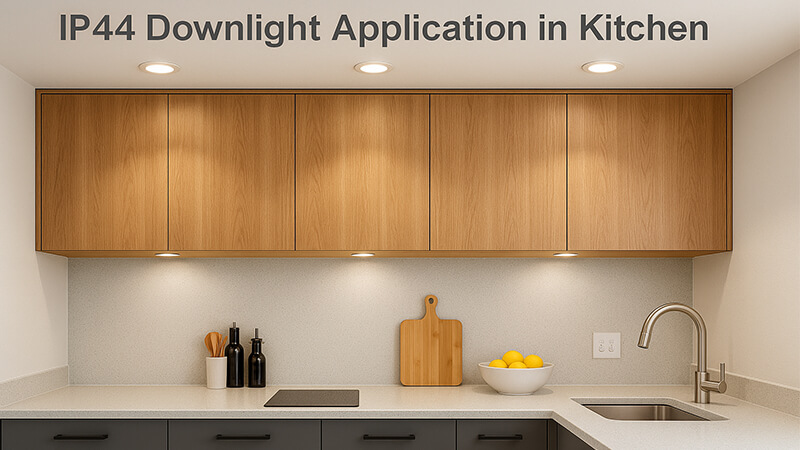
An IP44 fixture, on the other hand, isn’t perfectly sealed. This slight air exchange allows the fixture to "breathe." It can equalize pressure and allow any minor moisture build-up to dissipate. For an indoor downlight in a bathroom ceiling (Zone 2), it’s protected from splashes, but it can also manage the internal heat and humidity much more effectively than a sealed IP65 unit. For a purchasing manager like Shaz, understanding this means you can avoid paying for a higher IP rating that might actually shorten the product’s lifespan in certain applications.
| Feature |
IP44 Downlight |
IP65 Downlight |
| Solid Protection |
>1mm (wires, screws) |
Dust-tight |
| Liquid Protection |
Splashes from any direction |
Low-pressure water jets |
| Ideal Location |
Bathroom Zone 2, kitchens, covered patios |
Outdoors, wash-down areas, dusty workshops |
| Key Advantage |
Allows "breathing," reducing condensation |
High protection against dust and jets |
| Potential Drawback |
Not for direct water jets |
Can trap heat and internal moisture |
What does IP44 mean in lights?
You see "IP44" on a spec sheet, but what does it mean for performance? It’s a promise of durability in specific conditions. Misinterpreting it can lead to project callbacks and damaged reputations.
In lighting, IP44 means the fixture is specifically designed to be safe and durable in environments where it might be exposed to water splashes. It’s a mark of suitability for places like bathrooms (outside the shower), kitchens, and covered outdoor areas.
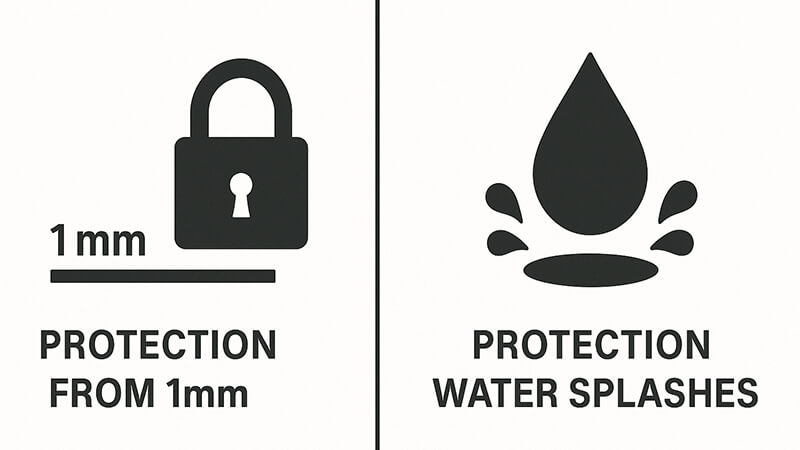
When you see IP44 on a downlight, it’s a clear signal from the manufacturer about its intended use. It tells you that we have built and tested the product to perform reliably under specific conditions. As a product designer, this rating influences every part of the downlight’s construction.
Design and Construction Considerations
To achieve an IP44 rating, we have to think carefully about how the light is put together.
- Gaskets and Seals: We place precision-engineered silicone or rubber gaskets between the main housing and the front bezel or lens. These create a barrier that stops splashes from reaching the internal wiring and the LED chip.
- Cable Entry Points: The point where the electrical cable enters the fixture is a common weak spot. We use sealed cable glands or grommets to ensure a tight fit, preventing water from wicking along the cable into the electronics.
- Material Selection: We choose materials that resist corrosion, like powder-coated aluminum or high-grade polymers. In a humid environment, using the wrong materials can lead to rust and degradation, even if water doesn’t get inside.
A story comes to mind from a hotel project in Southeast Asia. The humidity is very high year-round. An architect specified beautiful but unrated decorative pendants over the bathroom vanities. They looked great for the first six months. Then, the chrome finishes started to pit and the lamp holders showed signs of corrosion from the constant steam. They weren’t IP44 rated. We replaced them with custom IP44-rated fixtures we designed. We used marine-grade paint and sealed every joint. The problem was solved. This shows that IP44 isn’t just about passing a splash test; it’s about a holistic design approach for longevity in damp locations.
Is IP44 okay for rain?
You’re considering an IP44 light for an outdoor area. You worry if it can handle the rain. A mistake here can lead to short circuits and safety hazards for your client.
No, IP44 is generally not sufficient for direct or heavy rain. It is designed to handle splashes. For lights directly exposed to rainfall, a higher rating like IP65 is necessary to ensure safety and prevent water from getting inside the fixture.
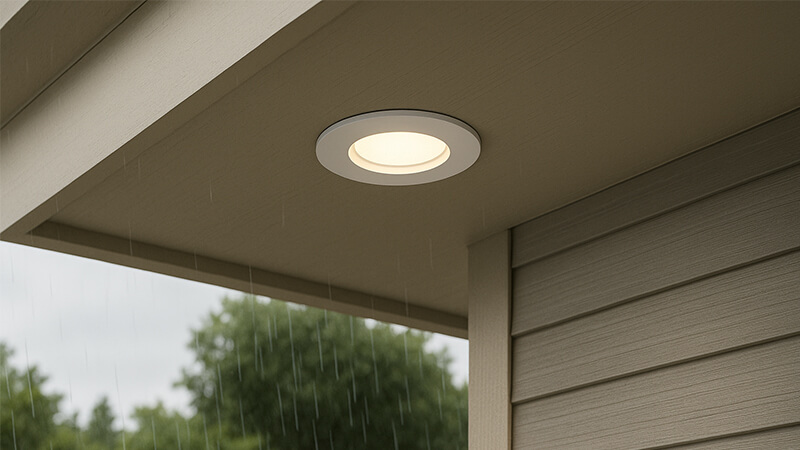
This is a critical distinction that can prevent costly project failures. The test for IPx4 involves splashing water from all directions, but the test for IPx5 (the ‘5’ in IP65) involves spraying it with a water jet from a nozzle. Rain, especially wind-driven rain, is much more like a water jet than a simple splash.
Choosing the Right IP Rating for Outdoors
When planning an outdoor lighting scheme, you must think in zones, just like you do for a bathroom. Not every outdoor area has the same level of water exposure.
- Fully Exposed Locations: For fixtures on an open wall, in the garden, or on a roof with no cover, you are dealing with direct rainfall. Here, IP65 is the minimum requirement. The fixture must be able to withstand jets of water from any direction.
- Covered Outdoor Locations: Think about a porch ceiling, a covered balcony, or the eaves of a house. These areas are shielded from direct rain but are still exposed to high humidity, condensation, and potentially angled, splashing rain. This is where IP44 is often a perfect fit. It provides enough protection from moisture without the potential heat-trapping issues of a fully sealed IP65 unit.
I worked with a distributor on a project for a series of villas. They wanted to use the same downlight model for the bathrooms and the covered terraces for a consistent look. I recommended an IP44 downlight. It was perfect for the bathroom’s Zone 2 and provided ample protection for the sheltered terrace ceilings. If they had chosen IP20, the terrace lights would have failed from humidity. If they had chosen IP65, they would have overpaid and risked reducing the lifespan of the lights due to heat. Choosing IP44 was the most efficient, cost-effective, and reliable solution for those specific zones.
| Location |
Direct Rain Exposure? |
Recommended IP Rating |
Why? |
| Garden Uplight |
Yes |
IP67/IP68 |
Submersion risk from puddles |
| Wall-mounted light (no cover) |
Yes |
IP65 |
Direct, wind-driven rain |
| Porch Ceiling Light |
No |
IP44 |
Protected from direct rain, but needs splash/humidity protection |
| Bathroom (Zone 2) |
No |
IP44 |
Protected from splashes and steam |
Conclusion
Understanding IP44 is about choosing the right tool for the job. It offers reliable splash protection for indoor damp locations and can even extend a light’s life by preventing condensation.