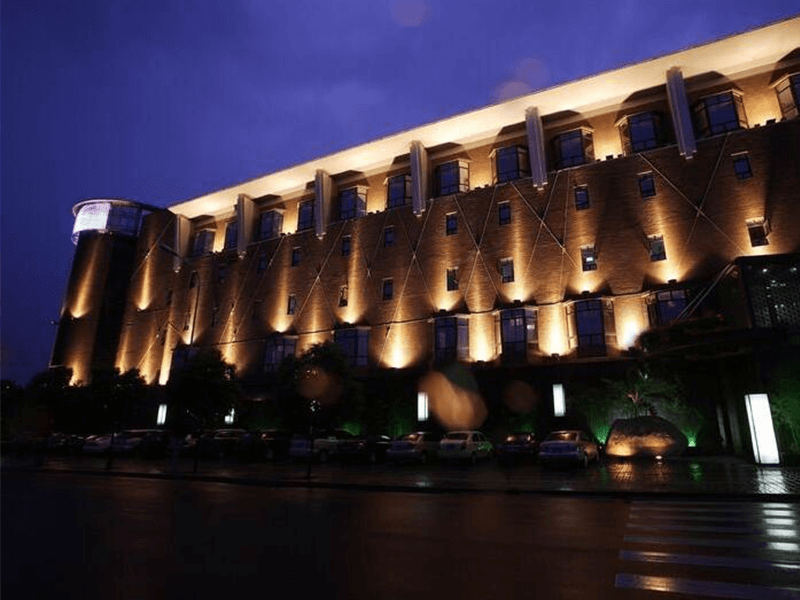
Picking the wrong beam angle can create a lighting disaster. You end up with uneven light, dark spots, or uncomfortable glare. This simple mistake can ruin an entire project’s feel.
The best beam angle for a downlight depends on the job it needs to do. For general room lighting, a wide angle like 60° is great. For highlighting a specific object or area, a narrow angle like 24° is better. There is no single "best" angle.
Choosing the right downlight is about more than just brightness or color. One of the most important factors, and one that I see people get wrong all the time, is the beam angle. Getting this right is the difference between a good lighting plan and a great one. Let’s break down what you need to know to make the perfect choice for your next project, so you can feel confident in every light you specify.
What is the beam angle for downlights?
You’ve designed a perfect space, but the lighting feels off. Some areas are too bright, others are too dim, creating an unbalanced and unprofessional look. This can frustrate your clients.
A downlight’s beam angle is the measurement of how wide the light spreads from the source. It’s measured in degrees (°). A smaller degree means a narrower, more focused beam of light, while a larger degree means a wider, more spread-out beam.
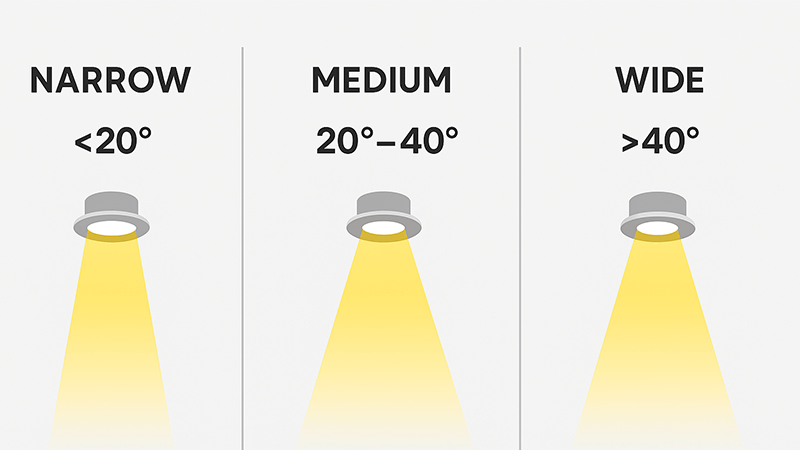
When I first started in a lighting factory, I was fascinated by how a small change in a reflector’s shape could completely change how a light performed. The beam angle is a direct result of the downlight’s internal optics—the reflector or lens that sits around the LED chip. It controls the cone of light that shines down onto the floor or a surface. Think of it like the nozzle on a hose. You can have a tight, powerful jet or a wide, gentle spray. Downlights work the same way. The key is to match the "spray" of light to the specific job you need it to do. A narrow beam is for precision, like a spotlight on a piece of art. A wide beam is for coverage, like lighting up an entire room. Understanding this simple concept is the first step to mastering lighting design.
How Beam Angle is Measured
The angle is measured at the point where the light intensity drops to 50% of its maximum brightness at the center of the beam. This is called the Full Width at Half Maximum (FWHM). It gives you a practical idea of the usable light cone.
Common Beam Angle Categories
To make things easier, we usually group beam angles into a few categories. This helps in quickly selecting a light for a specific purpose.
| Category |
Angle Range |
Common Use Cases |
| Narrow Spot |
10° – 24° |
Highlighting artwork, architectural details, high ceilings |
| Medium Flood |
25° – 40° |
Task lighting (kitchen counters), highlighting larger features |
| Wide Flood |
41° – 60° |
General ambient lighting for rooms, hallways |
| Very Wide Flood |
> 60° |
Open-plan areas, commercial spaces needing maximum coverage |
Remember, the distance from the light to the surface also matters. The further the light is, the wider the pool of light on the floor will be, even with the same beam angle.
What is the best beam angle for LED lights?
You want to create a beautifully lit space, but you’re unsure which beam angle to choose. Picking the wrong one could mean installing lights that don’t do their job effectively.
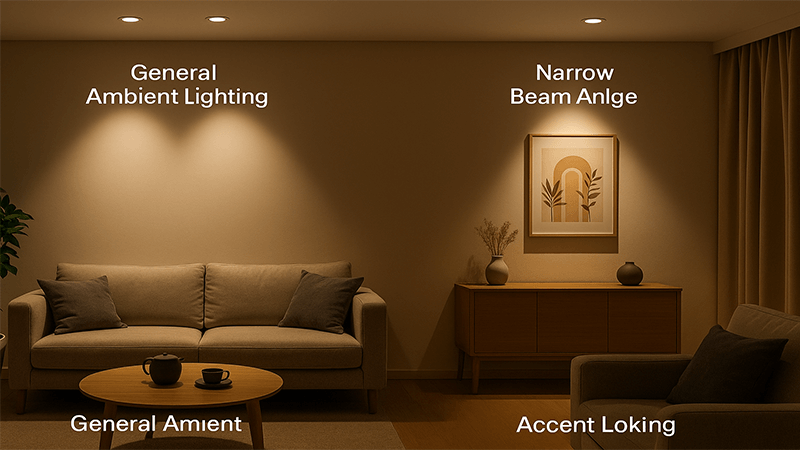
The "best" beam angle is the one that fits the specific application. Use wide angles (40°-60°) for general ambient lighting. Use medium angles (24°-36°) for task lighting. Use narrow angles (15°-24°) for accent lighting to highlight features.
I always tell my partners, like Shaz, that there is no "best" beam angle, only the "most suitable" one for the job. You wouldn’t use a hammer to turn a screw. In the same way, you shouldn’t use a narrow spot downlight to light up an entire living room. The perfect lighting plan uses a combination of different beam angles to create layers and functionality within a space. Before you even think about ordering a product, you must first ask: "What is the purpose of this exact light in this exact spot?" Once you answer that question, choosing the beam angle becomes easy. I once worked with a contractor who installed 24° downlights throughout an entire office. The result was a series of bright, isolated circles on the floor, with dark patches in between. It looked terrible and was impractical. We had to replace them all with 60° lights to create a smooth, even wash of light suitable for a work environment.
Choosing the Right Angle for the Job
Let’s break down the most common lighting needs and the angles that work best for each.
General (Ambient) Lighting
The goal here is to fill a room with a comfortable level of light. You want broad, even coverage that avoids creating harsh shadows or bright spots.
- Best Beam Angle: 40° to 60° or wider.
- Why it works: A wider beam angle means you need fewer downlights to illuminate a space evenly. The light from each fixture overlaps smoothly with the next, creating a seamless wash of illumination. This is perfect for living rooms, bedrooms, hallways, and open-plan offices.
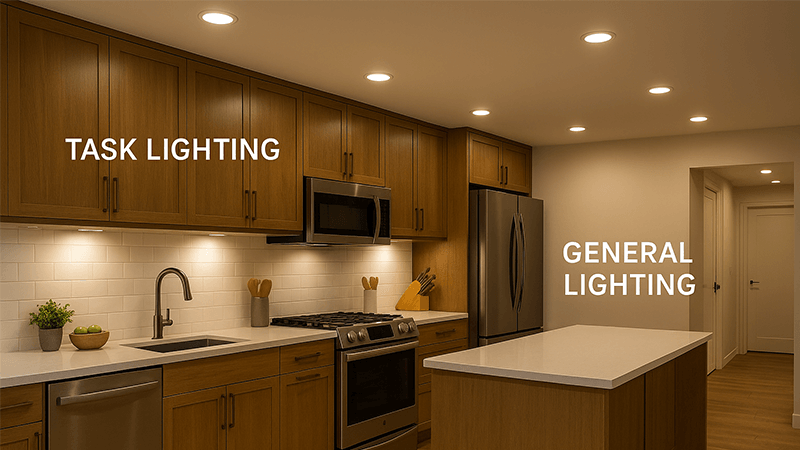
Task Lighting
This is focused light for specific activities, like reading, cooking, or working at a desk. The light needs to be concentrated on the work area without causing glare.
- Best Beam Angle: 24° to 40°.
- Why it works: A medium beam provides a defined pool of bright light directly where you need it. Over a kitchen island, for example, a 36° beam will illuminate the countertop perfectly for food preparation without spilling too much light into the surrounding area.
Accent Lighting
The purpose of accent lighting is to draw attention to something specific, like a painting, a sculpture, or an interesting architectural feature like a textured wall.
- Best Beam Angle: 15° to 24°.
- Why it works: A narrow, focused beam acts like a spotlight. It creates a high contrast between the highlighted object and its surroundings, making it a focal point in the room. This adds drama and visual interest to a space.
What does 36 degree beam angle mean?
You see a downlight specified with a "36-degree beam angle" but are not sure what that means for your project. This uncertainty can make it hard to choose the right product confidently.
A 36-degree beam angle means the downlight produces a cone of light that spreads out at a 36-degree angle. This is considered a medium flood, balancing focused intensity with decent coverage. It’s a versatile choice for many applications.

The 36° (or sometimes 38°) beam angle is one of the most popular choices I see in the projects we supply. It’s the "all-rounder" of downlights. It’s not as narrow as a true spotlight, so it doesn’t create overly harsh edges. But it’s also not as wide as a general floodlight, so it still has a good punch of light in the center. Think of it as the perfect middle ground. This versatility makes it a safe and effective choice for many situations, especially in residential settings. For purchasing managers like Shaz, having a reliable 36° downlight in your inventory is a smart move because it can solve many common lighting problems for your clients. It’s a workhorse that can be used for task lighting over counters, general lighting in smaller rooms, or highlighting larger furniture pieces.
Visualizing the 36° Beam Spread
The actual area a 36° downlight illuminates depends on the ceiling height. The higher the ceiling, the wider the pool of light on the floor.
Here’s a simple guide to help you visualize it:
| Ceiling Height |
Diameter of Light Pool on Floor (approx.) |
Best For |
| 2.4 meters (8 ft) |
1.5 meters (5 ft) |
Task lighting, kitchens, bathrooms, studies |
| 3.0 meters (10 ft) |
1.9 meters (6.2 ft) |
General lighting in standard rooms, highlighting dining tables |
| 3.6 meters (12 ft) |
2.3 meters (7.5 ft) |
General lighting in rooms with higher ceilings, retail displays |
When to Choose a 36° Beam Angle
A 36° beam angle is your go-to option when:
- You need focused light without sharp edges: It’s perfect for kitchen islands where you need bright light on the work surface but don’t want it to feel like a stage spotlight.
- You are lighting a standard-sized room: In rooms like bedrooms or living rooms with standard 2.4m to 3m ceilings, 36° downlights can provide good general illumination when spaced correctly.
- You want to create visual interest: You can use them to wash a wall or highlight a dining table, defining the space without being too dramatic.
It offers a great balance, making it one of the most specified and useful beam angles in an interior designer’s or contractor’s toolkit.
How to position downlights?
You’ve chosen the perfect downlights, but if you install them in the wrong places, the room will still look bad. Poor positioning creates shadows, glare, and an uncomfortable atmosphere for everyone.
Position downlights based on their function. For general lighting, space them evenly. For task lighting, place them directly above the work area. For accent lighting, aim them at the object you want to highlight, typically from a 30-degree angle.
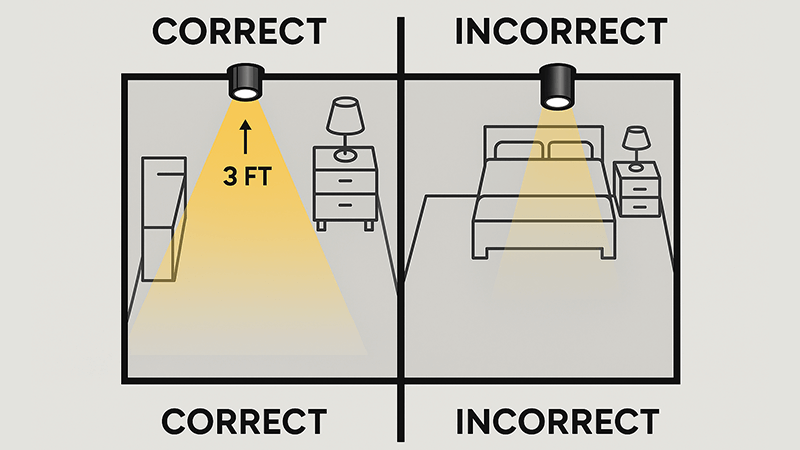
Positioning is just as important as selecting the beam angle. In my experience, the biggest mistake people make is placing downlights in a rigid grid pattern in the center of the room. This "airport runway" look is a terrible approach. It usually lights the top of people’s heads and leaves the walls dark and gloomy, making the room feel smaller. The right way is to think in layers and light what you want to see. Your lighting plan should be based on the room’s furniture, artwork, and function, not just its dimensions. Light the walls to make the space feel bigger. Light the task areas to make them functional. Light the features to make them beautiful. This thoughtful approach to positioning is what separates a professional from an amateur.
A Practical Guide to Downlight Spacing
Here are some simple rules I share with my clients to help them get positioning right every time.
1. General Lighting Spacing
The goal is an even wash of light. The spacing depends on the beam angle and ceiling height.
- Rule of Thumb: A common formula is to divide the ceiling height by two to get the suggested distance between downlights. For a 2.4-meter ceiling, you would space your 60° downlights about 1.2 meters apart.
- Distance from Walls: Place the first row of downlights about 60-90 cm (2-3 ft) away from the walls. This avoids creating harsh shadows (scalloping) at the top of the wall and helps light up the vertical surfaces, making the room feel more spacious.
2. Task Lighting Positioning
Here, precision is everything.
- Placement: Position the downlight directly above the center of the task area. For a kitchen counter that is 60 cm deep, you would place the downlight’s center about 30 cm from the wall, so it shines straight down on your workspace. This prevents your own body from casting a shadow on what you’re doing.
3. Accent Lighting Positioning
This is about creating drama and focus.
- The 30-Degree Rule: The ideal angle to light a piece of art on a wall is 30 degrees. To achieve this, place the downlight a certain distance from the wall.
- Simple Calculation: For a standard 2.4m (8 ft) ceiling, placing the downlight about 60 cm (2 ft) from the wall will create a nice wash of light on a painting hung at eye level.
By planning the position for each light’s specific purpose, you ensure the entire lighting scheme works together perfectly.
Conclusion
There is no single best beam angle. The right choice always depends on the specific job of each light, from wide angles for general lighting to narrow ones for accents.