Struggling to choose the right lighting for your space? You want perfect illumination, but the difference between downlights and spotlights is confusing, leaving you unsure which one meets your needs.
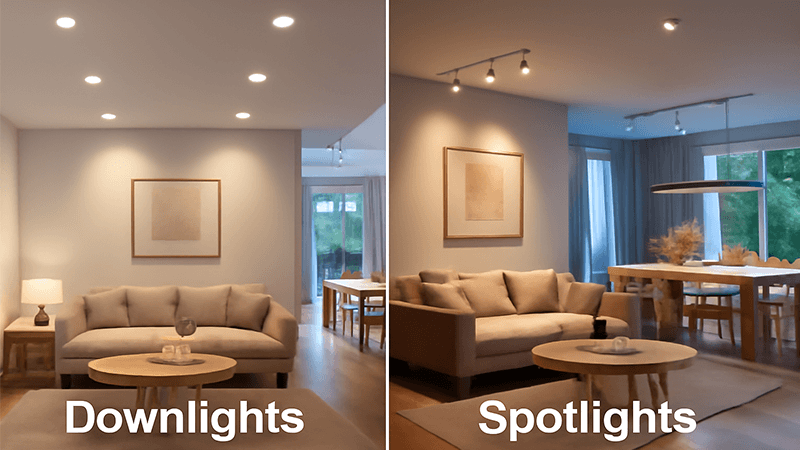
The main difference is their function. Downlights provide general, uniform illumination over a wide area, acting as primary lighting. Spotlights, however, create a focused beam to highlight specific objects or features, serving as accent lighting.
I’ve been in the lighting industry for over a decade, starting on the factory floor and eventually building my own manufacturing business, iPHD. I’ve helped countless partners like Shaz, a purchasing manager from the UAE, navigate these very questions. He often needs to source the perfect lighting for large projects, and knowing the core differences is key. Choosing incorrectly can completely change the feel of a room, turning a cozy space into a clinical one, or leaving important features in the dark. It’s a common challenge, but understanding the purpose behind each light makes the decision simple. Let me break it down for you, just as I would for a valued partner, so you can light your space with confidence.
Which Is Better, Downlight or Spotlight?
Choosing between a downlight and a spotlight feels like a tough decision. You want the best lighting for your project, but picking the wrong one can ruin the whole atmosphere.
Neither is "better" overall; the best choice depends entirely on your goal. Downlights are better for general ambient lighting to evenly illuminate a whole room. Spotlights are better for accent lighting to draw attention to specific details.
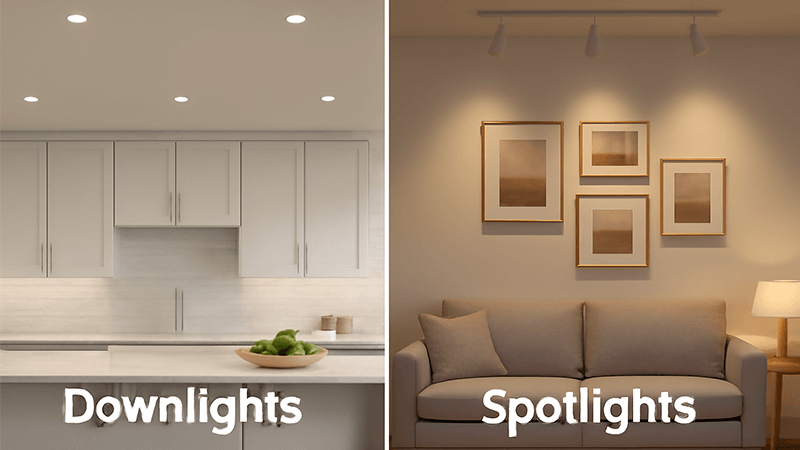
When I work with clients, the first question I ask is, "What are you trying to achieve with your light?" This is the most important question. There isn’t a single "best" light, only the best light for a specific job. Think of it like tools. Is a hammer better than a screwdriver? No, they just do different things. It’s the same with downlights and spotlights. I remember a project with Shaz for a hotel lobby. He was initially considering using only downlights. I explained that while downlights would provide excellent general brightness, they wouldn’t highlight the stunning sculptures and architectural features the hotel wanted to showcase. We decided on a layered approach. We used downlights for the base layer of ambient light, making the space feel welcoming and bright. Then, we added spotlights to focus on the artwork and reception desk. The combination created depth and visual interest that one type of light alone could never achieve. So, the "better" light is the one that fits your design intent.
Breaking Down the Choice
To make the best decision, you need to compare them side-by-side based on their intended use.
- Function: What is the primary purpose of the light?
- Beam Angle: How wide or narrow is the light beam?
- Best Use Case: Where does this light shine brightest?
Here is a simple table to help you decide:
| Feature |
Downlight |
Spotlight |
| Primary Goal |
General/Ambient Lighting |
Accent/Task Lighting |
| Light Spread |
Wide, diffuse, even illumination |
Narrow, focused, directional beam |
| Best For |
Kitchens, hallways, offices, living rooms |
Highlighting art, architectural details, tasks |
| Atmosphere |
Creates a bright, open feel |
Creates drama, focus, and visual interest |
What Qualifies a Light as a Spotlight?
You see a light fixture and wonder if it’s a spotlight. The term gets used loosely, causing confusion and making it hard to know if you’re getting what you need.
A light qualifies as a spotlight because of its narrow beam angle, typically less than 45 degrees. This focused beam allows it to direct intense light onto a specific, targeted area, creating high contrast and drawing attention.
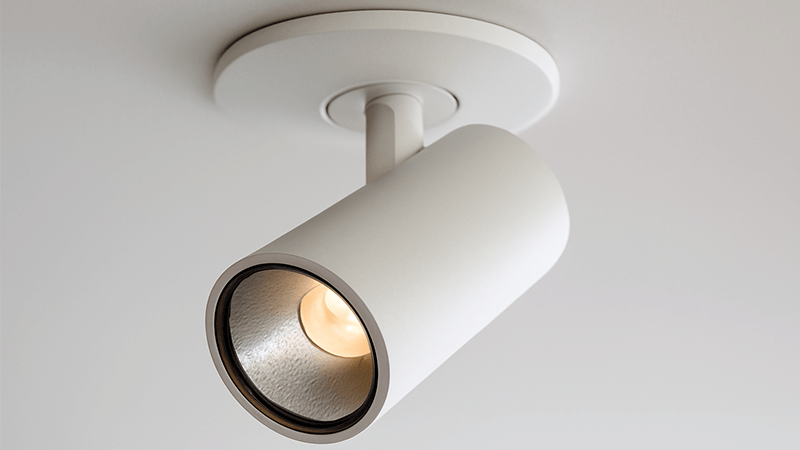
The defining characteristic of a spotlight is its ability to "spot" something. This comes from its internal optics, specifically the reflector and lens. In my factory, we design these components with extreme precision. The shape of the reflector cup and the type of lens work together to gather the light from the LED chip and project it forward in a tight, controlled cone. A downlight, by contrast, uses a wider, often frosted diffuser to spread the light out as much as possible. I recall helping Shaz source lights for a retail store in Dubai. The client wanted to make their high-end handbags pop. We couldn’t use downlights because their wide, soft light would just wash everything out. We needed the high-contrast drama that only a spotlight can provide. We selected a track lighting system with spotlights that had a 24-degree beam angle. We aimed them precisely at each handbag display. The result was dramatic. The handbags looked like jewels under the focused light, while the surrounding area was slightly dimmer, guiding the customer’s eye exactly where the retailer wanted it. That’s the power of a true spotlight: control and focus.
The Anatomy of a Spotlight
To really understand what makes a spotlight, let’s look at its key parts and how they create that focused beam.
- LED Chip: The source of the light. The quality of the chip affects brightness and color rendering.
- Lens/Optics: This is the most critical part. It shapes the light. A Total Internal Reflection (TIR) lens is often used to efficiently collect and direct light into a narrow beam.
- Reflector: A cone-shaped cup around the chip that helps gather stray light and direct it toward the lens. Its finish (smooth or faceted) also influences the beam’s quality.
- Housing and Gimbal: The body of the light, which often includes an adjustable mechanism (gimbal) that allows you to pivot and aim the light precisely.
This combination of parts is engineered for one purpose: to take a source of light and concentrate it into a powerful, controllable beam. It’s this engineering that separates a spotlight from any other type of luminaire.
What Are Downlights Used For?
You know you need general lighting for a room. But with so many options, you might feel lost about when and where to use a downlight specifically for the best effect.
Downlights are primarily used to provide uniform, ambient illumination for an entire space. They are perfect for general lighting in rooms like kitchens, hallways, bathrooms, and offices where overall brightness is the main goal.
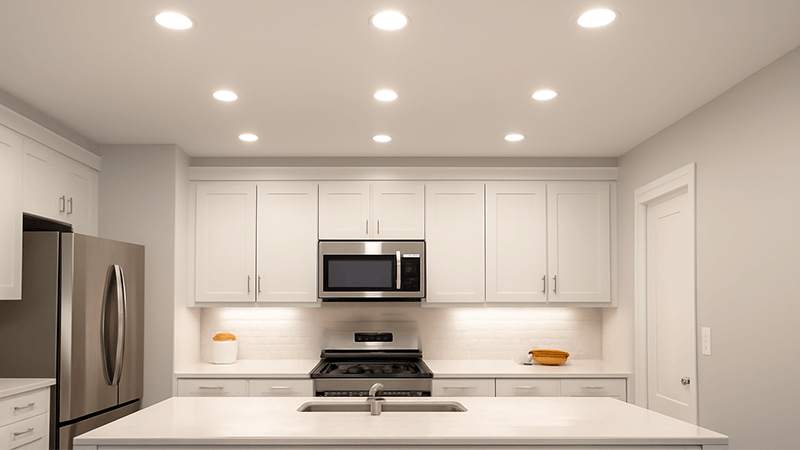
Think of downlights as the foundation of your lighting plan. Their job is to wash a room in a consistent layer of light, making it functional and comfortable. They are the workhorses of the lighting world. I always tell my partners, like Shaz, to start with the downlights when planning a layout for a large commercial space or residential project. We first map out a grid of downlights to ensure there are no dark corners and the entire area is usable. For instance, in an office setting, you need even light across all desks to prevent eye strain and create a productive environment. Downlights, spaced correctly, achieve this perfectly. I remember a project for a series of apartment buildings. The developer wanted a clean, modern look. We used recessed downlights throughout the living areas, kitchens, and corridors. Because they are installed flush with the ceiling, they create an uncluttered, spacious feel. They provided all the necessary ambient light without drawing attention to themselves, allowing the interior design and architecture to be the stars. That is the true strength of a downlight: powerful, effective illumination that blends seamlessly into the background.
Common Applications for Downlights
Downlights are incredibly versatile, but they excel in certain applications. Here’s where they are most effective:
- General Ambient Lighting: This is their primary function. Spaced in a grid pattern, they can illuminate an entire room. The key is proper spacing to avoid scallops on the walls or dark spots in the middle of the room. A good rule of thumb is to space them about half the distance of the ceiling height.
- Task Lighting (in some cases): While spotlights are often better for focused tasks, a series of downlights can work well for larger task areas. For example, placing downlights directly above a kitchen island or counter provides bright, even light for food preparation.
- Creating a Sense of Space: Because they are often recessed and provide broad illumination, downlights can make a room feel larger and more open. They don’t clutter the ceiling, which is great for rooms with lower ceiling heights.
The goal with downlights is to create a comfortable, functional base layer of light upon which you can add other layers, like accent or decorative lighting, if needed.
What Are the Disadvantages of Spotlights?
Spotlights seem great for creating drama and focus. But you worry they might have drawbacks, potentially creating a harsh or impractical environment if used incorrectly.
The main disadvantages of spotlights are their potential to create harsh glare, sharp shadows, and an unevenly lit room. Their focused beams can also generate more concentrated heat and may not be suitable for general illumination.
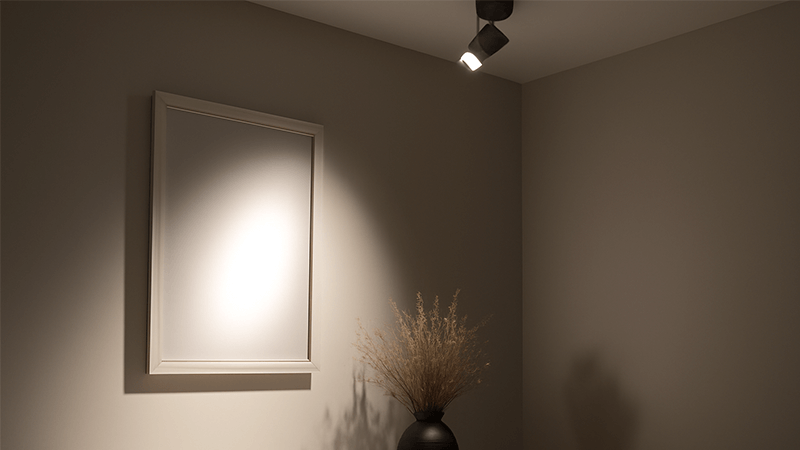
While I love using spotlights for accenting, I always caution my clients about their potential downsides. Their biggest strength—the intense, focused beam—is also their biggest weakness if misused. I once visited a cafe where the owner had installed spotlights directly above the seating areas. The idea was to create cozy, intimate pools of light. But the execution was flawed. The beams were too narrow and intense, creating a harsh glare on the tables and making customers feel like they were under an interrogation lamp. It also created very dark areas between the tables, which made the space feel choppy and smaller. We redesigned the layout by replacing the overhead spotlights with softer, decorative pendants and moving the spotlights to the walls to highlight artwork. This is a perfect example of why placement is so critical. A spotlight’s job is to highlight an object, not a person’s head. The focused energy can also mean more localized heat, which can be a concern for delicate artwork or if the fixture is within reach. Using them as your only light source is almost always a mistake, as it leads to a high-contrast, "cave-like" effect.
Mitigating Spotlight Drawbacks
Understanding the potential issues is the first step. The next is knowing how to avoid them. You can use spotlights effectively without falling into these common traps.
- Glare: This is the most common issue. To avoid it, never aim a spotlight directly at eye level or where people will be sitting or standing for long periods. Use them to graze a textured wall, highlight a piece of art from an angle, or light a feature from above. Using accessories like honeycomb louvers can also help cut down on direct glare.
- Harsh Shadows: A single, intense light source creates hard-edged shadows. To soften this, use multiple spotlights from different angles to light a single object, or combine them with a base layer of ambient light from downlights or other sources. This "fill light" will soften the shadows created by the spotlights.
- Uneven Lighting: Spotlights are not designed for general lighting. Relying on them for overall illumination will result in a patchy, unevenly lit space. Always use them as part of a layered lighting scheme, not as the sole source of light.
By keeping these points in mind, you can harness the dramatic power of spotlights while creating a comfortable and visually pleasing environment.
Conclusion
In short, downlights provide broad, general light for entire rooms, while spotlights use focused beams to highlight specific features. Choose based on your goal: ambient function or dramatic focus.