Are your LED downlights failing far too soon? You invest in new fixtures, expecting years of reliable light, but end up with premature failures. This costs you money, time, and client trust.
Your LED downlights are likely blowing because of poor quality power from the driver, not the bulb itself. The hidden cause is often "current ripple"—unstable electricity that stresses the LED chip and causes it to fail early.
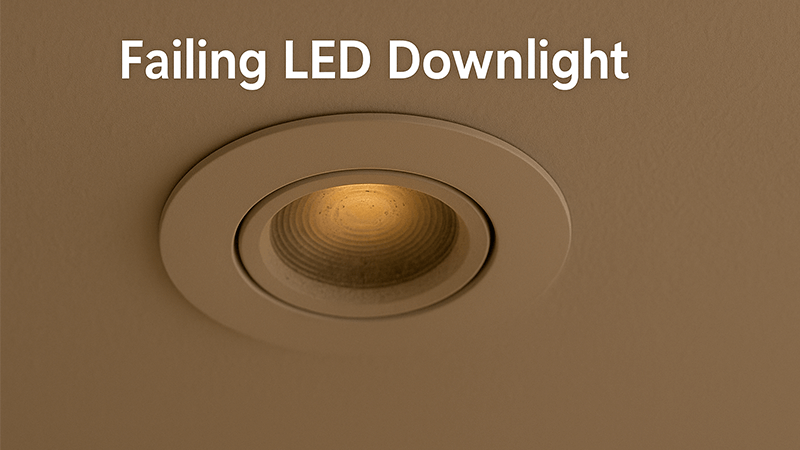
I’ve seen this problem countless times in my years in the lighting industry. A client calls me, completely frustrated that a whole batch of lights has failed. They always blame the bulb first. It’s a natural assumption. But the real problem is almost always hidden from view, silently killing the light from the moment it’s turned on.
Let’s dig into the real reasons your LEDs are failing. Understanding these issues will help you choose products that actually last. This knowledge is key to protecting your projects and your reputation.
Why does my LED light keep blowing?
It’s a huge headache when a new installation of LED lights starts failing one by one. You blame the manufacturer, but the real problem might be hidden. What if the issue is invisible?
Your LED light keeps blowing because of an unstable electrical current. Most failures trace back to the LED driver, which supplies power. Cheap drivers produce "current ripple," a fluctuating current that constantly over-stresses the sensitive LED chip, leading to its early death.
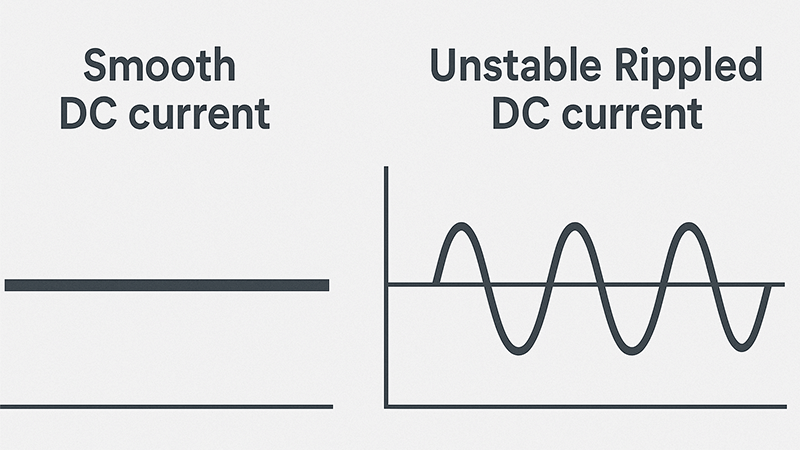
Let me explain "current ripple" in a simple way. Think of an LED chip as a person who needs a steady, healthy diet to live a long life. The perfect food for an LED is smooth, stable Direct Current (DC). An excellent LED driver provides this. However, many cheap drivers, especially non-isolated types, deliver a "dirty" current. This current has constant ups and downs, like ripples on water. These ripples are like feeding the LED a diet of junk food and energy drinks. The constant spikes and dips in power put immense stress on the delicate LED chip. It’s a silent killer.
In my early days, I helped a client in Dubai who was facing massive failures in a new hotel project. The downlights were failing in less than six months. When my team tested the drivers, we found the current ripple was over 40%, which is extremely high. The drivers were cheap, non-isolated models. We replaced them with our own iPHD drivers, which have a ripple of less than 5%. The problem disappeared completely. This is why I always tell my partners, especially experienced purchasing managers like Shaz, to look at the driver specifications first. Don’t just focus on the bulb’s brightness or price. The driver is the heart of the system.
Here’s a quick breakdown of driver types:
| Feature |
Isolated Driver |
Non-Isolated Driver |
| Safety |
Higher (has a physical barrier) |
Lower (components are connected) |
| Cost |
More expensive |
Cheaper |
| Size |
Larger and heavier |
More compact |
| Output Quality |
Smooth DC, very low ripple |
Higher ripple, less stable current |
| LED Lifespan |
Promotes a longer lifespan |
Can cause premature failure and flicker |
For any project where quality and longevity are important, a low-ripple driver is not a luxury. It is a necessity.
Why are my LED light bulbs burning out so quickly?
You invested in long-lasting LED technology, expecting years of service. Now you’re replacing bulbs far too often. This unexpected cost and maintenance work is frustrating and eats into your project’s profitability.
Your LEDs burn out quickly due to three main factors: high current ripple from the driver, excessive heat buildup, or voltage spikes on the power line. Poor heat dissipation is a major killer, as high temperatures degrade the LED chip and other components very fast.
We already talked about current ripple, which is a major factor. But heat is an equally dangerous enemy to LEDs. LEDs produce light very efficiently, but they still generate heat. Unlike old incandescent bulbs that radiate heat away as infrared light, all the heat from an LED is trapped at the base of the chip. This heat must be drawn away effectively. If it’s not, the temperature of the LED chip will rise. And high temperatures are poison for LEDs.
This is where good thermal management comes in.
The Role of the Heat Sink
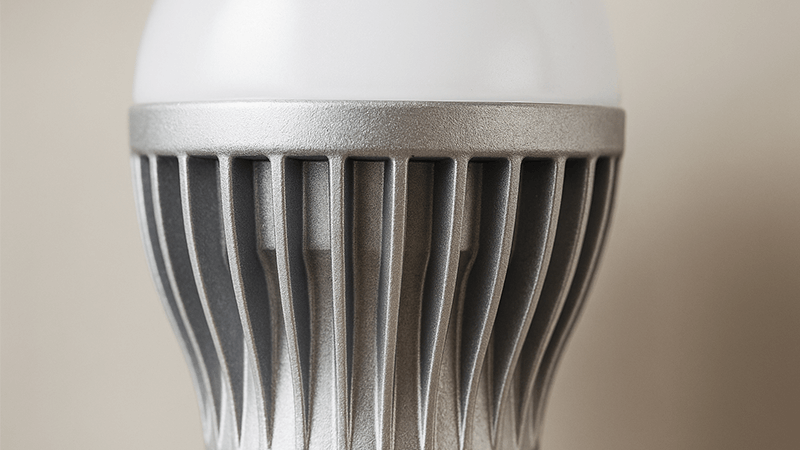
The heat sink is the part of the bulb designed to pull heat away from the LED chip and release it into the air. The quality of the heat sink depends on two things: material and design.
- Material: Good heat sinks are typically made of aluminum. Pure aluminum is great, but die-cast aluminum is often used for its balance of performance and cost. Some cheap manufacturers use plastic with a thin aluminum coating, or even just conductive plastic. These materials are poor at dissipating heat and will cause the bulb to overheat and fail quickly.
- Design: A good design maximizes the surface area. That’s why you see fins on many LED bulbs. More surface area means more contact with the air, which allows heat to escape faster.
I once consulted for a large distributor who bought a container of low-cost LED spotlights. They looked great on the outside. But inside, the "heat sink" was just a small, thin piece of aluminum that was not even making good contact with the LED board. The bulbs were failing in under 1,000 hours. An LED’s lifespan is directly tied to its operating temperature. A well-designed bulb keeps the chip cool. A poorly designed one cooks itself to death. So when you are sourcing products, always ask about the heat sink material and design. It is just as important as the LED chip itself.
How to stop LED ghosting?
You turn off the light switch, but the LED bulb continues to glow faintly. This strange "ghosting" is unnerving for clients and makes your installation look unprofessional. It seems like a faulty bulb, but the cause is more complex.
To stop LED ghosting, you can install a load resistor or a Zener diode in parallel with the LED bulb. This provides a path for the small leakage current to bypass the LED driver, preventing it from accumulating enough energy to make the bulb glow faintly.
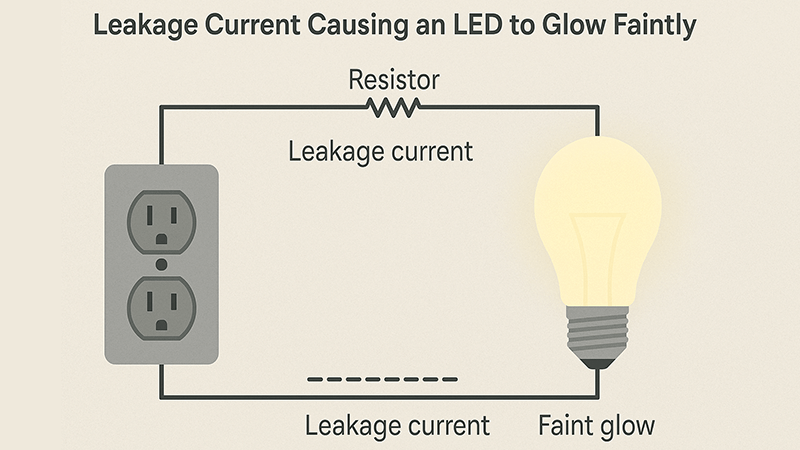
LED ghosting, or glowing when off, is a strange but common issue. It happens because LED drivers are extremely sensitive. They need very little electricity to activate the LED chip. The problem usually isn’t the bulb. The problem is a small amount of "leakage current" running through your wiring, even when the switch is off. This can come from a few sources.
First, some modern light switches, like dimmers, smart switches, or switches with indicator lights, are not simple on/off mechanical devices. They often require a small amount of power themselves to operate their electronics. This tiny current passes through the switch and down the wire to the light fixture. An old incandescent bulb wouldn’t even notice this tiny current. But for a highly efficient LED driver, it can be enough to store up energy in its capacitors and cause the LED to flash or glow dimly.
Second, in some wiring situations, you can have something called "capacitive coupling." This happens when the switched wire to your light runs parallel to a permanently live wire for a long distance inside the wall. The two wires act like a capacitor, and a tiny amount of current can be induced into the switched wire, even when the switch is off.
The solution is to give this leakage current another path to follow, so it doesn’t go to the LED driver.
- Install a Load Resistor: A simple resistor connected across the live and neutral terminals at the light fixture creates an alternate path. The leakage current flows through the resistor instead of the driver.
- Use a Bypass Capacitor: Sometimes called a "snubber," this device works similarly to a resistor to absorb the small leakage current.
- Check the Switch: If you are using a smart switch or dimmer that is not designed for LEDs, replacing it with a compatible one can solve the problem. Always check if the dimmer is a "trailing-edge" type, which is better for LEDs.
This is an issue I’ve helped many contractors solve. It’s not a sign of a bad LED, but a sign of how modern, efficient technology interacts with older wiring systems. Understanding this helps you solve the problem for your client quickly and professionally.
Do LED bulbs get hot enough to start a fire?
You’ve heard that LEDs run cool, but when you touch a bulb, it’s hot. This makes you wonder if it’s a fire hazard, especially in enclosed fixtures. It is a valid concern for any professional responsible for safety.
A high-quality, properly installed LED bulb from a reputable manufacturer will not get hot enough to start a fire. While they do get hot to the touch (around 60-100°C), this is well below the ignition temperature of common building materials.
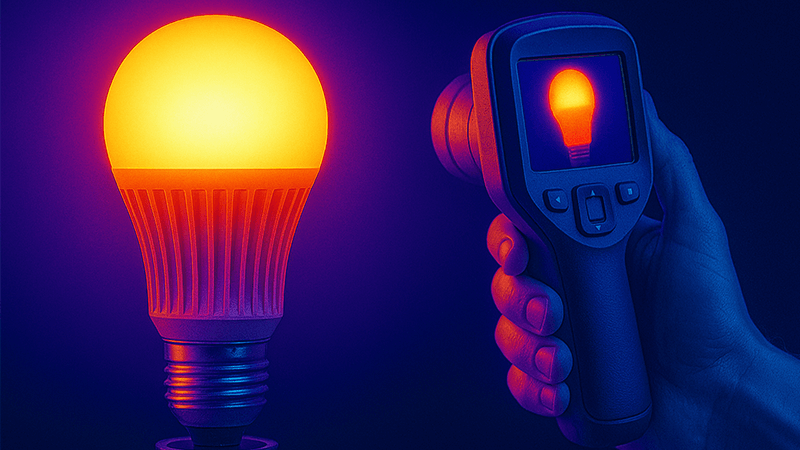
It’s true that LEDs are much cooler than old incandescent or halogen bulbs, which could easily reach over 200°C. However, it is a myth that LEDs produce no heat. They do get hot, but the heat is concentrated at the base of the bulb, at the heat sink. The bulb itself feels hot because the heat sink is doing its job—pulling heat away from the sensitive electronics. A typical LED bulb’s surface temperature is well under the point where it could ignite paper (233°C) or wood.
However, the risk of fire, though very low, is not zero. The danger does not come from the LED chip’s normal operating temperature. It comes from potential failures within the bulb’s internal components, especially in very cheap, uncertified products.
Where is the Real Fire Risk?
The primary risk comes from the internal driver and poor electrical connections.
- Poorly Made Drivers: In extremely low-cost bulbs, the driver components can be undersized and of poor quality. If a component like a capacitor or transistor fails, it can short-circuit. This can cause extreme overheating in a very small area, potentially melting the plastic housing and creating a fire hazard.
- Bad Soldering and Wiring: Poor connections inside the bulb can create high resistance points. As electricity struggles to get through, these points can heat up significantly, a process known as resistive heating. This can melt wires and surrounding materials.
This is why certifications like UL, CE, and RoHS are so important. These certifications mean the product has been tested by a third party for safety. They check for things like proper wire gauges, component spacing, and material flammability. As a manufacturer, I take this very seriously. Our iPHD products go through rigorous testing to ensure every component can handle its electrical load and that all safety standards are met. When sourcing lighting, never compromise on safety certifications. It’s the best way to protect your project, your clients, and your business from the rare but serious risk of fire.
Conclusion
The health of an LED downlight depends on its entire system. Don’t blame the bulb alone. Focus on quality drivers, effective heat management, and certified products to ensure long-lasting, reliable lighting.