Struggling with lighting terminology? This confusion can lead to costly project mistakes and delays. Let’s clarify the real difference between an LED downlight and a recessed light for good.
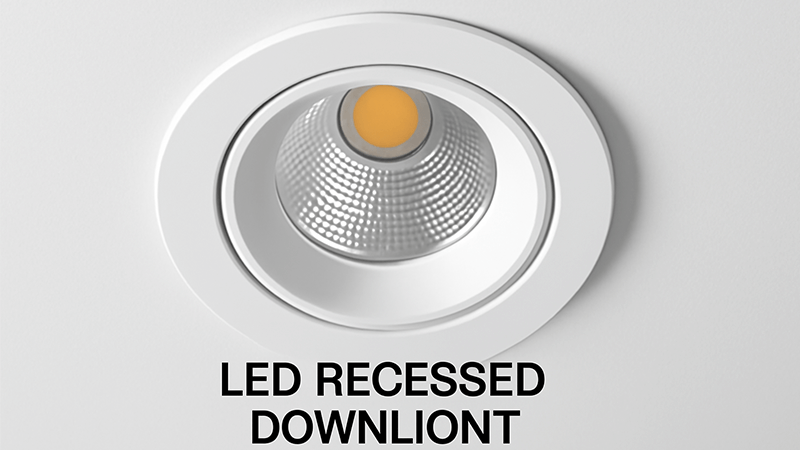
The main difference is about function versus installation. "Recessed light" refers to the installation method where the fixture is set into a ceiling. "LED downlight" refers to the light source technology. Today, most recessed lights you find are, in fact, LED downlights.
Understanding this basic difference is the first step, but it often leads to more questions. As a purchasing manager or project contractor, you need to be precise. You need to know exactly what to specify to get the right product for your needs.
Let’s break down the common questions I hear from clients all the time. Getting these details right will save you headaches and ensure your projects shine. Let’s dive deeper and make you an expert on the topic.
Are downlight and recessed light the same?
Are you using "downlight" and "recessed light" as the same term? This common mix-up can cause specification errors and ordering the wrong products for a big project.
No, they are not technically the same, but the terms are often used together and have become linked. A "recessed light" is any light installed into a surface. A "downlight" is any light that shines downwards. A recessed downlight is the most common type.
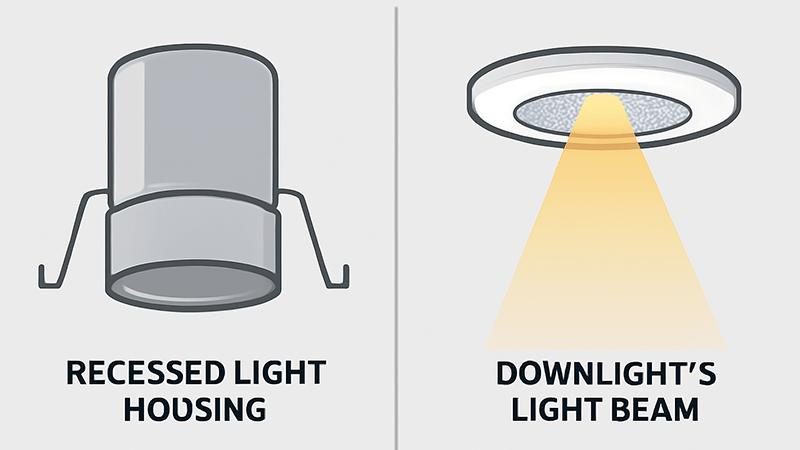
When I first started in this industry, I saw many clients get confused. They would ask for recessed lights, but what they really needed was a specific type of recessed light. A recessed light just describes how the fixture is mounted. A downlight describes where the light goes. Most of the time, people want a recessed fixture that shines light downwards, so they are looking for a recessed downlight.
Clarifying the Terms for Procurement
As a purchasing professional like Shaz, precision is key. You can’t afford to order 1,000 units of the wrong fixture. A "recessed light" could technically be a wall washer or an adjustable accent light, both of which fit into a ceiling but don’t just shine straight down. A "downlight" could be surface-mounted on the ceiling, not recessed into it. The term you are most likely looking for is "recessed downlight." This tells the manufacturer you need a fixture that fits into the ceiling and directs its light downwards. In my factory, we always confirm this.
Why the Confusion Exists
The confusion comes from market trends. Over 95% of the recessed lights sold today are downlights. So, the industry and customers started using the terms interchangeably. But for professionals, knowing the difference is crucial for getting the right lighting effect. Always specify both the installation style and the light direction.
| Feature |
Recessed Light |
Downlight |
Recessed Downlight |
| Primary Definition |
Installation Method (in-ceiling) |
Light Direction (downward) |
A downlight installed in-ceiling |
| Can it be surface-mounted? |
No |
Yes |
No |
| Can it shine upwards? |
Yes (e.g., in-ground uplight) |
No |
No |
| Most Common Use? |
General ceiling lighting |
General or task lighting |
The industry standard for ceiling lighting |
What are the disadvantages of LED downlights?
Worried that LED downlights might have hidden drawbacks? Choosing a lighting solution without knowing the cons can lead to client complaints and redesigns. Let’s look at the potential issues.
The main disadvantages of LED downlights include a higher initial cost compared to traditional bulbs, potential for glare if not chosen correctly, and the complexity of replacing the integrated LED source, as you often have to replace the entire fixture.
I believe in being honest about product limitations. While I’m a huge advocate for LED technology, it’s not perfect for every single situation. Understanding the potential downsides helps you choose better products and set the right expectations with your clients. At my company, iPHD, we focus on engineering solutions to minimize these disadvantages, but you should be aware of them when sourcing from any supplier.
Breaking Down the Drawbacks
Let’s look at these issues more closely. Each one can be managed with careful product selection.
-
Higher Initial Investment: Yes, LED fixtures cost more upfront than a simple halogen bulb. However, this is a classic case of investment versus expense. I always tell my clients to calculate the Total Cost of Ownership (TCO). When you factor in energy savings, lack of bulb replacements, and lower maintenance labor, LEDs are significantly cheaper over their lifespan. A purchasing manager focused on long-term value will see the benefit.
-
Glare and Visual Comfort: Poorly designed LED downlights can be a real problem. They can create harsh, uncomfortable glare. This is why we developed fixtures with deep-set LEDs, anti-glare reflectors, and better optics. When sourcing, you should always ask for the UGR (Unified Glare Rating). A UGR of <19 is considered excellent for office and commercial spaces.
-
Replacement and Maintenance: This is a big concern for many. With old recessed lights, you just swapped a bulb. With many modern LED downlights, the LED chip is integrated. If it fails, you replace the whole unit. While our LEDs are rated for 50,000+ hours, failure can happen. The solution is to choose suppliers with reliable warranties and to use modular designs where the driver or light engine can be replaced separately.
Here is how to mitigate these disadvantages:
| Disadvantage |
Mitigation Strategy |
What to Ask Your Supplier |
| High Upfront Cost |
Focus on Total Cost of Ownership (TCO). |
"What is the lumen-per-watt efficacy?" "What is the L70 lifetime?" |
| Potential for Glare |
Choose fixtures with good optical design. |
"What is the UGR rating of this downlight?" "Can you provide a photometric file?" |
| Integrated Fixture |
Select modular designs and reliable brands. |
"Is the driver external/replaceable?" "What is your warranty policy?" |
Can I replace recessed lights with LED?
Do you have old, inefficient recessed lights? Continuing to use them means high energy bills and frequent bulb changes. Upgrading them seems complex, but it’s a necessary step.
Yes, you can absolutely replace old recessed lights with LED. The easiest way is with an LED retrofit kit, which is designed to fit into existing housing. Alternatively, you can replace the entire fixture (housing and trim) with a modern integrated LED downlight.
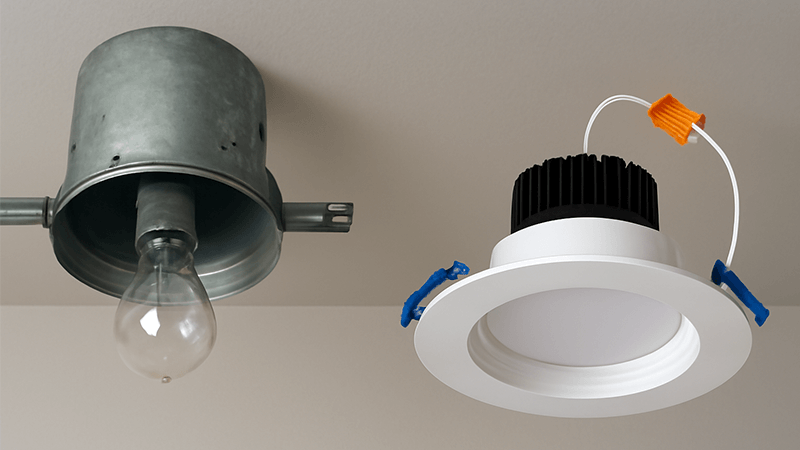
This is one of the most common projects I help clients with. Many buildings still have old recessed cans that use halogen or CFL bulbs. The energy waste is enormous. I remember working with a hotel project manager in Dubai who was changing thousands of halogen bulbs every few months. The labor and energy costs were killing his budget. We helped him switch to LED retrofit kits, and he cut his lighting energy consumption by over 80% and practically eliminated his maintenance routine.
Your Two Main Upgrade Paths
You have two great options, and the best choice depends on your project’s budget and the condition of the existing fixtures.
-
LED Retrofit Kits: This is the fastest and often cheapest solution. A retrofit kit is basically an all-in-one LED module that includes the trim and the light source. It’s designed to screw into the existing socket and then snap into the old housing can. The installation can take just a few minutes per light. This is perfect for large-scale upgrades where a full renovation isn’t planned. It’s a very popular choice for Shaz and other purchasing managers in the UAE, where efficiency upgrades are a priority.
-
Full Fixture Replacement: This is a more involved option. You remove the entire old fixture, including the housing can in the ceiling, and install a brand-new integrated LED downlight. This is the best choice for new construction or major renovations. It gives you access to the latest technology, like "canless" or ultra-thin wafer lights, which don’t even need a housing can. This provides a cleaner look and better performance, as the fixture is designed as a single, optimized unit.
| Upgrade Method |
Best For… |
Pros |
Cons |
| LED Retrofit Kit |
Large-scale upgrades, limited budget, existing housing is in good condition. |
Fast installation, low labor cost, cost-effective. |
Dependent on the quality of old housing, might not look as seamless. |
| Full Fixture Replacement |
New construction, major remodels, damaged housing. |
Best performance, modern look, latest features (e.g., canless), better long-term reliability. |
Higher initial cost, more complex installation, requires ceiling access. |
When should you not use recessed lighting?
Is recessed lighting always the right answer? Overusing it can create a sterile, flat environment, and in some cases, it’s just the wrong tool for the job.
You should not use recessed lighting as the sole light source in a room, as it can create harsh shadows. Avoid it on very high or sloped ceilings without special fixtures, and in spaces that need a decorative element, as recessed lights are designed to disappear.
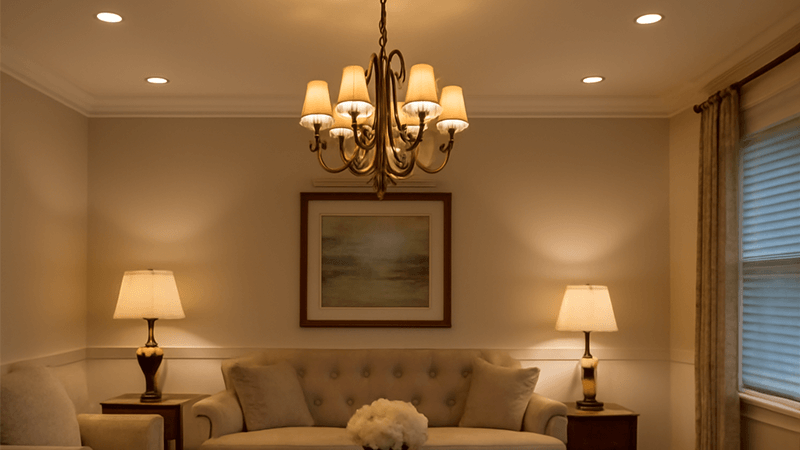
As much as I manufacture recessed downlights, I’m the first to admit they aren’t the solution for everything. Good lighting is about creating layers. Recessed lighting is fantastic for the "general" or "ambient" layer of light. But a room only lit by downlights can feel like a hospital or an airport runway. It lacks warmth and character. I often advise designers and project contractors to think of recessed lights as the foundation, not the entire house.
Situations Where Other Lighting Works Better
To create a functional and inviting space, you need to mix and match. Recessed lights provide great overall illumination, but you need other fixtures to complete the scene.
- For Creating Ambiance and Focus (Accent Lighting): To highlight a piece of art or an architectural feature, a narrow-beam track light or a picture light is far more effective than a general downlight.
- For Performing Specific Jobs (Task Lighting): Reading a book or chopping vegetables requires focused light. A table lamp, floor lamp, or under-cabinet lighting does this job much better than a distant overhead downlight, which can cast shadows from your own body.
- For Making a Statement (Decorative Lighting): A chandelier, a beautiful pendant, or a stylish sconce adds personality and becomes a focal point in a room. Recessed lights are designed to be invisible; they offer no decorative value.
Think of it as a lighting design strategy.
| Layer of Light |
Purpose |
Best Fixture Type |
Role of Recessed Lighting |
| Ambient |
General, overall illumination. |
Recessed Downlights, large pendants. |
Primary role. It sets the base level of light. |
| Task |
Focused light for activities. |
Under-cabinet lights, desk lamps, floor lamps. |
Poor choice. It creates shadows. |
| Accent |
Highlight specific features. |
Track lights, picture lights, spotlights. |
Can be used if they are adjustable (gimbal) fixtures. |
| Decorative |
Add style and visual interest. |
Chandeliers, sconces, designer pendants. |
No role. They are meant to be hidden. |
Don’t use recessed lights on ceilings over 15 feet (about 4.5 meters) high unless you use fixtures specifically designed for high ceilings with powerful, narrow beams. Otherwise, the light will be too dim by the time it reaches the floor.
Conclusion
The difference between LED, downlight, and recessed is simple: one is tech, one is direction, and one is installation. Most modern fixtures you need are all three: LED recessed downlights.