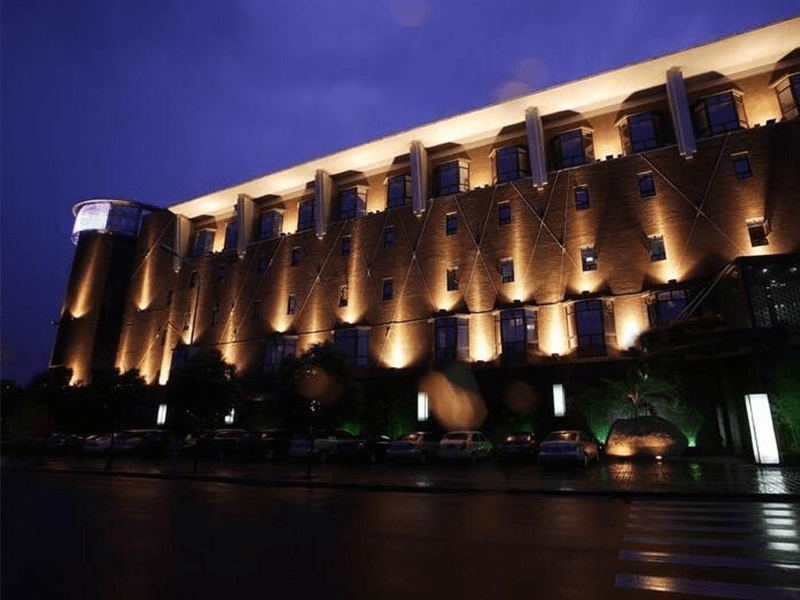
LED downlight brightness is often reduced to a wattage question during product selection. That shortcut can create costly problems when a downlight appears too dim, produces uneven illumination, or causes glare after installation. We recommend assessing usable light output, beam control, mounting conditions, and the intended lighting task before choosing wattage.
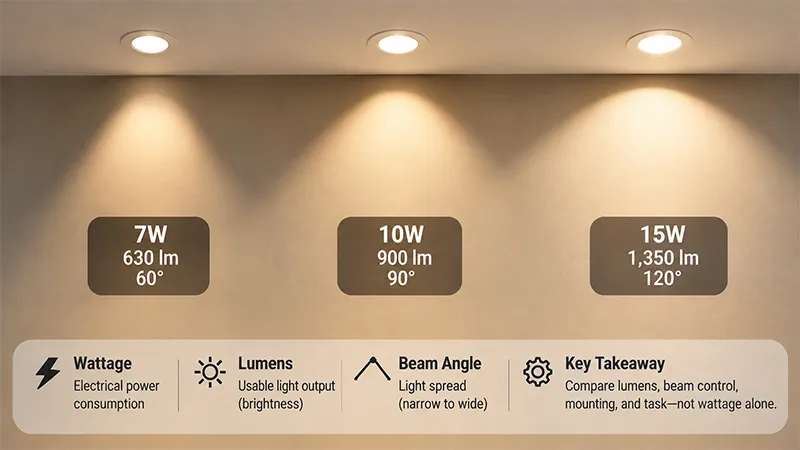
Wattage affects LED downlight brightness indirectly because it measures electrical power consumption, not the amount of useful light delivered to a room or target surface. A higher-wattage downlight may produce more lumens, but efficiency, driver design, beam angle, mounting height, and optical distribution can change the actual result. Buyers should compare photometric specifications and application requirements rather than wattage alone.
When we discuss specifications with OEM and ODM buyers, wattage is usually the first number mentioned. However, the better question is not simply “How many watts do I need?” It is “What lighting result does this installation need?” That shift helps buyers compare products more accurately and reduce installation risk.
Does Higher Wattage Always Increase LED Downlight Brightness?
Buyers often assume that a higher wattage automatically means stronger illumination. This assumption can make procurement easier on paper, but it can also lead to unsuitable products, unnecessary energy use, or lighting that does not match the project expectation. We encourage buyers to separate electrical input from lighting performance.
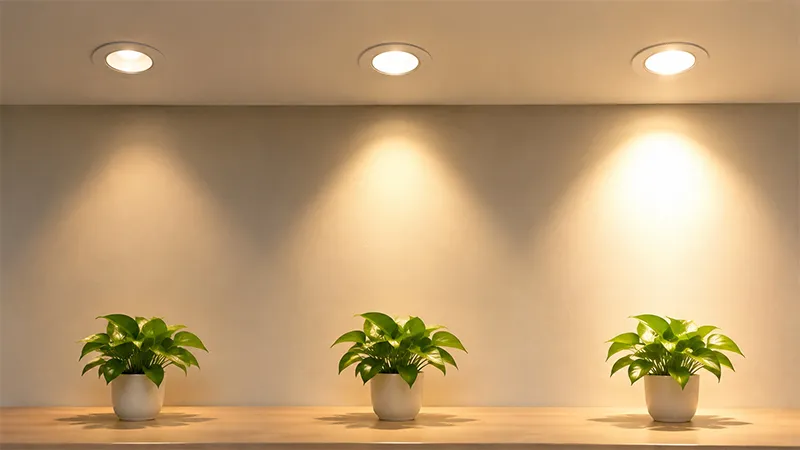
Higher wattage can increase the potential light output of an LED downlight, but it does not automatically guarantee better LED downlight brightness in the installed space. Wattage describes power consumption in watts. Brightness depends on lumen output, light distribution, beam angle, installation height, fixture spacing, and the surface receiving the light.
Wattage Measures Input Power
A watt is a measure of electrical power. For LED downlights, wattage tells a buyer how much electricity a fixture is designed to consume under its rated operating conditions.
This matters for several commercial decisions:
- Energy-use planning
- Circuit loading calculations
- Retrofit comparisons
- Sustainability targets
- Operating-cost estimates
- Product positioning within a lighting range
However, wattage alone does not explain how effectively that power becomes visible light. Two downlights with the same rated wattage can have different lumen outputs. They can also produce different lighting effects even when their published lumen values are similar.
For example, one product may use a more efficient LED package or better thermal design. Another may use a different optical lens, reflector, diffuser, or driver configuration. These differences can affect the amount of light that leaves the fixture and where that light goes.
A wattage label tells us what power a downlight consumes. A photometric specification helps us understand what the downlight delivers.
Why “Brighter” Is Not Always the Better Outcome
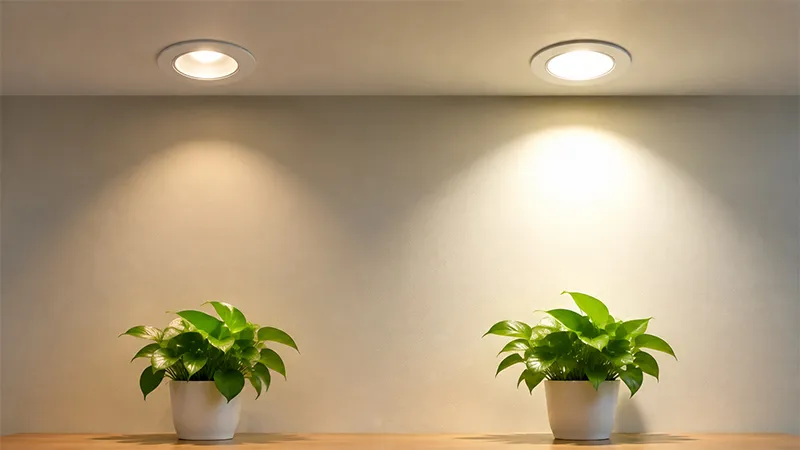
In commercial lighting, more light is not automatically better light. A high-output downlight with a narrow beam may create strong pools of light and darker surrounding areas. A wide-beam product may make a room feel more evenly illuminated, even when its output is lower.
We have seen specification conversations begin with a request for “the brightest option.” Once we ask about ceiling height, room size, finishes, and task requirements, the conversation usually changes. A retail display, hotel corridor, office reception, and residential living room can all require different distributions and visual comfort levels.
Buyers should define whether the downlight is intended for:
- General illumination across a broad area
- Task lighting over a work surface, counter, or desk
- Accent lighting for merchandise, artwork, or architectural features
- Replacement lighting where existing cutout size and electrical conditions limit the options
A qualified lighting professional should evaluate application-specific requirements, especially where safety, workplace visibility, accessibility, or regulated design criteria apply.
Why Can Same-Wattage Downlights Have Different Brightness?
Same-wattage products can look similar in a catalog but perform very differently in real installations. This can frustrate buyers who compare only the wattage printed on packaging or a quotation. The reason is that multiple design and production factors influence the usable light from each fixture.
Same-wattage LED downlights can have different brightness because their LED efficacy, driver efficiency, thermal design, optical components, and beam distribution are not identical. Buyers should compare declared lumen output, lumens per watt, beam angle, color properties, and supporting photometric documentation under clearly stated test conditions.
LED Efficacy and System Efficacy
LED efficacy describes how efficiently an LED source converts electrical power into light. Yet buyers should not stop at the LED chip specification. The final fixture includes the driver, thermal structure, diffuser or lens, reflector, housing, and electrical connections.
For procurement purposes, system efficacy is usually more useful than an isolated component claim. It compares the complete fixture’s declared light output with its rated power consumption.
The basic comparison is:
| Parameter |
What It Tells Buyers |
Why It Matters |
| Wattage |
Electrical input power |
Supports energy and circuit planning |
| Lumen output |
Total declared light output |
Helps compare potential output |
| Efficacy, lm/W |
Output relative to power |
Indicates energy-performance value |
| Beam angle |
Width of light distribution |
Affects coverage and spacing |
| Candela distribution |
Intensity in specific directions |
Helps assess task and accent effects |
| CRI |
Color-rendering ability |
Affects visual quality and merchandise appearance |
| CCT |
Warm-to-cool appearance of light |
Supports design intent and user comfort |
A higher lm/W figure can suggest stronger energy efficiency, but buyers should confirm that the comparison uses equivalent test conditions. The same product family may have different results across color temperatures, beam angles, control options, and regional electrical versions.
Driver Design and Thermal Management
The LED driver regulates power supplied to the light source. Driver quality can affect stability, dimming compatibility, flicker behavior, operating temperature, and long-term performance. It can also influence actual system power and delivered light output.
Thermal design matters because LEDs generate heat even though they are generally more efficient than traditional light sources. If heat is not managed well, LED performance may be affected over time. The installation environment also matters. A downlight installed in a tight ceiling void, insulated space, or high-temperature environment may operate differently from a product tested in a more open condition.
At Upward Lighting, we regularly review driver and production documentation during OEM/ODM discussions because buyers need to understand what they are specifying. Our manufacturing process includes aging procedures before shipment, and our business context includes an independent aging chamber. Still, aging testing should not be treated as proof that one downlight will be brighter than every competing product. Buyers should verify the current datasheet, applicable test reports, and project conditions for the specific model.
Optics Change the Lighting Result
The optic controls where light goes. A reflector, lens, diffuser, or anti-glare structure can reduce direct glare, spread light more broadly, or focus light on a smaller target. Each approach can create a different visual impression.
A narrow beam can appear very bright on a wall display or countertop. A wider beam can provide softer, more even coverage. Neither approach is universally better. The correct decision depends on the lighting purpose and layout.
How Should Buyers Specify LED Downlight Brightness for a Project?
A vague request for “a 10W downlight” gives a supplier very little information about the real installation. The result may be a quotation that looks comparable but does not solve the buyer’s application need. A better specification starts with the space and the desired lighting effect.
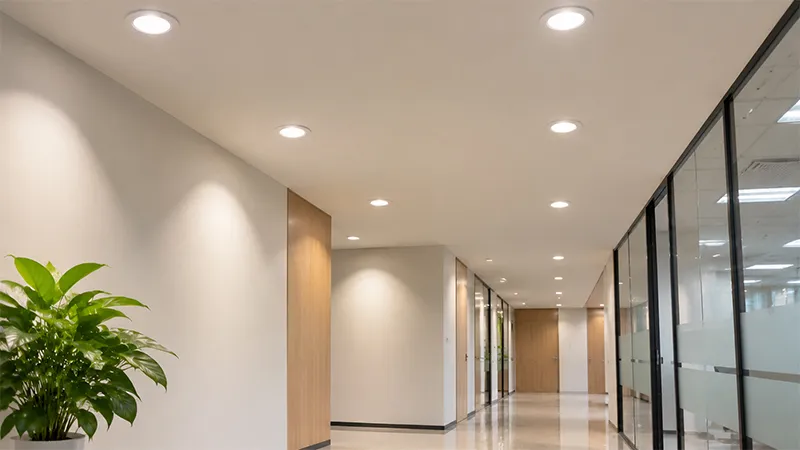
To specify LED downlight brightness effectively, buyers should first define the illuminated area, ceiling height, mounting layout, lighting purpose, target surface, and desired visual effect. They should then compare lumen output, beam angle, distribution data, color temperature, CRI, glare considerations, and the current technical documentation for each proposed downlight.
Start With Four Practical Questions
When we receive an inquiry, we usually need more than wattage before we can discuss a suitable configuration. These four questions establish a practical starting point:
-
What area is being lit?
Buyers should identify room dimensions, target zones, and the surfaces that need illumination. A downlight for a narrow corridor has a different requirement from one used in an open retail area.
-
How high is the ceiling?
Mounting height affects the distance light must travel. It also affects beam spread and perceived brightness at the working plane or floor.
-
What lighting result is expected?
The goal may be uniform ambient lighting, focused illumination, visual comfort, merchandise emphasis, or a particular architectural mood.
-
Is this general lighting, accent lighting, or a replacement?
The answer changes the importance of beam angle, glare control, cutout size, dimming requirements, and installation constraints.
These questions are simple, but they prevent a common procurement error: comparing fixtures by wattage without considering whether they are designed for the same job.
Build a Procurement Comparison Sheet
For B2B projects, we recommend asking suppliers to complete a consistent comparison sheet. This makes it easier to evaluate quotations from different factories or brands.
| Comparison Item |
What Buyers Should Request |
Procurement Risk if Missing |
| Rated wattage |
Product-specific rated power |
Incorrect energy comparison |
| Lumen output |
Declared output for the exact version |
Misleading brightness expectations |
| Efficacy |
Lumens per watt for the complete fixture |
Weak value comparison |
| Beam angle |
Stated angle and optic type |
Poor coverage or unwanted hotspots |
| Photometric data |
Distribution files or reports where relevant |
Limited ability to assess layout |
| CCT |
Available color temperatures |
Inconsistent visual appearance |
| CRI |
Declared color-rendering level |
Unsuitable color presentation |
| Driver details |
Input range, dimming method, compatibility |
Installation and control issues |
| Cutout and dimensions |
Mechanical drawing |
Retrofit or ceiling-fit failure |
| IP rating |
Relevant ingress-protection classification |
Unsuitable environmental selection |
| Test conditions |
Conditions supporting published data |
Non-comparable specifications |
Do Not Treat Lumens as the Final Answer
Lumens are more useful than watts for comparing potential output, but lumens do not finish the selection process. A fixture with higher lumen output may still be unsuitable if the beam is too narrow, the downlight spacing is incorrect, or glare is unacceptable.
Lighting layout and target-surface illumination are often assessed in lux, which describes light falling on a surface. Yet even a lux target should be evaluated in context. Surface reflectance, mounting geometry, furniture, daylight, maintenance conditions, and local design requirements can all influence the result.
For significant projects, buyers should request qualified lighting design support or engage an appropriately qualified professional. This is particularly important for offices, retail chains, healthcare environments, hospitality projects, and other spaces where visual performance and user comfort influence the outcome.
What Should Buyers Verify When Comparing LED Downlight Brightness Suppliers?
Supplier selection can become difficult when several factories offer similar wattages, prices, and product photos. The real differences may appear in documentation quality, production control, component consistency, communication, and the ability to maintain a specification over repeat orders. Buyers need a verification process, not just a low quotation.
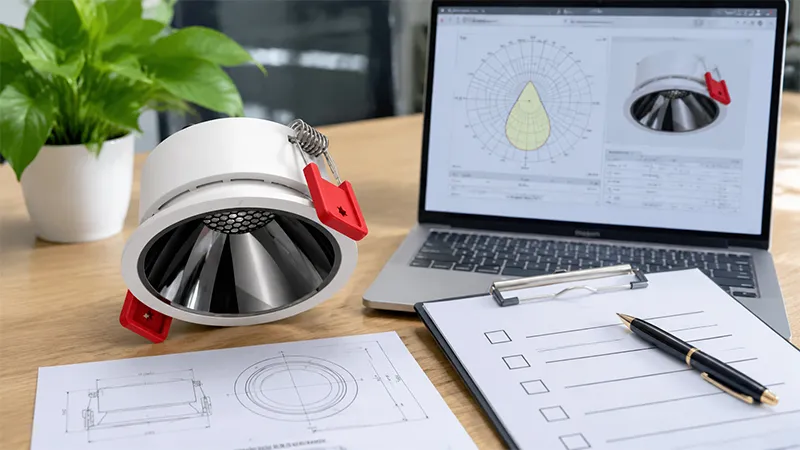
When comparing LED downlight brightness suppliers, buyers should verify model-specific photometric specifications, driver information, mechanical dimensions, production controls, aging procedures, inspection records, and applicable compliance documents. They should treat certifications and test reports as documents to review for the exact product, market, and current production version.
Review Documentation for the Exact Configuration
A downlight range can include many variations. A change in wattage, color temperature, beam angle, trim color, driver, dimming function, or housing may affect published specifications. Buyers should confirm that documentation matches the version being purchased.
We suggest reviewing:
- Current product datasheet
- Product drawing with cutout dimensions
- Rated electrical input and driver parameters
- Declared lumen output and efficacy
- Beam angle and optical configuration
- CCT and CRI options
- Relevant photometric documentation
- Dimming compatibility information, if required
- Applicable compliance documents for the destination market
- Packaging, labeling, and traceability requirements
Upward Lighting states that its products are supplied to meet standards such as CE, CB, UL, and RoHS as applicable. However, buyers should verify the relevant certificates, reports, marking requirements, and market-access obligations for the specific product and destination. A document that applies to one configuration or market should not be assumed to cover every version.
Evaluate Manufacturing and Quality Controls
Specification quality is only one part of the decision. Buyers also need confidence that repeat orders can remain consistent. In our own manufacturing context, we use multiple production lines and quality-control stages, including incoming material inspection, in-process checks, finished-product inspection, and aging tests before shipment.
Our stated process includes 100% aging testing before products leave the factory. Depending on the production arrangement and product requirements, our capability description references room-temperature aging of at least 44 hours or high-temperature aging at 45°C for 6 hours, while other production information references a 4–6 hour aging test. Buyers should clarify the applicable aging plan for the exact model and order because requirements may differ by product configuration and customer specification.
A useful supplier discussion should cover:
- How incoming LED, driver, housing, and optic materials are checked
- How first-article approval is handled
- How in-process deviations are identified and corrected
- How finished goods are sampled and inspected
- How production changes are communicated
- How batch identification and quality records are maintained
- What third-party reliability verification is available when needed
These controls support a more disciplined procurement process, but they do not replace model-specific testing or professional evaluation for a particular application.
Consider the Retrofit Risks
Retrofit projects introduce practical constraints that may matter as much as LED downlight brightness. A product can have suitable output but still fail as a replacement option if it does not fit the ceiling or work with existing controls.
Before approving a retrofit downlight, buyers should check:
- Ceiling cutout diameter
- Overall fixture depth
- Ceiling-void clearance
- Heat and insulation conditions
- Input voltage and driver arrangement
- Dimming-control compatibility
- Connector and wiring requirements
- Trim diameter and ceiling appearance
- Beam angle compared with the existing fixture
- Potential glare at the installed height
I have found that these basic checks often save more time than debating a one- or two-watt difference between products. The most suitable replacement is the one that fits physically, operates correctly, and provides the intended lighting effect.
Frequently Asked Questions
Does a higher watt LED downlight always produce more lumens?
Not always. Higher wattage may allow a downlight to produce more light, but lumen output depends on LED efficacy, driver efficiency, thermal design, and optical losses. Buyers should request the declared lumen output and verify the test conditions for the exact model being compared.
Is wattage or lumens more important when buying LED downlights?
Lumens are generally more useful for comparing potential light output, while wattage is important for energy use and electrical planning. However, neither figure alone determines the installed result. Beam angle, mounting height, layout, glare control, and the intended lighting task also matter.
How does beam angle affect LED downlight brightness?
Beam angle affects how widely light is distributed. A narrow beam concentrates light on a smaller area and may create a stronger accent effect. A wide beam spreads light over a larger area and may support more even general illumination. The suitable option depends on the application.
What documents should a purchasing manager request from a downlight supplier?
A purchasing manager should request a current datasheet, mechanical drawing, lumen and efficacy data, beam-angle details, driver specifications, photometric information where relevant, applicable compliance documents, and quality-control information. The buyer should confirm that each document matches the exact model and destination market.
Can aging tests prove that an LED downlight will stay bright for its full lifetime?
No. Aging tests are an important quality-control step, but they do not independently prove every lifetime or lumen-maintenance claim for every installation. Buyers should review product-specific maintenance data, test reports, warranty terms, thermal conditions, and application requirements before making a decision.
Conclusion
LED downlight brightness should never be selected by wattage alone. Wattage supports energy and electrical planning, but lumen output, efficacy, beam angle, optics, ceiling height, fixture spacing, glare, and the lighting task determine whether a downlight is suitable in practice. We recommend that buyers use model-specific documentation and compare suppliers on both product data and quality-control transparency. If you are sourcing an OEM or ODM downlight range, contact Upward Lighting to discuss your target specification, customization needs, and production requirements.