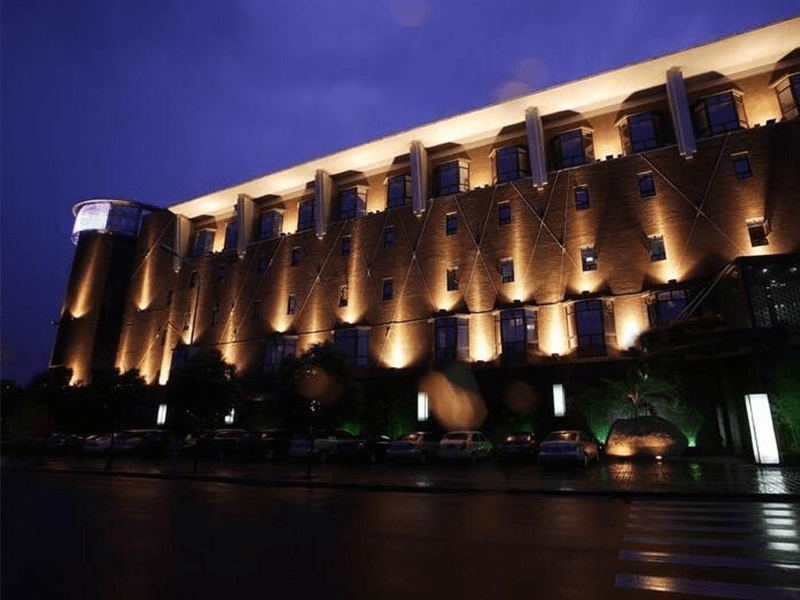
LED flood lights can lose light output, experience driver stress, or require premature maintenance when heat is not managed for the actual installation site. This becomes more serious in hot climates, enclosed mounting positions, and long daily operating schedules. The practical solution is to select a cooling design that suits the project’s heat load, airflow, and maintenance plan.
Passive cooling in LED flood lights removes heat through the housing, heat sink, and natural airflow, while active cooling uses fans or other forced-air methods to move heat away faster. Neither approach is automatically better. The right choice depends on ambient temperature, mounting clearance, operating hours, enclosure conditions, dust exposure, noise limits, and the project’s ability to maintain the fixture over time.
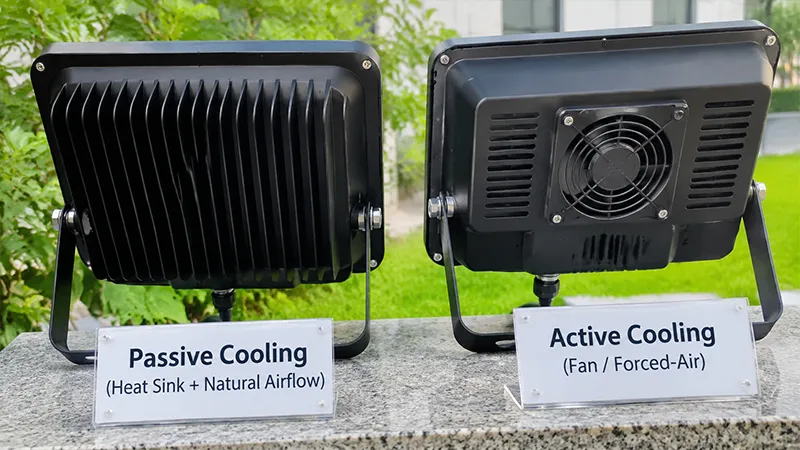
From my perspective as a lighting manufacturer, I do not think the best procurement question is, “Does this flood light have a fan?” I think the better question is, “Can this cooling system keep working reliably in this exact location?” That question leads contractors and buyers to examine the complete product structure and the real operating environment.
How Does Passive Cooling Work in LED Flood Lights?
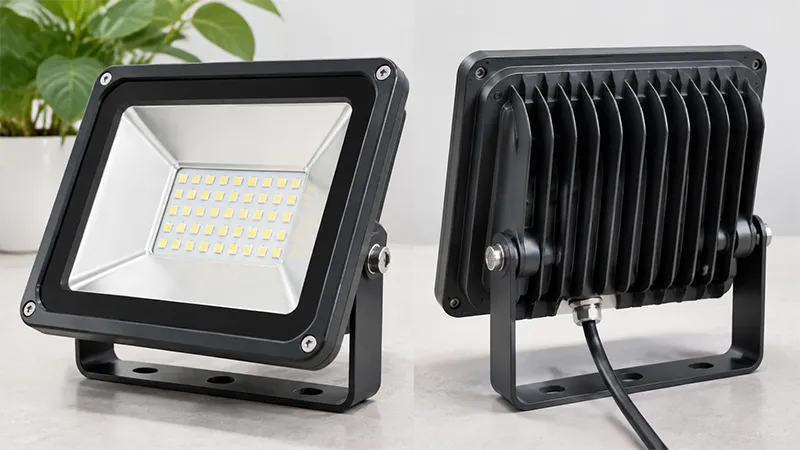
Passive cooling in LED flood lights transfers heat from LED components and drivers into a metal housing or heat sink, where natural air movement releases it into the surrounding environment. It has no fan or moving cooling component. Its reliability depends on the complete thermal path, housing design, installation clearance, and local ambient conditions.
Why passive cooling is popular for outdoor projects
Passive cooling is common in outdoor LED flood lights because it uses a relatively simple mechanical structure. The fixture normally relies on conductive materials, such as aluminum, to move heat away from the LED board, driver area, and other heat-sensitive parts.
A typical passive thermal path may include:
- The LED chip and LED package
- The PCB or metal-core board
- Thermal interface materials
- The lamp body or heat sink
- Heat-dissipating fins or surface area
- Natural airflow around the fixture
The important point is that every stage affects the next stage. A large housing does not automatically mean a better passive cooling system. A fixture may look heavy or have many fins, but its thermal performance can still be limited by poor contact between components, an unsuitable driver position, restricted air movement, or an installation method that blocks heat release.
What buyers should inspect beyond housing size
When I discuss OEM or ODM flood-light projects with buyers, I encourage them to assess the complete thermal design rather than one visible feature. Buyers should ask for drawings, technical specifications, and available test documentation for the specific model under consideration.
Key review points include:
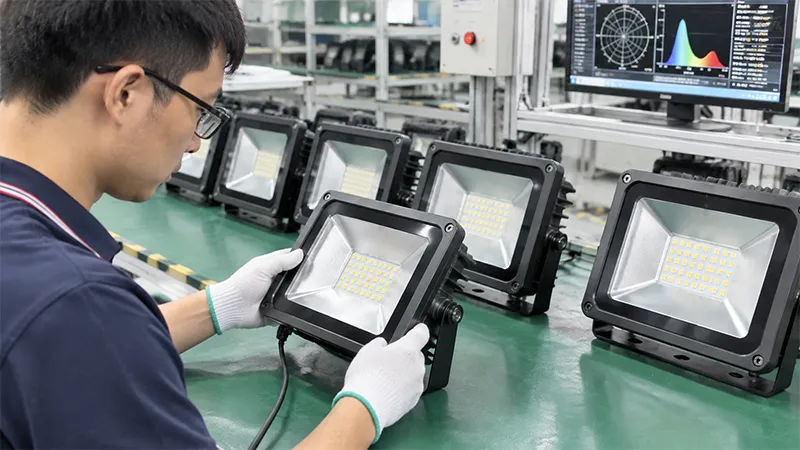
At our factory, production and quality teams look at assembly consistency because a sound thermal design can still be affected by inconsistent manufacturing. Incoming materials are checked through IQC procedures, and in-process controls help identify deviations during assembly. However, I always make an important distinction for customers: routine inspection and aging tests can help screen product consistency, but they do not guarantee a fixed field lifespan in every installation environment.
Where passive cooling can be a practical fit
Passive cooling often suits projects where maintenance access is difficult or expensive. A flood light mounted high on a warehouse exterior, stadium structure, façade, or pole may be costly to reach after installation. Removing a fan also removes a moving part that could require inspection or replacement.
Passive cooling may be worth considering when:
- The fixture has sufficient open-air clearance.
- The local ambient environment is within the product’s documented operating range.
- The application has limited access for maintenance.
- The site has high dust exposure that could affect a fan.
- Noise is a concern.
- The contractor wants a lower-complexity cooling structure.
Still, passive cooling should not be treated as a universal answer. A tightly enclosed passive fixture in a high-heat location can face more difficulty than a well-designed actively cooled fixture in a serviceable technical installation.
How Does Active Cooling Work in LED Flood Lights?
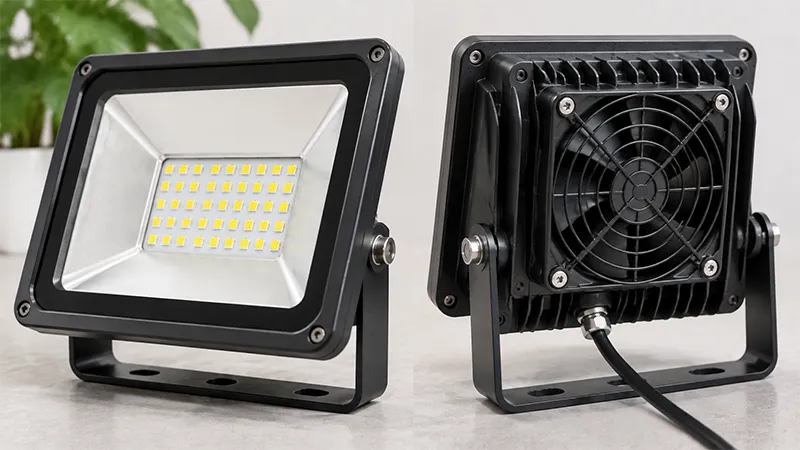
Active cooling in LED flood lights uses fans or forced airflow systems to increase heat removal from internal components and heat-dissipating surfaces. It can help in high-heat or constrained installations, but it also adds moving parts, possible noise, dust accumulation, and maintenance requirements that buyers must evaluate before specifying the fixture.
Why projects use active cooling
Active cooling is designed to move air more aggressively than natural convection alone. In principle, forced airflow can support heat removal where fixture power density is higher, airflow is restricted, or ambient conditions are more demanding.
However, active cooling changes the purchasing decision. The buyer is no longer evaluating only a housing, heat sink, LED board, and driver. The buyer must also evaluate the fan system, airflow path, protection against dust and moisture, electrical connections, service access, and the consequences of a fan malfunction.
I have seen this issue become important during early product discussions. A customer may request a compact, high-output LED flood light for an installation with limited space. The design team may then need to balance output, optics, driver placement, sealing, housing dimensions, and cooling strategy. There is rarely one feature that solves the entire thermal challenge.
Active cooling adds a maintenance question
A fan can help move heat, but it can also become a maintenance point. For contractors, that does not necessarily mean active cooling is unsuitable. It means that the service plan needs to match the product.
Buyers should ask the supplier:
- Is the fan designed for the intended temperature, dust, and humidity conditions?
- How is the airflow path protected from debris?
- Can dust buildup reduce airflow over time?
- Is the fan accessible for inspection or replacement?
- What happens to product operation if the fan stops?
- Does the design generate audible noise that matters for the site?
- Is the fixture installed where technicians can safely perform maintenance?
Comparing practical considerations
| Consideration |
Passive cooling |
Active cooling |
| Air movement |
Relies on natural convection |
Uses forced airflow |
| Moving parts |
Usually none in the cooling system |
Usually includes a fan or similar component |
| Noise potential |
Generally lower |
May create operational noise |
| Dust sensitivity |
Depends on exterior buildup and installation |
Fan and airflow path may require closer dust consideration |
| Maintenance planning |
Often lower mechanical maintenance |
Requires attention to fan condition and access |
| Compact high-heat applications |
May be more challenging |
May offer added heat-removal capability |
| Site suitability |
Often useful for accessible airflow and limited service access |
May suit demanding applications with planned maintenance |
I recommend that contractors avoid treating this table as a pass-or-fail checklist. A well-designed product can perform differently depending on site conditions. Product-specific thermal information, construction details, and appropriate verification documents should guide the final decision.
Which Cooling Method Fits Your LED Flood Lights Installation?
The right cooling method for LED flood lights depends on the installation environment, operating duration, mounting arrangement, maintenance access, and the fixture’s verified design limits. Passive cooling may suit open and hard-to-service locations, while active cooling may be considered for specific high-heat constraints when the site can support ongoing inspection and maintenance.
Start with the site, not the product brochure
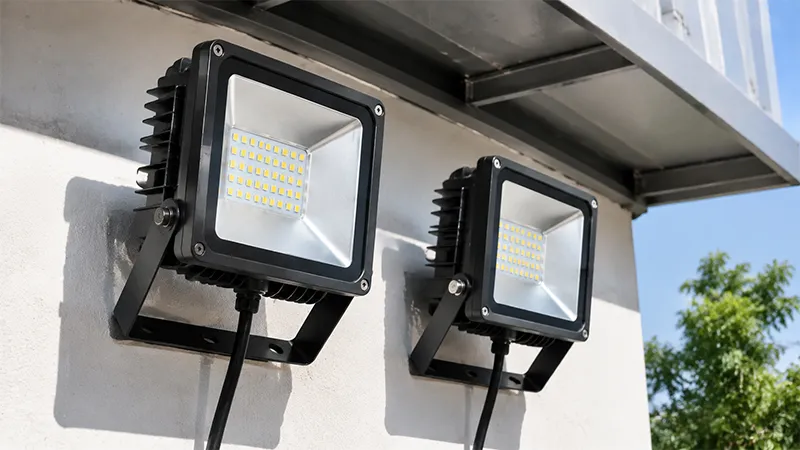
I recommend that engineering contractors begin with a site assessment. A product can appear suitable on paper, but the final installation may create different thermal conditions. For example, an LED flood light installed in open air on a pole faces a different heat profile from the same model installed beneath a canopy, inside a recess, behind a decorative panel, or near other heat-producing equipment.
During project discussions, I often return to five practical site questions:
-
What is the ambient temperature range at the installation point?
Regional weather matters, but so does localized heat. A fixture near a roof, industrial process, dark wall, or poorly ventilated cavity may experience different conditions than a general weather report suggests.
-
Will the fixture operate in open air or an enclosed space?
Open space supports natural airflow. Enclosures, recesses, and closely spaced fixtures can reduce heat dissipation.
-
How many hours per day will the flood light operate?
A security light used intermittently presents a different duty cycle from a sports, industrial, logistics, or façade lighting system that operates for extended periods.
-
How accessible is the fixture after commissioning?
If a fixture is installed on a high mast or difficult façade, maintenance labor and equipment costs may outweigh a small initial product-price difference.
-
What contaminants are present?
Dust, salt air, oil, insects, construction debris, and airborne industrial particles can affect housing surfaces, airflow routes, seals, and moving components.
A project selection framework
| Site condition |
Cooling evaluation priority |
Procurement implication |
| Open outdoor area with good airflow |
Housing thermal path and corrosion resistance |
Passive cooling may be practical if product data supports the application. |
| High mounting location |
Long-term maintenance access |
Favor designs with service requirements that match access limitations. |
| Enclosed canopy or recess |
Airflow restriction and internal heat buildup |
Request model-specific installation guidance and thermal documentation. |
| Dusty industrial location |
Buildup risk and cleaning schedule |
Review fan exposure, sealing design, and practical maintenance procedures. |
| Noise-sensitive location |
Acoustic impact |
Assess whether active cooling noise is acceptable. |
| Long operating schedule |
Driver and LED heat management |
Review the complete fixture design, not only the heat sink. |
| Hot-climate project |
Ambient temperature capability |
Verify documented operating conditions for the selected model. |
A useful specification does not simply state “fan cooling required” or “fanless design preferred.” A stronger specification describes the installation conditions, expected operating schedule, maintenance constraints, and documentation required from the supplier.
What Should Buyers Verify When Comparing LED Flood Lights?
Buyers should compare LED flood lights using product-specific thermal design information, quality-control procedures, installation instructions, and compliance documents rather than visual assumptions. They should verify how each model manages LED and driver heat, how it performs in the intended mounting position, and whether the supplier can support the required OEM, technical, and maintenance expectations.
Do not rely on simple visual signals
I understand why buyers often use quick indicators. A larger heat sink, thicker housing, more fins, or a built-in fan can be easy to spot during a quotation comparison. Yet none of these points independently proves thermal suitability.
A larger body may have poor airflow after installation. A smaller body may use a carefully planned internal layout. A fan may provide useful forced airflow, but it may not suit a dusty site with no service access. A fanless fixture may reduce maintenance points, but it still needs an adequate thermal path for the required load and environment.
The most useful question is not “Which fixture looks cooler?” It is “Which cooling system can continue working reliably at this site?”
Request documentation that supports the decision
For a procurement evaluation, I recommend requesting the following items from the supplier:
- Product datasheet with electrical, optical, and operating-condition information
- Mechanical drawing showing housing dimensions and mounting method
- Installation manual with clearance and orientation requirements
- Driver brand, specifications, or configuration details where appropriate
- Information about thermal design and cooling structure
- Aging and quality-control process overview
- Available reliability or laboratory test reports for the specific product
- CE, EMC, LVD, RoHS, CB, UL, or other applicable compliance documents, depending on the market
- Warranty terms and service procedure
- Sample units for project validation where practical
Certifications and declarations should be treated as documents that buyers verify. A certification mark alone does not replace a review of the applicable document, product model, issuing body, market requirements, or project-specific compliance needs.
How we approach production consistency
At Upward Lighting, we manufacture indoor and outdoor lighting products for OEM and ODM customers, including LED flood lights for international markets. We use production-line quality controls, incoming material checks, in-process inspection, finished-product inspection, and aging procedures as part of our manufacturing process.
Our factory information indicates that products undergo 100% aging before shipment, with aging conditions arranged according to the product and production requirement. Our team also commissions regular reliability verification, such as withstand-voltage, insulation, temperature-rise, and lifespan-related testing, through third-party laboratories.
These practices help us identify manufacturing consistency issues before shipment. Still, I would not describe factory aging as a promise of exact field life. Field results depend on the selected model, installation method, electrical conditions, ambient environment, operating duration, maintenance practice, and other application-specific variables. Contractors should seek qualified professional evaluation when a project has unusual thermal, structural, electrical, or safety requirements.
How Can Contractors Reduce Heat-Related Risk After Installation?
Contractors can reduce heat-related risk in LED flood lights by following the supplier’s installation guidance, maintaining airflow clearance, avoiding unintended enclosure, checking electrical connections, and planning cleaning or service around the site environment. The cooling method works best when installation practices do not block the thermal design that the product depends on.

Installation details can change thermal performance
Even a carefully designed flood light can face problems if it is installed without sufficient clearance. I have seen project drawings focus heavily on beam angles and mounting heights while giving very little attention to rear housing space, orientation, or nearby obstructions. These details matter because the fixture needs a realistic way to release heat.
Contractors should avoid placing fixtures where the rear heat sink is pressed tightly against a surface unless the supplier has specifically designed and approved that installation method. They should also consider whether signage, louvers, architectural panels, cable trays, or other equipment will block airflow after the site is complete.
A practical field checklist
Before final commissioning, I suggest that installers review:
- Mounting clearance: Is there enough space around the housing for the intended airflow?
- Fixture orientation: Does the installation follow the manufacturer’s specified orientation?
- Enclosure risk: Has any cover, recess, or decorative panel changed the original installation condition?
- Electrical supply: Are voltage, grounding, surge-protection measures, and connections aligned with project requirements?
- Environmental exposure: Will dust, insects, salt spray, oil, or water accumulation affect the fixture?
- Service access: Can a technician inspect or replace components safely if necessary?
- Cleaning plan: Does the project include sensible cleaning intervals for the environment?
- Documentation: Are installation records, product labels, and maintenance instructions retained?
Build maintenance into the original decision
The lowest initial purchase price is not always the lowest project cost. For high-mounted or difficult-to-access LED flood lights, one maintenance visit may require lifts, traffic management, shutdown coordination, or specialist labor. This is why maintenance planning should be part of the product selection process.
For example, an actively cooled fixture may be technically appropriate for a specific high-demand application. Yet the contractor should ensure that the fan system can be inspected and maintained within the client’s service capacity. In another project, a passive design may be more suitable because the site is remote, dusty, or expensive to access, provided the product is installed in conditions that support natural heat dissipation.
Frequently Asked Questions
Is passive cooling better than active cooling for LED flood lights?
Passive cooling is not always better, and active cooling is not always better. Passive systems avoid fan-related maintenance points, while active systems can provide stronger airflow in some demanding situations. The right choice depends on installation space, ambient conditions, operating hours, dust exposure, noise limits, and maintenance access.
Do larger heat sinks mean LED flood lights will last longer?
No. A larger heat sink may contribute to heat dissipation, but it does not prove better thermal performance by itself. Buyers should assess the full thermal path, driver placement, housing construction, airflow clearance, sealing design, assembly quality, and documented operating limits for the specific model.
Can a fan in an LED flood light fail?
Yes. A fan is a moving component, so buyers should evaluate its reliability, dust exposure, noise, protection design, and replacement accessibility. A fan-based cooling design can still be suitable, but the project should include realistic inspection and maintenance planning.
Does factory aging guarantee the lifespan of LED flood lights?
No. Factory aging helps manufacturers screen products for early consistency issues before shipment, but it cannot guarantee a fixed field lifespan. Actual performance depends on site temperature, operating hours, electrical conditions, mounting arrangement, maintenance, and other application-specific factors.
What documents should I request from an LED flood light supplier?
I recommend requesting a product datasheet, mechanical drawing, installation instructions, available test reports, quality-control information, warranty terms, and relevant compliance documents. Buyers should verify that certifications and reports apply to the specific product model and the regulations of the destination market.
Conclusion
The difference between passive and active cooling in LED flood lights is mainly about how heat is removed and what the project can support over time. Passive designs rely on housing structure and natural airflow, while active designs add forced airflow and additional maintenance considerations. I recommend that contractors evaluate ambient temperature, enclosure risk, operating duration, mounting clearance, driver heat management, and service access before selecting either approach. If you are sourcing OEM or ODM LED flood lights, our Upward Lighting team can help review product options, customization needs, and production requirements for your project.