Choosing the right downlight feels overwhelming. The wrong choice can ruin your ceiling’s clean look. Understanding this key difference helps you make the perfect choice for your space.
Trim downlights have a visible outer ring (the trim) that covers the cutout hole, making them easy to install. Trimless downlights are plastered into the ceiling for a seamless, "invisible" finish. Your choice depends on budget, installation complexity, and your desired aesthetic.
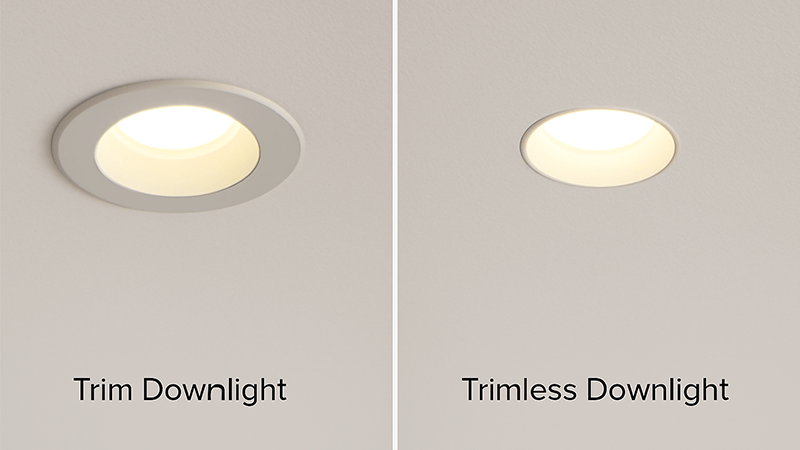
Now you know the basic difference between the two styles. But this is just the beginning. The decision involves more than just looks, it impacts your budget, installation timeline, and the skills you need for your project. To help you make a fully informed choice, let’s dive deeper into the specific questions you might have. Let’s break it all down so you can source the perfect lighting with confidence.
What is the difference between trim and trimless lights?
You’re stuck between a practical option and a high-end look. Choosing without knowing the details can lead to costly mistakes and project delays. Let’s compare them directly.
The main difference is both visual and installation-based. Trim lights are surface-mounted with a visible flange, offering a traditional look and simple installation. Trimless lights are recessed and plastered over, creating a clean, minimalist aesthetic but requiring a more complex, skilled installation process.
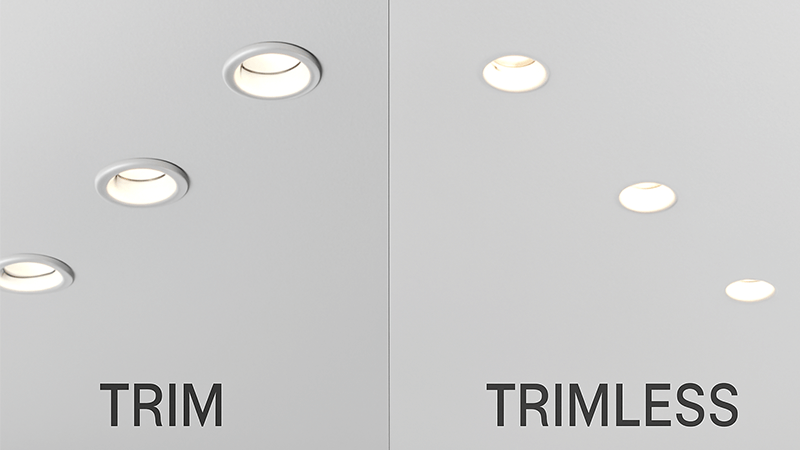
When I work with purchasing managers like Shaz from the UAE, this choice comes up all the time. He knows that for some projects, practicality is king. For others, it’s all about the look. Trim downlights are the "practical choice." They are generally more affordable and much more forgiving to install. An electrician can cut a hole, connect the wires, and push the fixture into place. The trim handily covers any minor imperfections in the cutout. This makes them perfect for large-scale residential projects or commercial spaces where budget and speed are priorities.
Trimless downlights, on the other hand, are the "aesthetic choice." They offer an unmatched minimalist look, where the light seems to just appear from a clean hole in the ceiling. This high-end finish comes at a cost, both in the product itself and the installation. It requires careful planning and a multi-stage process involving both an electrician and a skilled plasterer. I always tell my clients, if you go trimless, make sure your contractor has experience with them. The housing must be installed perfectly before the ceiling is plastered and finished. One wrong move and the seamless effect is lost.
Here is a simple breakdown:
| Feature |
Trim Downlights |
Trimless Downlights |
| Aesthetics |
Visible trim, traditional look |
No visible trim, minimalist, seamless look |
| Installation |
Simple, fast, forgiving |
Complex, multi-stage, requires a plasterer |
| Cost |
More budget-friendly |
Higher product and labor cost |
| Maintenance |
Easy to replace or access |
Can be more difficult to service |
| Best For |
General use, renovations, budget projects |
New builds, high-end interiors, minimalist designs |
What is a downlight trim?
You keep hearing the word "trim" but are not exactly sure what it is. This confusion can make it hard to specify exactly what you need for a project.
A downlight trim is the visible part of the light fixture that you see on the ceiling. It’s the outer ring or flange that sits flush against the ceiling surface. Its main jobs are to cover the rough edge of the cutout hole and to hold the fixture securely in place.
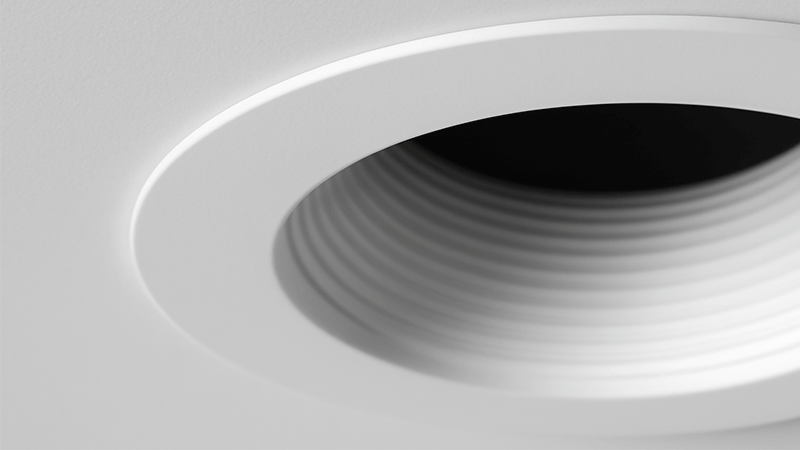
When I first started in an LED lighting factory years ago, I learned that the trim is more than just a decorative ring. It’s a key functional component that comes in many forms, and each one affects the light differently. Understanding these parts helps you, as a purchasing manager, source the exact product your project needs.
Types of Trims
The trim determines how the light looks and performs. The most common types are:
- Baffle Trim: This is the most popular type. It has ribbed grooves on the inside surface. These grooves are designed to absorb excess light and reduce glare. It’s a great all-around choice for general lighting in living rooms or bedrooms.
- Reflector Trim: This trim has a smooth, mirror-like surface inside. It’s designed to maximize the light output from the bulb, creating a bright, focused beam. I often recommend these for kitchens, workspaces, or areas with high ceilings where you need powerful illumination.
- Gimbal Trim: This trim allows you to pivot and direct the light. It’s like having a spotlight built into your ceiling. It’s perfect for accent lighting, like highlighting artwork, a fireplace, or architectural features.
Trim as a Problem Solver
The trim is also incredibly practical. During a renovation, it’s not always possible to cut a perfect hole in the ceiling. The trim’s flange provides a clean finish by covering any jagged drywall edges. This forgiving nature is why they are a favorite among electricians and contractors. It speeds up installation and guarantees a neat look every time, without needing a plasterer to come back and fix the ceiling.
What does trimless mean?
The term "trimless" sounds simple but hides a complex process. Misunderstanding it can lead to installation nightmares and budget overruns for your project. Let’s define it clearly.
Trimless means the light fixture has no visible edge or flange on the ceiling’s surface. The housing is installed before plastering, and the ceiling finish is skimmed right up to the light’s aperture. This makes the light source appear as a clean hole in the ceiling.

The magic of the trimless look happens "behind the scenes," or rather, inside the ceiling. It’s not a single-step installation. I learned this early on when I started manufacturing trimless fixtures. We had to create detailed guides because contractors who were used to standard downlights were getting it wrong.
The Installation Process
Here is how it typically works, and why it requires more coordination:
- Mounting the Frame: First, the electrician installs the trimless housing or plaster-in frame. This frame is screwed directly to the ceiling joists or a support structure. Its position has to be exact.
- Installing the Drywall: The drywall is then installed, with a rough hole cut around the fixture’s frame.
- Plastering: This is the crucial step. A plasterer applies joint compound over the frame’s perforated edges, blending it seamlessly with the ceiling. They skim the plaster right up to the inner edge of the aperture. This step requires skill and patience to get a perfectly smooth, level surface.
- Sanding and Painting: After the plaster dries, the ceiling is sanded and painted.
- Inserting the Light: Finally, the main light engine or lamp module is inserted into the now-invisible housing.
The Final Look
The result is stunning. Light emerges from a simple, clean opening with no visible hardware. This architectural look is why designers and architects love trimless fixtures for high-end residential homes, art galleries, luxury retail stores, and modern offices. It removes visual clutter and puts all the focus on the light itself and the space it illuminates. When clients want that "wow" factor, trimless is the way to go, as long as the budget and timeline allow for the meticulous installation.
What is the difference between trimless and flangeless?
You might hear the terms "trimless" and "flangeless" and think they are the same. This small difference in wording can lead to big confusion when ordering products. Let’s clarify.
Essentially, trimless and flangeless mean the same thing: the downlight has no visible lip or flange on the ceiling. Both terms describe a fixture that is plastered into the ceiling for a seamless, architectural finish. "Trimless" is the most common industry term.

In my years of manufacturing and exporting LED lights, I’ve seen different terms used in different regions. Some markets might prefer the word "flangeless," while others exclusively use "trimless." It’s a bit like "sofa" versus "couch." Both describe the same piece of furniture. When I communicate with a client like Shaz, I make sure we are aligned on the terminology from the start to avoid any misunderstanding in the product specifications.
Why Do Both Terms Exist?
The two terms approach the description from different angles:
- Trimless: This focuses on the final look. The fixture is without a trim, which is the decorative and functional ring you see on a standard downlight. It describes the absence of the entire visible assembly.
- Flangeless: This is a more technical description. It focuses on a specific part of the fixture that is missing: the flange. The flange is the flat lip that rests on the ceiling surface and covers the cutout.
Ultimately, both terms point to the same product type and the same installation method. The key is understanding the installation process itself. This type of fixture always requires a plaster-in frame that gets integrated into the ceiling before the final finish is applied.
So, when you are sourcing products, don’t get hung up on the vocabulary. If a supplier lists a "flangeless" downlight, you can be confident they are talking about what you know as a "trimless" downlight. The important thing is to check the technical sheets and installation guides to confirm it requires being plastered in. This ensures you’re getting the seamless, high-end look your project demands.
Conclusion
Trimmed downlights are practical, easy to install, and cost-effective. Trimless downlights offer a superior, seamless aesthetic but require a higher budget and a more complex, skilled installation process.