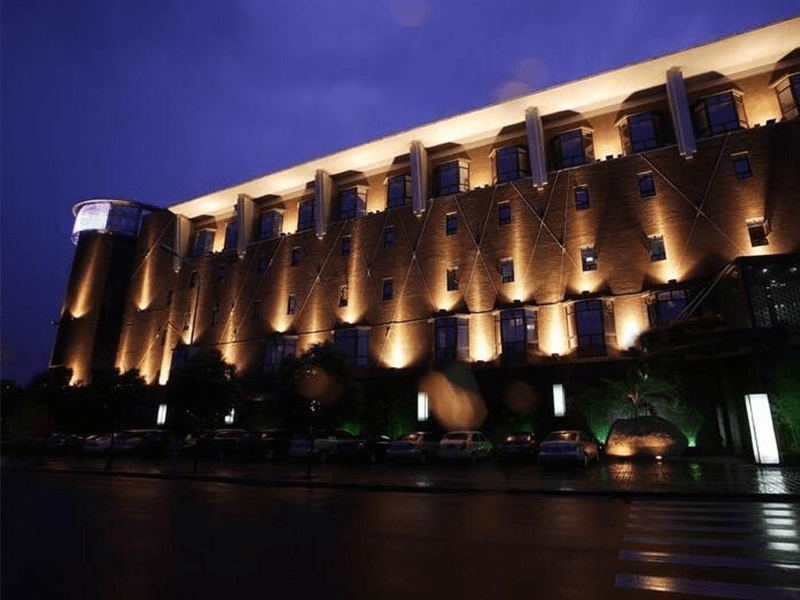
LED flood lights can appear simple to specify, yet many outdoor projects suffer from uneven coverage, glare, wasted energy, or early product issues. I often see buyers compare wattage first and discover too late that the fixture does not suit the mounting height, beam pattern, or local environment. The solution is to evaluate the complete lighting system.
LED flood lights work by converting regulated electrical power into light through LED chips, controlling operating temperature with a heat sink, and directing the output with optical components. In outdoor lighting applications, useful performance depends on more than wattage or total lumens. Buyers should match the fixture’s beam angle, mounting position, aiming direction, protection level, and thermal design to the actual area and conditions of the project.
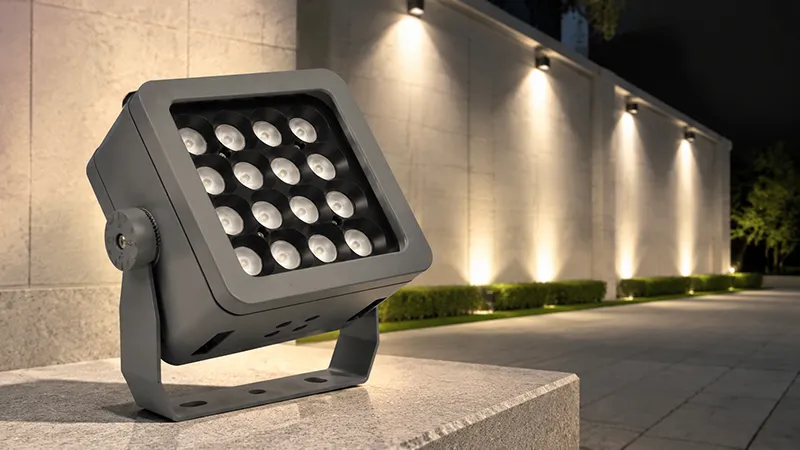
I approach outdoor lighting selection as a practical engineering and procurement decision. A floodlight may look strong on a data sheet, but the real question is whether it delivers appropriate illumination where people, vehicles, equipment, or building features need it. Below, I explain the operating chain and the buying factors that shape real-world results.
How Do LED Flood Lights Convert Power Into Outdoor Illumination?
I find that many buyers face a common problem: they receive a fixture specification with watts, lumens, and an IP rating, but they still cannot tell whether the product will work for their site. This uncertainty can lead to poor coverage or unnecessary over-specification. I recommend understanding the basic operating chain before comparing suppliers.
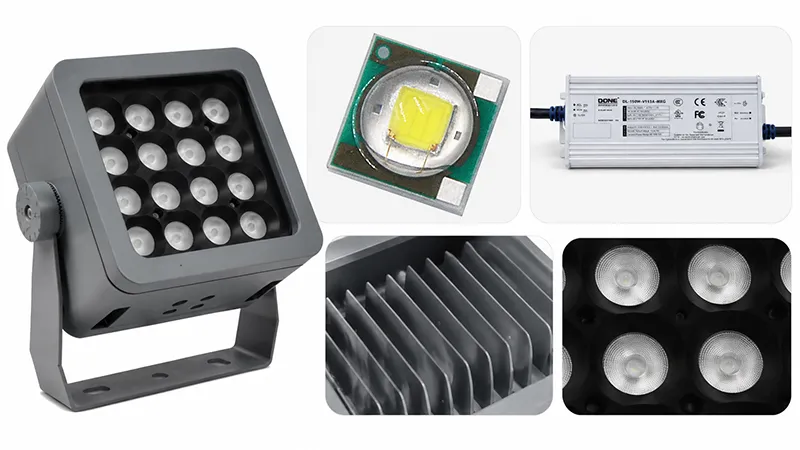
LED flood lights produce outdoor illumination through four connected functions: LED chips generate light, a driver supplies controlled electrical power, a heat sink removes operating heat, and optical lenses or reflectors distribute light across the target area. If one element is poorly matched, the fixture may deliver less useful light, more glare, unstable operation, or reduced reliability.
The light engine produces the visible output
The LED chips are the light source inside an LED floodlight. When the driver supplies the proper electrical current, the chips emit light. However, I do not advise buyers to judge the light engine by chip brand or advertised lumen output alone.
The light engine should be considered alongside:
- Required lumen output for the application
- Color temperature for the site purpose and visual comfort
- Color rendering index (CRI) when color recognition matters
- Optical compatibility with the lens or reflector
- Thermal contact between the LED board and heat sink
For example, a loading yard may prioritize broad, functional visibility, while an architectural façade may need controlled beam placement and color consistency. A retail customer may prefer a certain color temperature based on local market preference, but that does not make it appropriate for every installation.
The driver regulates electrical power
The LED driver converts incoming electrical power into the controlled current and voltage required by the LED module. I regard the driver as a key procurement item because it directly affects stable operation.
A driver specification should be reviewed for the project’s input voltage, frequency, dimming requirement, surge environment, and installation temperature. A fixture with suitable LEDs can still perform poorly if its driver is not appropriate for the supply conditions or operating environment.
The heat sink manages operating temperature
LEDs are efficient light sources, but they still generate heat. The heat sink transfers that heat away from the LED module and other sensitive components. If thermal management is weak, elevated temperatures can affect light output, component stress, and consistency.
I always remind buyers that “high power” is not automatically a benefit. Higher output generally creates more thermal demand, so the housing, heat sink design, driver location, and installation environment all deserve closer review.
The optics make lumens useful
Optics determine where the light goes. A lens, reflector, or optical cover can create narrow, medium, wide, asymmetric, or other distributions. This is why two fixtures with similar wattage and lumen claims can produce very different project results.
For procurement teams, I recommend requesting photometric information or distribution data where available. This information helps engineers and contractors evaluate whether the fixture can illuminate the intended target instead of simply producing a bright-looking source.
Why Are Lumens Not Enough When Selecting LED Flood Lights?
I often see a purchasing team compare two LED flood lights by selecting the higher lumen figure. The concern is understandable because lumens are easy to compare. Yet this approach can create dark edges, excessive spill light, and glare when the fixture is installed. I recommend starting with the target area instead.
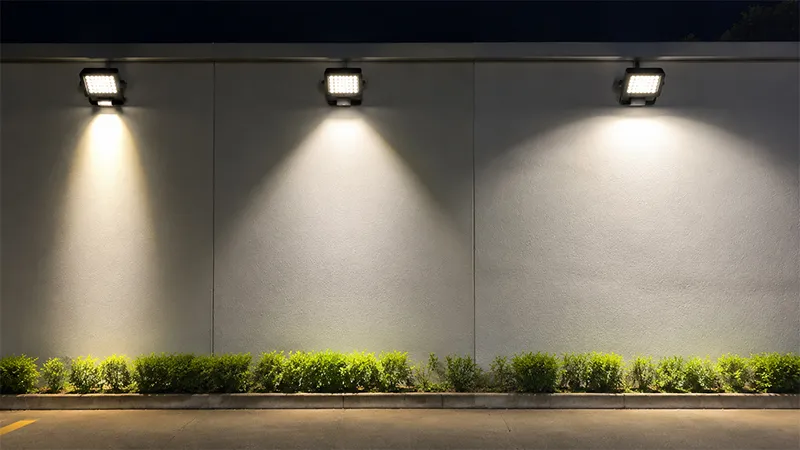
Lumens measure total light output, but they do not show how much light reaches the required surface. For LED flood lights, useful on-site illumination depends on beam distribution, mounting height, aiming angle, fixture spacing, obstructions, and the size of the target area. Buyers should evaluate illumination layout rather than relying on lumen output alone.
Start with the illuminated area
Before I discuss wattage or lumens with a customer, I ask several basic questions:
- What area needs illumination?
- What are the length and width of that area?
- Where can the fixtures be mounted?
- What mounting height is available?
- How far is the fixture from the target?
- Are there trees, signs, roofs, vehicles, or structures that block light?
- Does the project require broad ambient light, focused task lighting, security lighting, or façade lighting?
These questions change the fixture selection process. A 100 W floodlight mounted at 4 meters will behave very differently from the same fixture mounted at 12 meters. At a higher mounting position, the light covers a larger area, but the illumination on the ground may decrease unless output and distribution are selected appropriately.
Beam angle changes the coverage pattern
A narrow beam concentrates light over a smaller area. A wide beam spreads the available light across a larger area. Neither option is universally better.
| Selection factor |
Narrower distribution |
Wider distribution |
| Typical effect |
More concentrated center illumination |
Broader area coverage |
| Common use |
Distant targets, façade features, selected zones |
Yard areas, entrances, general perimeter zones |
| Main risk |
Bright center with insufficient edge coverage |
Lower intensity if mounted too high or too far away |
| Installation need |
More careful aiming |
More careful control of spill light |
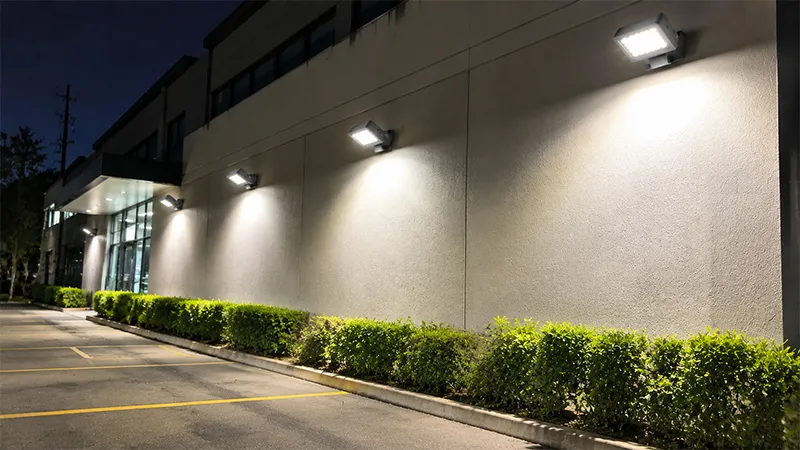
I recommend that buyers consider the throw distance and the coverage width together. If a light is installed too close to a wall with an overly wide distribution, it may create unwanted spill or glare. If it is installed too far from the target with a very narrow beam, it may leave surrounding areas dark.
Aiming and spacing matter as much as fixture output
I have seen project discussions focus heavily on fixture parameters while installation geometry receives only a brief mention. In practice, aiming direction and spacing can be decisive.
A contractor should consider:
- Fixture tilt angle
- Pole or wall position
- Distance between fixtures
- Desired illumination uniformity
- Potential glare toward drivers, pedestrians, residents, or neighbors
- Maintenance access after installation
For larger projects, I recommend that a qualified lighting professional create or review a lighting layout. Project-specific calculations can help determine average illumination, minimum levels, uniformity, and potential spill light. I do not treat a generic product specification as a substitute for an application-specific lighting design.
What Makes LED Flood Lights Reliable Outdoors?
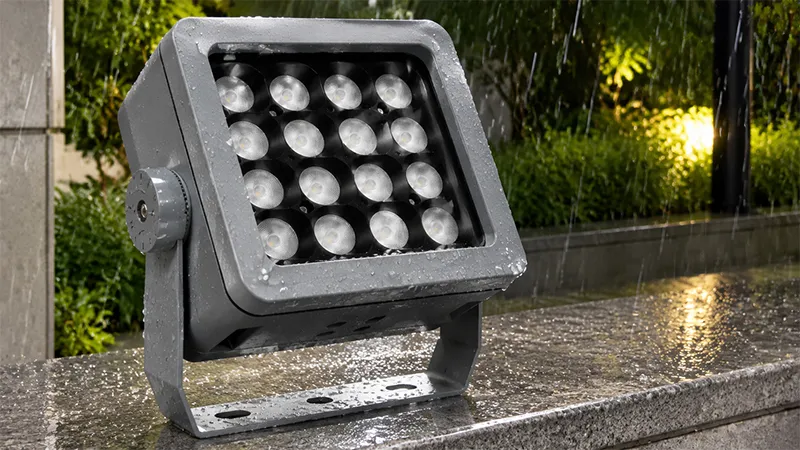
Outdoor environments can be demanding. Rain, dust, heat, humidity, salt exposure, vibration, and electrical conditions can all affect a lighting system. I know that buyers may want a single parameter, such as an IP rating, to confirm durability. However, I believe outdoor reliability requires a broader review of the whole fixture and its installation.
Reliable LED flood lights require suitable enclosure protection, material quality, sealing, driver design, thermal management, cable and connector selection, and consistent manufacturing control. An IP rating is important, but it does not independently prove that a fixture will achieve a specific service life in every climate, location, or installation method.
Review protection as part of a system
An IP rating describes protection against solid objects and water ingress under defined test conditions. It is useful for comparing enclosure protection, but it does not answer every outdoor reliability question.
For example, buyers should also examine:
- Housing material: Die-cast aluminum is widely used for thermal performance and corrosion resistance, but finishing quality and local conditions still matter.
- Lens material: The lens should suit the required impact, optical, and weathering considerations.
- Gaskets and seals: Sealing design affects resistance to moisture and dust ingress.
- Cable entry: Poorly selected or installed cable glands can create weak points.
- Fasteners and brackets: Outdoor hardware should suit the installation environment.
- Driver placement: Driver temperature and enclosure design can influence operating stress.
I encourage procurement teams to define the real exposure level. A sheltered exterior wall, an open sports area, a coastal location, and a dusty industrial yard are not equivalent environments. The appropriate selection should reflect the actual site rather than a general assumption about “outdoor use.”
Thermal management affects consistency
Thermal design is especially important for higher-output fixtures. The heat sink needs sufficient area and an effective path for heat transfer from the LED board. The installation also affects cooling. A fixture installed in a confined position with limited airflow may operate differently from a fixture mounted openly on a pole.
I advise buyers to ask suppliers practical questions:
- What is the intended ambient operating range?
- How is heat transferred from the LED board to the housing?
- Where is the driver located?
- Does the product design change at different wattages?
- Is the proposed installation likely to restrict airflow?
These questions are more useful than assuming that a large-looking housing automatically provides adequate thermal control.
Production checks help reduce avoidable risk
As an OEM/ODM manufacturer, I see production-side controls as important tools for identifying early issues and improving batch consistency. At Upward Lighting, I use incoming inspection on raw materials, in-process checks, finished-product inspection, and aging tests before shipment.
Our production process can include room-temperature aging and high-temperature aging according to the agreed product and order requirements. We also perform outgoing checks that may cover appearance, assembly, electrical function, and relevant product parameters. These steps help us identify early failures, assembly deviations, and inconsistent batches before products leave the factory.
However, I do not present factory aging or outgoing inspection as proof of a guaranteed multi-year lifespan in every outdoor project. Real service life depends on the actual climate, electrical supply, operating hours, installation quality, maintenance conditions, and use pattern. Buyers should treat test records and certification documents as items to verify during supplier evaluation.
How Should Buyers Specify LED Flood Lights for Different Outdoor Projects?
I know that procurement teams need a practical way to turn technical discussion into an order specification. The risk is that vague requests such as “200 W waterproof floodlight” can lead to inconsistent quotations and products that are hard to compare. I recommend writing a project brief that describes the lighting task first.
Buyers should specify LED flood lights by defining the target area, mounting geometry, illumination objective, electrical conditions, environmental exposure, optical distribution, control needs, and documentation requirements. This approach makes supplier quotations more comparable and reduces the risk of ordering a high-output fixture that does not fit the installation.
Build a clear product specification
A useful request for quotation should include more than a wattage. I suggest including the following information.
| Specification area |
What I recommend defining |
Why it matters |
| Application |
Yard, façade, parking area, sports area, entrance, work zone |
Establishes the lighting purpose |
| Installation |
Pole, wall, bracket, ceiling, ground-level structure |
Affects aiming and cooling |
| Mounting height |
Actual distance from fixture to target |
Influences beam and output selection |
| Coverage area |
Length, width, and target locations |
Supports layout evaluation |
| Input power |
Voltage, frequency, and local electrical conditions |
Helps match driver requirements |
| Optical need |
Beam angle or light distribution |
Controls coverage and spill light |
| Color temperature |
Site preference, visual comfort, local requirements |
Supports suitable visual effect |
| Control |
On/off, photocell, timer, dimming, sensor |
Affects driver and system selection |
| Environmental exposure |
Rain, dust, heat, coastal air, vibration |
Guides housing and protection review |
| Documentation |
Test reports, certifications, drawings, photometric data |
Supports supplier qualification |
Compare suppliers on evidence, not only price
I believe the most useful supplier comparison includes both product information and manufacturing controls. A low initial price can become less attractive if the supplier cannot provide consistent specifications, responsive communication, or appropriate documentation.
When I work with brand owners, distributors, and engineering firms, I expect them to evaluate:
- Product drawings and dimensional tolerances
- Declared electrical and optical parameters
- Test documentation relevant to the destination market
- Sample quality and finish consistency
- Packaging and labeling requirements
- Production capacity and lead-time planning
- Quality-control procedures
- OEM/ODM customization capability
- Warranty terms and the process for handling quality concerns
At Upward Lighting, I can support OEM/ODM projects with adjustable power, color temperature, color rendering requirements, surface treatment colors, and other product specifications based on the project. I also operate multiple production lines to support different order volumes and model configurations. Still, I encourage every buyer to verify documents, samples, and application suitability independently before placing a large order.
Use samples and pilot orders strategically
For a new product or supplier, I recommend a sample review or pilot order before full-scale procurement. This process gives the buyer an opportunity to inspect:
- Housing finish and assembly quality
- Bracket strength and adjustment range
- Cable length and connection details
- Light distribution and glare in a representative setting
- Packaging protection
- Label accuracy
- Compatibility with installation accessories
A small pilot can reveal whether the product matches the written specification. It can also help a distributor or brand owner refine packaging, labeling, color, and product positioning before a larger launch.
Frequently Asked Questions
Are higher-wattage LED flood lights always brighter?
Higher wattage can indicate higher power consumption and may correspond with higher light output, but it is not a complete performance measure. I recommend comparing declared lumens, beam distribution, driver design, thermal management, and intended mounting conditions. The fixture must place light effectively on the target area.
What IP rating should I choose for outdoor LED flood lights?
The appropriate IP rating depends on the exposure level and local project requirements. I recommend evaluating rain, dust, washdown exposure, mounting direction, cable entry design, and enclosure construction together. Buyers should verify the supplier’s relevant test documents rather than relying only on a marking.
How do I choose the right beam angle for a floodlight?
I choose beam angle based on mounting height, distance to the target, required coverage width, and glare control needs. A narrower beam generally concentrates light, while a wider beam spreads it. For larger or safety-sensitive installations, I recommend a professional lighting layout review.
Do factory aging tests prove LED floodlight lifespan?
No. Factory aging tests can help identify early defects and support outgoing quality consistency, but they do not prove a specific multi-year lifespan in every field installation. Actual performance depends on temperature, electrical conditions, operating hours, installation quality, and environmental exposure.
Can LED flood lights use different color temperatures?
Yes. Many LED flood lights can be specified in different color temperatures, subject to product design and order requirements. I recommend selecting color temperature based on the site purpose, visual comfort, customer preference, and applicable local requirements. No single color temperature is ideal for all outdoor projects.
Conclusion
LED flood lights work best when buyers evaluate them as complete outdoor lighting systems rather than simple wattage-and-lumen products. I recommend starting with the target area, mounting height, beam distribution, and installation geometry. Then review driver quality, thermal design, enclosure protection, materials, production controls, and supplier documentation. At Upward Lighting, I support OEM/ODM floodlight projects with manufacturing, aging, inspection, and customization capabilities. Contact us to discuss your outdoor lighting specification, sample requirements, or supplier evaluation process.